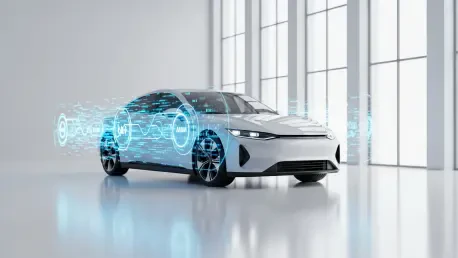

The process of buying or selling a vehicle remains notoriously complex, often involving a fragmented and frustrating series of steps that leave both consumers and retailers drained. A new startup, Ever, is confronting this long-standing challenge by building an all-electric vehicle marketplace entirely on a foundation of artificial intelligence, a strategy that just attracted a substantial $31 million in Series A funding. This significant investment underscores a powerful belief that the company’s unique, AI-native approach is not just an incremental improvement but a fundamental reconstruction of the automotive retail experience, designed to eliminate the inherent inefficiencies that have plagued the industry for decades. By focusing exclusively on the burgeoning used EV market, Ever is positioning itself to become a dominant force, promising a streamlined, transparent, and highly efficient journey for every transaction it handles.
A Foundational Shift in Automotive Retail
At the heart of Ever’s strategy is a rejection of the conventional, piecemeal approach to automotive retail software. Instead of relying on a dozen disparate, single-point solutions for tasks like vehicle appraisals, pricing, titling, and inventory management, the company has developed a proprietary “orchestration layer.” This unified system functions as the central operating system for the entire business, seamlessly managing every workflow from start to finish. This platform leverages what is described as “agentic AI” to handle the deterministic, rules-based processes that constitute the bulk of a vehicle transaction. According to the company’s founder, a single car sale can trigger hundreds of distinct actions. By automating these tasks, Ever’s system is engineered to systematically eliminate the “micro-frictions” that create delays, errors, and frustration for both buyers and sellers, delivering a truly integrated and fluid customer experience that existing models struggle to replicate.
The tangible impact of this AI-driven foundation is a remarkable leap in operational efficiency, which forms the cornerstone of the company’s value proposition. CEO Lasse-Mathias Nyberg reports that Ever’s sales team is already operating at two to three times the productivity level of their industry counterparts, a metric he confidently expects to improve as the business expands. This heightened productivity directly translates into stronger financial margins. This gives the company critical strategic flexibility: it can either retain the efficiency gains to bolster its profitability or pass the savings on to its customers. The ability to offer more competitive pricing on its used electric vehicles without sacrificing financial health provides a powerful competitive advantage in a market where value is a key driver for consumers. This efficiency is not just a backend improvement; it’s a core feature that shapes the entire business model and customer offering.
The Investor Bet on a Purpose Built Model
The $31 million Series A round, led by venture capital firm Eclipse, signals a strong conviction in Ever’s ground-up methodology. Jiten Behl of Eclipse, who spearheaded the investment, contends that the process-heavy and labor-intensive nature of automotive retail makes it an ideal candidate for AI-driven disruption. He sharply criticizes the efforts of competitors who attempt to modernize by adding “bolt-on AI tools”—such as voice agents or smart schedulers—to their legacy systems, dismissing these superficial additions as ineffective “band-aids.” To illustrate his point, he draws a compelling analogy to the first-generation electric vehicles from traditional automakers, which were often just combustion engine platforms retrofitted with electric drivetrains. This approach, he notes, led to significant compromises in performance and design when compared to the dedicated, purpose-built EV platforms developed by pioneers like Tesla and Rivian.
In the view of its investors, Ever is taking the superior, ground-up approach to rebuilding auto retail with artificial intelligence at its very core. This deep-seated belief in the model’s potential is further reinforced by the participation of other strategic investors, including JIMCO, the investment arm of the Jameel family of Saudi Arabia. The Jameel family’s distinction as early investors in the EV manufacturer Rivian lends significant credibility and signals a deep understanding of the electric vehicle ecosystem. Behl’s confidence was so profound that during the due diligence process, his first thought was, “I wish Rivian was doing this.” This sentiment captures the essence of the investment thesis: that a clean-sheet, AI-native platform is not merely a better way to sell cars but the only way to truly solve the industry’s foundational problems and create a lasting, defensible market leader.
Capitalizing on Evolving Market Dynamics
Ever’s strategy is skillfully aligned with several powerful and overarching industry trends, positioning the company to capitalize on a market in transition. The first is the inexorable consumer shift toward digital-first purchasing experiences, a trend initially pioneered in the auto sector by companies like Carvana and CarMax. However, as investors point out, these digital giants still command only a single-digit share of the massive used car market. This indicates that a vast, untapped opportunity remains for a company that can deliver a genuinely superior and friction-free customer journey. The prevailing belief is that customers will inevitably “gravitate towards better experience,” which is increasingly defined as a digitally-led process that eliminates the traditional hassles and pressures associated with visiting a dealership. Ever aims to be the definitive answer to that demand.
Secondly, the company is capitalizing on the growing, albeit currently fluctuating, market for used electric vehicles. While overall consumer interest in new EVs has shown some volatility in the United States, Ever is maintaining a “laser-focused” approach on the pre-owned segment, where no other major retailer has established an exclusive presence. This specialization allows the company to develop deep expertise and build a brand synonymous with used EVs. At the same time, the business model remains pragmatic, not ruling out the future inclusion of internal combustion engine vehicles if market conditions warrant it. Furthermore, Ever employs a hybrid online-physical model. While its core platform is digital, the company maintains physical locations, recognizing that for many consumers—especially those new to electric vehicles—the ability to see, touch, and test-drive a car in person remains a critical and non-negotiable part of the decision-making process.
Overcoming Early Obstacles for Future Growth
Despite its promising technology and substantial new funding, the company’s early journey was not without its challenges. During its initial operational phase while still in “stealth” mode, some early customer reviews were mixed. While some users praised the platform’s intuitive design and ease of use, others reported difficulties in contacting the company’s support team, citing communication gaps. The company’s leadership addressed these issues, attributing them to the pains of a nascent operation and framing the entire period as a crucial “learning experience.” The team had since dedicated itself to enhancing the system’s flexibility to better meet and exceed customer expectations. With its new capital, Ever’s primary focus shifted to scaling its operations, refining its customer service protocols, and aggressively capturing market share. Its ultimate success hinged on its ability to prove that its AI-native operating system could deliver a demonstrably more efficient and superior experience than both traditional dealerships and existing digital retailers, all while navigating the evolving dynamics of the consumer EV market.