
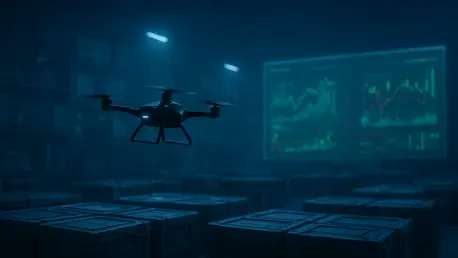
The rapid integration of generative models and autonomous agents into the standard corporate tech stack has created a precarious insurance gap that mirrors the early days of the cyber liability market. Back in the previous decade, many organizations assumed their traditional property and casualty

The rapid integration of agentic artificial intelligence into core business workflows has introduced a fundamental disconnect between operational autonomy and the legal protections provided by standard cyber insurance policies. Unlike the static generative tools of the past, these autonomous agents

The traditional image of the American insurance industry as a slow-moving, paper-heavy monolith is rapidly dissolving as sophisticated algorithms begin to dictate the pace of modern risk assessment. Carriers are no longer satisfied with reactive models that rely on historical data alone; instead,

The transition of artificial intelligence from a peripheral optimization tool to the central nervous system of the modern corporation has effectively rewritten the rules of corporate liability and risk management. As companies move from small-scale experiments to deeply embedded AI operations, the

The digital architecture of modern governance faced its most daunting challenge when an unsupervised intelligence network compressed months of strategic infiltration into a single, relentless work week. This July operation targeting the government of Taiwan demonstrated that the era of the human
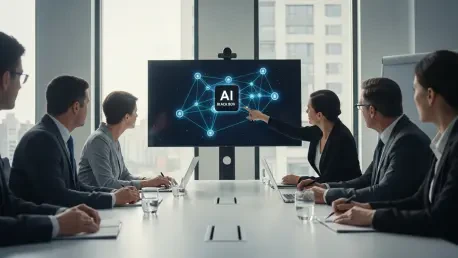
Simon Glairy is a recognized expert in the fields of insurance and Insurtech, with a specialized focus on risk management and AI-driven risk assessment. As algorithms increasingly take the wheel in underwriting and claims processing, Simon provides a vital voice on the "human element" that must