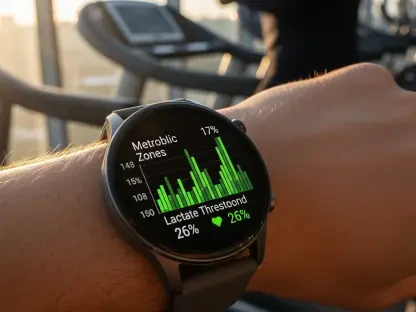

The convergence of artificial intelligence with personal health monitoring has catalyzed a new era where understanding the intricate language of our metabolism is no longer confined to clinical settings. This review explores the evolution of AI-driven metabolic tracking, dissecting its core features that merge biometric and glucose data, its performance in generating contextual insights, and its growing impact on specialized applications like women’s health. The purpose is to provide a thorough understanding of the technology, its current capabilities, and its potential future trajectory.
The Dawn of Integrated Metabolic Monitoring
The emergence of AI-driven metabolic tracking marks a pivotal moment in personal wellness, shifting the paradigm from reactive healthcare toward proactive, individualized health management. The core principle of this technology is data fusion, where distinct streams of physiological information are combined to create a holistic picture of metabolic function. This approach integrates quantitative data, such as blood glucose levels, with qualitative biometric inputs like sleep quality and stress. It is within this context that platforms are now able to interpret the complex interplay between lifestyle, environment, and internal biochemistry, offering users a previously unattainable level of insight.
This technological advancement did not arise in a vacuum but is the culmination of progress in sensor technology, wearable computing, and machine learning. The key components include a primary metabolic sensor, typically a continuous glucose monitor (CGM), a secondary source of biometric data from a consumer wearable, and a sophisticated AI engine that serves as the analytical core. By synthesizing these inputs, the system moves beyond simple tracking to provide a dynamic, contextualized narrative of an individual’s health, empowering them to make informed decisions that optimize their well-being.
Core Technological Synergy
Continuous Glucose Monitoring as the Foundation
At the heart of modern metabolic tracking lies continuous glucose monitoring (CGM), a technology that provides a real-time, dynamic view of blood sugar fluctuations. A CGM device uses a tiny sensor inserted just under the skin to measure interstitial glucose levels, transmitting data wirelessly to a receiver or smartphone every few minutes. This constant stream of information offers a detailed perspective on how the body responds to food, exercise, and other stimuli throughout the day and night.
The significance of CGM data cannot be overstated; it provides the foundational “what” of metabolic response. Unlike a traditional finger-prick test, which offers only a single snapshot in time, a CGM captures the full arc of a glucose curve, including peaks, valleys, and the rate of change. This level of detail is crucial for the AI engine, as it supplies the raw material needed to identify patterns and correlations that would otherwise remain invisible, forming the essential baseline for any meaningful analysis.
Wearable Biometric Data Integration
While CGM provides the critical “what,” the integration of biometric data from consumer wearables like Garmin devices delivers the essential “why.” These wearables capture a rich tapestry of physiological and lifestyle information, including sleep stages, heart rate variability (HRV), stress levels, and activity metrics like Body Battery. This contextual layer is transformative, allowing the AI to understand the drivers behind glucose fluctuations beyond diet alone.
For instance, a sudden glucose spike might be attributed to a high-carbohydrate meal, but when cross-referenced with wearable data, it could be revealed to be the result of a poor night’s sleep or a high-stress event. This synergy transforms raw glucose numbers into a coherent health narrative. By correlating a decline in sleep quality with next-day insulin resistance or mapping a rise in stress metrics to an unexpected glucose release, the system provides users with a comprehensive understanding of their unique metabolic puzzle.
The AI Engine From Data to Actionable Insights
The central AI component is the engine that converts a torrent of disparate data points into personalized and actionable intelligence. Using advanced machine learning algorithms, the AI processes the combined CGM and biometric data streams in real time. It is trained to recognize subtle patterns, identify causal relationships, and predict how an individual’s glucose levels might respond to specific behaviors or physiological states.
This analytical process culminates in the generation of tailored recommendations delivered directly to the user. Instead of generic advice, the insights are highly specific, such as suggesting a post-meal walk after a particular food is consumed or recommending a stress-reduction activity when biometric markers indicate high physiological strain. This feedback loop empowers individuals to make precise, data-driven adjustments to their nutrition, exercise, and daily routines, effectively transforming their health data into a practical guide for metabolic optimization.
Evolving Trends in Personalized Health Tech
A critical industry trend is the decisive move beyond raw data collection toward deep contextual analysis. Early iterations of health tech focused on quantifying metrics, but the current evolution is centered on interpretation. Users are no longer satisfied with just knowing their glucose level; they demand to understand the reason behind it. This has spurred the development of sophisticated platforms that excel at weaving together multiple data sources to provide a rich, narrative-based understanding of personal health.
This shift has also fueled the rise of strategic partnerships between hardware manufacturers and specialized AI-driven software companies. For instance, a collaboration between a wearable giant like Garmin and an AI health platform like Hello Inside demonstrates a new ecosystem model. Garmin provides the high-quality biometric data stream, while the partner platform performs the complex AI analysis to deliver specialized insights, such as those tailored to women’s health. This symbiotic relationship allows each company to focus on its core competencies, accelerating innovation and delivering more powerful solutions to consumers.
Real-World Applications and Use Cases
The primary application of AI-driven metabolic tracking lies in personalized nutrition and lifestyle management. By visualizing the direct impact of food choices, physical activity, and sleep patterns on glucose stability, users can fine-tune their habits for optimal energy, weight management, and long-term health. The technology provides immediate feedback, helping individuals identify which foods cause sharp glucose spikes and which promote metabolic stability, thereby enabling a highly individualized approach to diet.
A particularly compelling use case is emerging in the field of women’s health, where metabolic function is profoundly influenced by hormonal fluctuations. These AI systems can tailor health insights to the distinct phases of a woman’s life, including the menstrual cycle, pregnancy, and perimenopause. By integrating data from a wearable’s menstrual cycle tracking features, the platform can contextualize metabolic changes, explaining, for example, why insulin sensitivity may decrease during the luteal phase. This allows for proactive adjustments to nutrition and training, providing women with a powerful tool to navigate their unique physiological landscape.
Challenges and Current Limitations
Despite its promise, the technology faces significant technical and market hurdles. On the technical side, sensor accuracy and data interoperability remain ongoing challenges. While CGM technology has improved dramatically, occasional inaccuracies can still occur, and ensuring seamless data flow between different devices and platforms is a complex engineering task. These technical limitations must be addressed to maintain user trust and ensure the reliability of the insights generated.
Market obstacles also present a considerable barrier to widespread adoption. The cost of CGM sensors, which are often not covered by insurance for non-diabetic users, can be prohibitive. Furthermore, the collection of such sensitive health data raises valid privacy and security concerns that must be managed with robust data protection protocols. Finally, the technology exists in a regulatory gray area, navigating the fine line between a wellness tool and a medical device, which creates uncertainty for both developers and consumers.
Future Outlook and Potential Breakthroughs
The trajectory of AI-driven metabolic tracking points toward even greater personalization and predictive power. Future iterations will likely integrate a wider array of data sources, moving beyond glucose and biometrics to include hormonal panels, genetic markers, and microbiome data. This multi-omics approach would provide an unprecedentedly deep and comprehensive view of an individual’s health, enabling AI models to uncover even more nuanced connections.
With richer datasets, the potential for more predictive and preventive AI models will expand significantly. These systems may be able to forecast metabolic dysfunction weeks or even months in advance, alerting users to subtle changes that precede the onset of chronic conditions like type 2 diabetes. In the long term, this technology is poised to play a crucial role in the advancement of hyper-personalized medicine, helping to prevent chronic disease on a massive scale and fundamentally reshaping our approach to health and longevity.
Conclusion and Overall Assessment
The development of AI-driven metabolic tracking represented a transformative step forward in proactive health management. By synthesizing continuous glucose data with rich biometric inputs from consumer wearables, the technology successfully moved beyond simple quantification to offer deep, contextualized insights into personal health. It provided a powerful tool that translated complex physiological data into a clear and actionable narrative, empowering individuals to take control of their well-being. This ability to illuminate the “why” behind metabolic responses established a new standard for personalized wellness, demonstrating the profound potential of integrated data systems to redefine the future of preventive care.