
The sight of thousands of runners crossing the Tower Bridge now carries a different technological weight as Apple secures its position as the “Official Performance Technology Product Partner” for the TCS London Marathon. This landmark sponsorship marks a transition from passive market participation to active competition, as the tech giant moves to challenge long-established endurance brands for dominance in the professional athletic space. By aligning itself with one of the world’s most prestigious marathons, Apple aims to prove that its ecosystem is no longer just for casual fitness enthusiasts but is a formidable tool for elite competitors.
Tracing the Evolution: From Lifestyle Gadget to Elite Tool
To understand the weight of this partnership, one must look at the historical trajectory of the Apple Watch. Since its debut, the device was largely categorized as a lifestyle accessory—a sleek companion for managing notifications and closing “Activity Rings.” However, the industry has seen a gradual yet deliberate shift as Apple began integrating hardware capable of meeting the grueling demands of endurance sports.
The introduction of the Ultra line was the turning point, signaling a departure from general wellness toward rugged, professional-grade utility. These past developments have laid the foundation for Apple to move beyond the “everyday user” demographic and directly confront the industry standards set by specialized manufacturers like Garmin.
Breaking Down the Performance Ecosystem
Precision Hardware: Solving the Urban Jungle
A critical component of Apple’s appeal to the marathon community is its significant advancement in location tracking. The dual-frequency GPS introduced in the Ultra series has proven superior in dense urban environments, where “GPS drift” caused by skyscrapers can ruin a runner’s pacing data. For a city-based race like the London Marathon, this level of precision is non-negotiable. By solving the hardware limitations that previously plagued smartwatches in metropolitan areas, Apple has removed a primary barrier to entry for serious athletes who require frame-perfect accuracy.
Advanced Biometrics: Integrated Performance Software
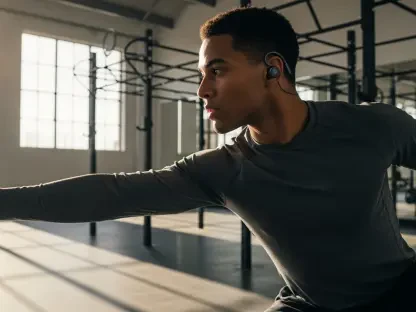
Beyond raw hardware, Apple has cultivated a deep software ecosystem that tracks sophisticated metrics once reserved for laboratory settings. Runners now have access to real-time data on vertical oscillation, stride length, and ground contact time directly from their wrists. This holistic approach extends to secondary devices, such as the heart rate monitoring capabilities found in the AirPods Pro 3. By weaving performance tracking into the audio and wearable experience, Apple provides a seamless feedback loop that allows athletes to adjust their form on the fly.
Market Rivalry: Challenging Dedicated Sports Manufacturers
The partnership with the London Marathon is a direct challenge to the market share of brands like Garmin and Coros. For years, professional runners favored these brands for their data-heavy interfaces, often viewing the Apple Watch as a secondary device. Apple is now dismantling this perception by proving its utility in high-stakes environments. While challenges remain—such as convincing the “hardcore” community to abandon long-standing data ecosystems—Apple’s massive user base and hardware-software integration provide a competitive edge that could disrupt the established order.
The Future of Training Load and AI-Powered Insights
Looking ahead, industry analysts anticipate that this partnership is a precursor to a complete overhaul of Apple’s health philosophy. The focus is expected to shift away from the simplistic “Activity Ring” model toward a sophisticated, data-driven analysis of training load and recovery. Emerging trends suggest that Apple will leverage its silicon power to provide AI-powered feedback, telling runners not just how far they ran, but how well they recovered and when they are primed for a personal best.
Navigating the Shift: Professional Data Standards
As Apple cements its place in the athletic community, users and professionals should adapt their strategies to leverage these new tools. Runners can now consolidate their gear, moving away from multiple chest straps and pods toward a unified ecosystem. For coaches and health professionals, the focus should shift to interpreting the wealth of biometric data Apple provides to create personalized, injury-preventative training schedules. To get the most out of this technology, consumers looked beyond the surface-level metrics and engaged with custom pacer alerts and stride analysis features.
The Finish Line: Long-Term Ambitions in Endurance Sport
The partnership between Apple and the London Marathon represented more than a simple marketing deal; it served as a declaration of intent. By focusing on the specific needs of marathon runners, Apple proved that its technology could withstand the rigors of professional competition. This shift ensured that the Apple Watch remained a significant player in the tech landscape, evolving from a generalist tool into a specialized instrument for excellence. For the endurance community, this competition between tech giants drove further innovation, ultimately providing athletes with the best possible data to reach their next finish line.