
Introduction
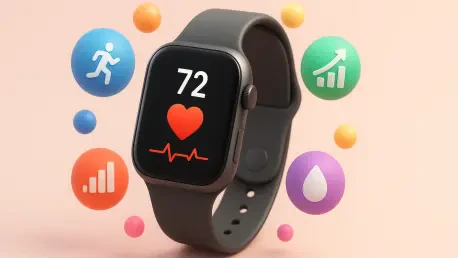
The relentless quest for precise biometric data has reached a new pinnacle with the introduction of hardware that narrows the gap between consumer wearables and medical-grade equipment. Apple recently unveiled the Health Sensing System within the Apple Watch Series 12 and Apple Watch Ultra 4, marking a transformative shift in physiological monitoring. This update integrates sophisticated optical sensors with machine learning to achieve unprecedented accuracy.
This article explores this technological leap by answering questions regarding the new sensor array and clinical testing. Readers will learn how the hardware compares to rivals and what these improvements mean for daily health tracking.
Key Questions or Key Topics Section
What Technology Drives the Accuracy of the New Health Sensing System?
The foundation of this advancement lies in the redesign of both optical and electrical heart sensors. By increasing the sampling frequency for heart rate and variability, the device captures granular data during rest and peak exertion. This allows the on-device algorithms to filter out noise more effectively than earlier models.
Moreover, specialized machine learning allows the watch to interpret complex signals in real time. These algorithms are tuned to distinguish between pulse changes and physical interference caused by movement. This synergy enables features like a readiness score and an expanded Vitals overview.
How Was the Clinical Study Conducted to Validate These Claims?
To ensure validity, a clinical study was launched in 2026 involving 1,200 participants in the United States and Malaysia. Researchers used the Polar #0 chest strap as the primary control reference. The diverse pool ensured that sensors performed reliably across different skin tones and physiology.
Testing spanned a wide range of scenarios, including high-intensity training and mundane tasks. A major focus was the elimination of cadence lock, where motion sensors mistakenly identify a runner’s stride as a pulse. By testing under varied conditions, the study provided a holistic view of device reliability.
How Does the Series 12 Compare to Other Premium Wearables?
When compared to rivals, the Apple Watch Series 12 demonstrated a clear statistical advantage. The analysis included the Garmin Forerunner 970 and Samsung Galaxy Watch 8, alongside trackers like the Whoop 5.0. In 159 distinct metrics, the Apple hardware was more accurate in 139 instances.
This reflects a success rate of nearly 90% across scenarios, with a 99% confidence interval. While competitors remain strong in certain areas, the data indicates that Apple has set a new benchmark. These results suggest that smarter data processing has moved the needle for the entire wearable market.
Summary or Recap
The Apple Watch Series 12 redefined expectations for accuracy through its Health Sensing System and clinical validation. By outperforming rivals in most tests, the device offers a reliable tool for tracking recovery. The emphasis on high-frequency sampling ensures that biometric tracking is more dependable for daily use.
Conclusion or Final Thoughts
The evolution of biometric sensors signified a shift toward proactive health management where data led to genuine insights. Users had to decide how to utilize this high-fidelity information to optimize physical performance. These advancements provided a robust platform for innovations that eventually bridged the gaps between wearable tech and clinical diagnostics.