
Hypertension remains one of the most significant health challenges of the modern age, affecting approximately one in three adults worldwide while remaining largely asymptomatic until severe complications arise. The historical difficulty in managing this condition stemmed from the lack of accessible, consistent monitoring outside of clinical environments, which often resulted in late-stage diagnoses. However, recent advancements in sensor technology and data analytics have transformed cardiovascular care into a proactive, home-based endeavor. This transition is not merely a matter of convenience; it represents a fundamental shift in how individuals interact with their own physiological data. By moving toward a model of constant awareness, society has begun to address the “silent killer” with unprecedented precision.
The significance of this evolution cannot be overstated, as the World Health Organization has suggested that widespread home monitoring could save tens of millions of lives through early detection and simple lifestyle adjustments. For years, the only way to get a reliable reading was to sit in a sterile clinic, often resulting in “white coat syndrome” where anxiety artificially inflates the numbers. Today, the landscape is entirely different. Consumers have access to a variety of tools, from medical-grade tabletop units to invisible sensors embedded in daily wearables. This article explores the most effective ways to monitor blood pressure in the current technological climate, highlighting the balance between clinical accuracy and everyday ease of use.
Advancements in Precision and Accessibility
Medical-Grade Reliability with Smart Tabletop Units
Medical-grade reliability has traditionally been the exclusive domain of heavy, manual equipment used by trained professionals, but smart tabletop units have successfully bridged this gap. Devices such as the Withings BPM Vision have set a new standard by combining high-fidelity sensors with user-friendly interfaces that guide the individual through the measurement process. The primary advantage of a tabletop unit over a portable cuff lies in its stability; by separating the display and control unit from the inflatable sleeve, these devices minimize the physical interference that often plagues all-in-one models. This design philosophy ensures that the arm remains at the correct heart level, which is a critical factor in obtaining an accurate reading.
These units are frequently validated against the highest international standards, such as those set by the Association for the Advancement of Medical Instrumentation. For individuals who have already been diagnosed with hypertension, the precision of a cuffed tabletop monitor remains the gold standard for home use. These devices often include features like guest profiles and multi-user synchronization, allowing families to manage their heart health through a single hub. Moreover, the integration of LCD screens directly on the base unit provides immediate feedback, which is essential for those who may not always have a smartphone within reach.
However, the transition to high-tech tabletop units is not without its debates. While they offer superior accuracy, their bulkier nature compared to wrist-based wearables can sometimes discourage frequent use. Critics argue that the most accurate device is the one a person actually uses consistently. Despite this, industry leaders emphasize that for clinical decision-making, the oscillometric detection found in these cuffed units provides a level of certainty that purely optical sensors have yet to fully match. The challenge remains in making these high-precision instruments as intuitive and non-intrusive as possible to ensure long-term compliance.
The Shift Toward Continuous Cuffless Tracking
The move toward continuous, cuffless tracking represents perhaps the most significant disruption in blood pressure monitoring technology in recent memory. Systems like the Aktiia Hilo utilize optical photoplethysmography to measure the pulse wave velocity within the arteries, translating this data into blood pressure estimates throughout the day. This technology addresses a major flaw in traditional monitoring: the “snapshot” problem. A single high reading in a doctor’s office might be an outlier caused by temporary stress, whereas continuous tracking reveals the true baseline. This constant stream of data provides a much more granular view of how lifestyle factors, such as diet and exercise, affect arterial pressure in real time.
Furthermore, monitoring blood pressure during sleep has emerged as a vital diagnostic tool that was previously difficult to implement at home. Research indicates that if blood pressure does not naturally drop during the night—a phenomenon known as non-dipping—it serves as a strong indicator of existing or developing cardiovascular disease. Cuffless bands can take dozens of readings while the wearer is asleep without the discomfort of a physical cuff inflating and waking them up. This passive data collection allows healthcare providers to see the full 24-hour cycle of a patient’s heart health, leading to more personalized and effective treatment plans.
Despite the clear benefits, cuffless technology introduces its own set of risks and complexities. Because these devices rely on optical sensors rather than physical pressure, they often require initial and periodic calibration using a traditional cuff to ensure the algorithms remain accurate. There is also a competitive tension in the industry between established medical device manufacturers and newer tech startups. While startups move faster with sleek designs, the rigorous clinical validation required for these sensors means that the transition from a “wellness” gadget to a “medical” device is a slow and demanding process. Nevertheless, the convenience of a slim, waterproof band that lasts for weeks on a single charge is a powerful incentive for users.
Wearable Integration and Passive Screening
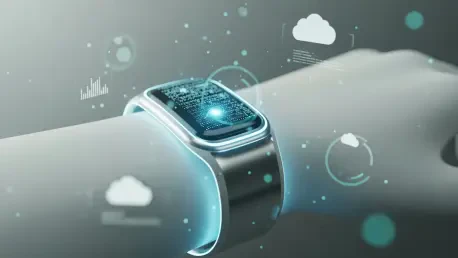
The integration of blood pressure screening into general-purpose wearables, such as the Apple Watch, has democratized cardiovascular awareness for millions of users. These devices do not necessarily aim to replace the high-precision cuffed monitor but rather serve as a ubiquitous first line of defense. By analyzing cardiac data over extended periods, these wearables can flag potential issues that might otherwise go unnoticed for years. This passive screening approach is particularly effective because it requires no active effort from the user, catching hypertension in its earliest stages when it is most manageable.
The industry has seen a notable shift toward utilizing existing sensor arrays to extrapolate complex health metrics. For instance, the latest iterations of smartwatches use advanced algorithms to analyze blood flow patterns and heart rate variability to estimate the probability of hypertension. This is a disruptive innovation because it places screening technology on the wrists of people who may not even be aware they are at risk. Regional differences in healthcare access also play a role here; in areas where clinical visits are infrequent, a reliable smartwatch can be a literal lifesaver by prompting the wearer to seek professional medical advice.
However, common assumptions about the accuracy of these wearables must be challenged. It is important for users to understand that a notification from a smartwatch is an indicator of risk, not a definitive diagnosis. The industry is currently grappling with how to communicate these findings without causing unnecessary alarm or, conversely, a false sense of security. As these devices become more sophisticated, the line between consumer electronics and medical hardware continues to blur, leading to a future where our daily accessories are also our most diligent health guardians.
Navigating the Regulatory Landscape of Wellness Tech
The regulatory environment for home health technology is more complex than ever, as authorities strive to keep pace with rapid innovation. The distinction between a device marketed for “wellness” and one intended for “clinical use” is a critical one for consumers to navigate. For example, some fitness trackers offer blood pressure estimates but have opted not to pursue formal clearance from regulatory bodies like the FDA. This decision often hinges on whether a company wants to provide “cutting-edge insights” for general health or “medical-grade data” for treating specific conditions.
Expert opinions suggest that the future of this sector will be defined by how well companies balance the speed of innovation with the necessity of clinical validation. While unapproved devices can offer valuable trends and patterns, they lack the legal and scientific backing required for making critical health decisions. Comparative analysis shows that consumers are increasingly looking for “FDA-cleared” labels as a mark of trust, even if the device is more expensive. This has led to a tiered market where users can choose between high-end medical devices and more affordable, general-purpose health trackers.
Looking forward, speculative directions in wellness tech point toward even more seamless integration, such as smart rings or even sensor-embedded clothing. These future possibilities promise to make blood pressure monitoring completely invisible, removing the last vestiges of “testing” from the user experience. The ultimate goal is a world where health data is collected and analyzed in the background, allowing for immediate intervention the moment an anomaly is detected. Until then, navigating the current landscape requires a discerning eye for regulatory status and a clear understanding of what each device is designed to accomplish.
Best Practices for Consistent and Accurate Home Readings
Regardless of the technology chosen, the accuracy of home blood pressure monitoring depends heavily on following established protocols. The most impactful insight for any user is that a single reading is rarely representative of overall health. To obtain a reliable average, it is essential to take measurements at the same time every day, ideally in the morning and evening. Before starting the process, one should avoid caffeine, nicotine, and vigorous exercise for at least thirty minutes, as these factors can cause temporary spikes that do not reflect a person’s true baseline.
Actionable recommendations for proper positioning are also vital for success. One should sit in a comfortable chair with back support and keep both feet flat on the floor; crossing the ankles is a common mistake that can lead to an incorrect reading. The arm being measured should be supported on a flat surface, such as a table, at the same height as the heart. Furthermore, it is important to ensure that the cuff is placed directly on the skin rather than over clothing, as fabric can interfere with the sensor’s ability to detect arterial vibrations or optical signals.
For those using digital monitors, taking two or three readings spaced about a minute apart is a highly effective strategy. The first reading is often slightly higher due to the initial stress of the measurement process, so averaging the subsequent results provides a more accurate picture. Maintaining a digital log or using an app that automatically syncs data can help in identifying long-term trends. These practices allow individuals to provide their doctors with high-quality data that can significantly improve the management of their cardiovascular health, moving beyond the limitations of occasional office visits.
The Future of Proactive Heart Health Management
The evolution of home blood pressure monitoring demonstrated that the transition from reactive to proactive care was the most effective way to combat cardiovascular disease. By integrating medical-grade precision with the convenience of modern wearables, the healthcare landscape successfully moved toward a model of continuous awareness. It became clear that the ability to monitor physiological changes in real time allowed individuals to make more informed decisions about their lifestyle and treatment. This era of self-care proved that empowered patients could achieve better health outcomes through the consistent use of reliable technology.
The ongoing importance of this subject is underscored by the increasing connectivity between personal devices and professional healthcare systems. As data sharing became more seamless, the distinction between home and clinic began to fade, creating a unified approach to heart health. Future implications suggest that the next step will involve even more sophisticated artificial intelligence capable of predicting cardiac events before they occur. The standard for preventative medicine was forever altered by the realization that heart health is a 24-hour commitment rather than a yearly check-up.
This comprehensive approach to monitoring established a new foundation for longevity and wellness. Individuals who took the initiative to track their metrics found themselves better equipped to navigate the complexities of aging and chronic disease management. The strategic takeaway for anyone concerned with their cardiovascular health was that consistency and accuracy were the keys to success. Ultimately, the integration of these tools into daily life served as a powerful reminder that the most important medical data is often the data we collect ourselves. Moving forward, the focus must remain on making these technologies accessible to all, ensuring that the benefits of digital health are felt across every segment of society.