
The familiar advice for weight loss has long centered on diligent calorie counting and rigorous exercise, yet a small, sophisticated sensor worn on the arm is quietly rewriting the rules of personal health management. This technology, once confined to the clinical management of diabetes, now offers a continuous stream of biological data that provides a direct window into how an individual’s body processes food, stress, and activity. By shifting the focus from generic dietary rules to personalized metabolic responses, continuous glucose monitors (CGMs) are presenting a compelling new approach to achieving and maintaining a healthy weight. This detailed, real-time feedback loop has the potential to transform abstract health goals into tangible, daily actions, moving beyond the limitations of traditional methods.
Beyond the Scale and Calorie Counts Could a Sensor on Your Arm Be the Real Key to Weight Management
For decades, the standard approach to weight management has involved a somewhat simplistic equation of calories in versus calories out. While this principle holds some truth, it fails to account for the complex and highly individual ways different bodies react to various foods and lifestyle factors. A CGM introduces a new, critical variable into this equation: metabolic response. By tracking blood sugar fluctuations in real time, a user can see the immediate physiological impact of a meal, a workout, or even a stressful meeting.
This shift in perspective moves the conversation from mere quantity to quality and timing. A food that is considered “healthy” by conventional standards might cause a significant glucose spike in one person but not another, promoting fat storage and subsequent energy crashes that lead to cravings. Understanding these personal metabolic patterns allows for adjustments that stabilize energy levels and support fat loss more effectively than a generic diet plan. The goal becomes less about deprivation and more about making informed choices that work in harmony with one’s unique biology.
From Niche Medical Device to Mainstream Tech Why Everyone Is Suddenly Talking About Blood Sugar
Continuous glucose monitors were originally developed and prescribed for individuals managing diabetes, a chronic condition characterized by elevated blood sugar levels. However, with staggering statistics from organizations like the American Diabetes Association indicating that one in three Americans is at risk for developing type 2 diabetes, the line between medical necessity and proactive wellness is blurring. This growing awareness of metabolic health has fueled a significant market shift, making these devices more accessible than ever.
The transition of CGMs from prescription-only tools to over-the-counter consumer technology, available through major retailers and direct-to-consumer services, marks a pivotal moment in personalized health. Companies are now packaging these sensors with sophisticated, AI-driven apps that interpret the raw data, offering personalized insights and actionable guidance. This widespread availability democratizes access to personal biometric information, empowering a broader audience to understand and manage a key indicator of overall health and its direct link to weight management.
How It Works A Look at the Technology and the Daily Experience of a CGM User
The core of a CGM system is a small, discreet sensor applied to the back of the arm. Using a simple applicator, it inserts a tiny, flexible filament just beneath the skin into the subcutaneous tissue. This filament does not measure glucose in the blood directly but rather in the interstitial fluid that surrounds the cells. While this method is less invasive than constant finger pricks, it is important to note that a slight lag exists as glucose diffuses from the bloodstream into this fluid, which can cause minor variations in readings. Proper placement—typically on the non-dominant arm and away from areas prone to pressure or impact—is crucial for ensuring data accuracy.
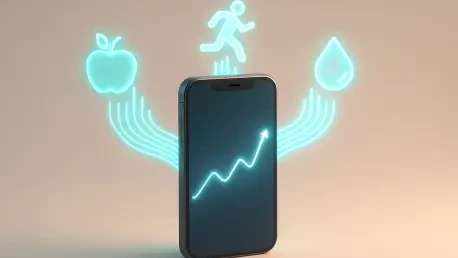
The daily experience of using a CGM for weight management extends beyond the physical sensor to a comprehensive digital platform. Users are prompted to log meals, often with the help of AI-powered photo recognition, along with exercise, sleep, and hydration. The platform then correlates these lifestyle inputs with the continuous glucose data stream to identify patterns. For instance, it can pinpoint which specific foods cause sharp spikes, suggest post-meal activities like a short walk to mitigate them, and offer personalized challenges to build healthier habits.
Despite its powerful capabilities, the reality of 24/7 tracking can introduce its own set of challenges. The constant stream of data and the need for meticulous logging can feel overwhelming, adding a significant layer of mental labor to daily routines. Furthermore, the AI, while advanced, is not infallible; it may misidentify foods or miscalculate portion sizes, requiring manual correction. This process highlights a learning curve where the user must learn to navigate the technology’s quirks and interpret the data within the context of their own life, treating the information as a guide rather than an infallible judge.
The Professional Perspective What a Registered Dietitian Says About Using CGMs for Weight Loss
Many nutrition experts view the rise of consumer CGMs not as a fleeting trend but as a valuable tool for behavioral change. Diane Stadler, a registered dietitian and professor at Oregon Health & Science University, noted that a significant majority of her graduate students approve of patients using this technology. Experts like Stadler are strong proponents of leveraging technology to provide individuals with more information, empowering them to make better and more sustainable lifestyle choices. A CGM provides immediate, objective feedback that can validate the dietary advice a professional gives, making abstract concepts like “glycemic index” tangible and personal.
A common concern surrounding any form of health tracking is the potential for it to foster obsessive or disordered eating habits. However, dietitians often differentiate between data-driven awareness and unhealthy fixation. Stadler gently reminds that individuals prone to disordered eating have a pre-existing condition, and the technology itself is not the root cause. For the general population, a CGM can promote a healthier relationship with food by shifting the focus from restrictive eating to balanced, metabolically stable eating. The dietary patterns that stabilize blood sugar—rich in lean protein, fiber, and healthy fats—closely mirror established healthy eating plans like the DASH or Mediterranean diets, which are widely recognized for their weight loss and overall health benefits.
Turning Real-Time Data into Real-Life Results Practical Strategies for Managing Your Glucose
One of the most powerful applications of CGM data is the ability to identify personal “spike” foods. A bowl of oatmeal, often touted as a healthy breakfast, might send one person’s glucose soaring, while another can tolerate it well. By observing real-time feedback, users can pinpoint the specific meals and ingredients that disrupt their metabolic stability. This knowledge allows for precise, personalized dietary adjustments—such as swapping a high-glycemic cereal for cottage cheese or eggs—that have a direct and measurable impact.
Armed with this data, individuals can implement simple yet effective strategies to maintain stable blood sugar throughout the day. For example, consistently eating smaller, more frequent meals can prevent the large glucose surges associated with heavy meals. Moreover, the data often reveals the profound impact of simple habits, such as taking a 10-minute walk after eating. This small amount of physical activity helps muscles absorb excess glucose from the bloodstream, effectively lowering and shortening the duration of a post-meal spike.
Beyond diet and exercise, a CGM can illuminate the surprising influence of other lifestyle factors on metabolic health. Chronic stress, for instance, can trigger the release of cortisol, a hormone that prompts the liver to release stored glucose, leading to elevated levels even in the absence of food. Similarly, hormonal fluctuations, such as those occurring during the premenstrual cycle, can affect insulin sensitivity and glucose readings. Recognizing these connections provided a more holistic understanding of health, encouraging users to manage not just what they ate, but also their stress levels and sleep patterns to achieve their weight loss goals.
The journey with a continuous glucose monitor revealed that managing weight was about more than just numbers on a scale; it was about understanding the body’s intricate language. The technology translated complex biological processes into clear, actionable data, empowering users to make informed decisions that fostered metabolic health. By moving beyond generic advice, the CGM provided a personalized roadmap, demonstrating that sustainable weight management was achieved not through restriction, but through a deeper and more responsive connection to one’s own physiology.