
The rapid evolution of biosensing technology has shifted the focus from merely tracking steps to managing the complex physiological signals of entire populations through a single interface. While early wearable tech catered primarily to the fitness enthusiast, the modern landscape demands systems that can translate individual data points into institutional intelligence. Circular’s Team Dashboard enters this space not as a simple update, but as a strategic pivot toward medical-grade oversight for healthcare facilities and professional athletic organizations.
The Shift: From Individual Wellness to Institutional Health Oversight
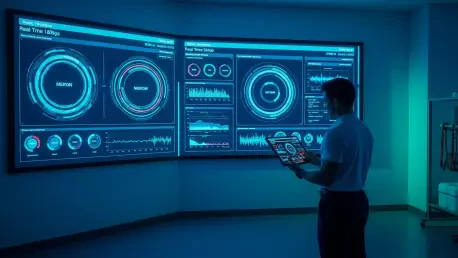
The traditional smart ring has long been a private companion, whispering health metrics to a single user via a smartphone app. However, the launch of the Team Dashboard flips this script, turning a personal wellness gadget into a centralized command center for healthcare providers and elite coaches. By allowing a single administrator to oversee the biometrics of an entire ward or roster, the platform moves beyond the “quantified self” and into the era of the “quantified collective.”
This transformation addresses a growing need for efficiency in high-stakes environments where monitoring dozens of individuals manually is no longer feasible. Instead of patients or athletes reporting their own status, the dashboard provides a bird’s-eye view of a group’s collective health. This shift allows supervisors to move from reactive care—responding only when a problem is reported—to a proactive model where the data dictates the intervention.
Bridging the Gap: Personal Wearables and Professional Diagnostics
In the current medical landscape, the transition from episodic clinic visits to continuous remote monitoring is a primary goal for healthcare systems. The industry is seeing a distinct pivot where screenless wearables are no longer viewed as peripheral accessories but as essential medical-grade tools. Circular’s entry into the enterprise sector addresses a critical bottleneck: the inefficiency of manual data auditing, which has historically prevented large-scale adoption of wearables in clinical trials.
By automating the flow of information, the system removes the friction that often exists between patient data collection and physician analysis. Healthcare providers can now integrate these continuous streams into existing workflows without being overwhelmed by the sheer volume of numbers. This bridge ensures that the convenience of a ring is matched by the analytical rigor required for diagnostic support and long-term health management.
Decoding the Ecosystem: Ring 2, Kira AI, and Integrity Monitoring
The hardware foundation of this transition is the Circular Ring 2, currently unique in the market for offering active ECG functionality for AFib detection alongside SpO2 monitoring. To prevent data overload for administrators, the proprietary AI assistant, Kira, automatically sifts through biometric streams to flag anomalies like dropping oxygen levels or heart rate variability indicative of overtraining. This intelligence layer acts as a filter, ensuring that only the most critical deviations reach the dashboard for review.
Furthermore, the “Integrity Monitoring” feature acts as a fail-safe, identifying inconsistent wear patterns or data gaps to ensure that the metrics being integrated into Electronic Health Records (EHRs) are reliable. If a device is not worn correctly, the system alerts the administrator, preventing skewed data from influencing medical decisions. This combination of advanced hardware and vigilant AI creates a robust ecosystem capable of maintaining high standards of data quality across hundreds of users.
Validating High-Fidelity DatHigh-Stakes Environments
The success of clinical monitoring depends entirely on the fidelity of the data collected, as decisions in hospital wards or professional sports carry significant consequences. By prioritizing medical-grade sensing, the system provides a non-invasive alternative to traditional, often cumbersome, monitoring devices, which significantly improved patient compliance during recent pilot programs. When users are comfortable, they are more likely to wear the device consistently, leading to more complete data sets.
Expert analysis of the current wearable market suggested that the ability to manage bulk data while maintaining individual precision—such as detecting early signs of respiratory distress—would be the defining factor for institutional adoption. In professional sports, this level of detail allows trainers to prevent injuries by identifying cardiovascular strain before it manifests as a physical ailment. The accuracy of these sensors transformed the ring from a lifestyle accessory into a legitimate clinical asset.
Strategies for Deploying: Scalable Biometric Management
Adopting a team-based monitoring platform required a structured approach to transition from raw data collection to proactive intervention. Organizations first established baseline biometrics for their cohort to allow the AI to accurately identify outliers over time. This calibration period was essential for reducing false positives and ensuring that alerts remained meaningful for the supervisors overseeing the dashboard.
Managers then utilized the dashboard to set specific priority alerts, ensuring that immediate focus was directed toward the individuals most at risk. By integrating these insights directly into specialized software or EHR systems, institutions created a seamless workflow that reduced response times. Future implementations will likely focus on cross-institutional data sharing and the refinement of predictive algorithms to further automate the detection of emerging health crises before they escalate.