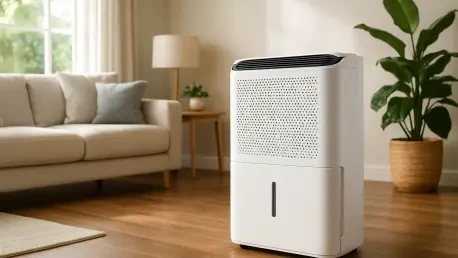

The persistent battle against musty odors, condensation-streaked windows, and a deep-seated chill that defies the thermostat is a familiar struggle for countless households, often accepted as an unchangeable reality of their living environment. For many, the source of these frustrations is an invisible adversary: excessive indoor humidity. This airborne moisture silently compromises comfort, damages property, and can even pose significant health risks. Consequently, a once-specialized appliance is rapidly emerging from the background to become a household essential, offering a powerful and direct solution to the pervasive problems created by damp air. Understanding its function and potential impact reveals why this simple machine could be one of the most transformative additions to a modern home.
Beyond the Damp What If the Air in Your Home Is Working Against You
Many homes harbor subtle yet persistent symptoms of an environmental imbalance. The faint, earthy smell that clings to fabrics in a closet, the frustrating film of moisture that appears on windows each morning, or a damp, heavy coldness in the air that no amount of heating seems to alleviate are all classic indicators of high relative humidity. These issues are not merely minor annoyances; they are signals that the indoor atmosphere is saturated with more water vapor than it can hold, leading to a cascade of undesirable effects that can degrade both the living space and the quality of life within it.
The rising popularity of dehumidifiers stems from their direct and effective approach to tackling these very problems at their source. By mechanically extracting excess moisture from the air, these devices do more than just dry a room; they fundamentally alter the indoor climate. This shift can eliminate the root cause of condensation, inhibit the growth of mold and mildew, and even make a home feel warmer and more comfortable without adjusting the thermostat. For this reason, what was once considered a niche gadget for basements or flood recovery is now being recognized as a versatile tool for everyday climate control and healthier living.
The Hidden Enemy Understanding the Pervasive Problem of Indoor Humidity
The problem of excess indoor moisture is surprisingly democratic, affecting both historic properties and brand-new constructions, albeit for different reasons. Older homes, often characterized by single-glazed windows, solid brick or stone walls, and less effective insulation, are classic victims of condensation. As temperatures fluctuate, the cool surfaces of walls and glass act as magnets for airborne moisture, leading to the familiar “weeping windows” and damp patches that can foster mold. In stark contrast, modern, energy-efficient homes present a paradox. Their airtight construction is excellent for retaining heat but also proves highly effective at trapping moisture generated from daily activities like cooking, showering, and even breathing. Without adequate ventilation, this trapped water vapor has nowhere to go, creating a humid indoor environment ripe for the same issues found in older, draftier houses.
Beyond the unpleasant smells and aesthetic damage, high indoor humidity poses unseen health dangers. One particularly telling case involved a homeowner who, after a period of unexplained respiratory illness, discovered a wall behind their bed’s headboard was entirely covered in black mold. This shocking find underscored a direct link between the damp, poorly ventilated environment and personal health. High humidity creates the ideal breeding ground for mold, mildew, dust mites, and other allergens. When these microorganisms proliferate, they release spores and particles into the air that can trigger allergic reactions, asthma attacks, and other respiratory complications, turning a home from a sanctuary into a source of chronic illness.
The Triple-Threat Solution How a Dehumidifier Wages War on Damp
One of the most immediate and visible victories a dehumidifier achieves is in the war on weeping windows. The science is straightforward: when warm, moist air comes into contact with a cooler surface, such as a windowpane in winter, the air’s temperature drops, reducing its ability to hold water vapor. This excess moisture then condenses into liquid droplets. A dehumidifier prevents this by actively lowering the overall relative humidity in the room to a target level, typically between 40% and 60%. By maintaining this balance, there is simply not enough excess moisture in the air to condense on cool surfaces, resulting in clear windows and drier walls, and providing a tangible, daily confirmation of a healthier home environment.
Perhaps the most celebrated benefit is the appliance’s ability to revolutionize indoor laundry drying. In climates where outdoor drying is impractical for much of the year, hanging clothes inside can take days to dry and often leaves them with a lingering musty odor caused by slow evaporation. A dehumidifier equipped with a dedicated laundry mode completely changes this dynamic. By drawing moist air through the damp clothes and expelling warm, dry air, it can dry a full load of laundry, including heavy items like jeans and towels, in a matter of hours. This process not only accelerates drying times dramatically but also eliminates the development of musty smells, ensuring fabrics emerge fresh and ready to wear overnight.
A surprising yet significant advantage of managing indoor humidity is its positive impact on heating costs. Damp, heavy air requires more energy to heat than dry air. By removing excess moisture, a dehumidifier makes the air feel warmer and more comfortable at a lower thermostat setting. This increased thermal efficiency means a home’s heating system can operate more effectively and economically. Furthermore, because the need to open windows for ventilation to reduce dampness is minimized, less heat is lost to the outdoors during colder months. The appliance itself also emits a small amount of warmth as a byproduct of its operation, contributing a modest but noticeable boost to the ambient temperature and helping to lower overall energy bills.
The Unvarnished Truth Acknowledging the Downsides and Debunking Myths
While highly effective, it is crucial to understand that a dehumidifier is a treatment for a symptom, not a cure for an underlying structural problem. It excels at removing excess airborne moisture, but it cannot repair a leaky pipe, a damaged roof, or blocked gutters that may be the root cause of dampness. If persistent damp patches or aggressive mold growth appear on walls or ceilings, these are signs that professional investigation is required. Using a dehumidifier in such cases can help manage the immediate indoor environment but should not be a substitute for addressing the foundational issue causing the water ingress.
It is also important to approach marketing claims with a degree of scientific skepticism. Manufacturers often promote their devices as capable of improving air quality by removing dust, allergens, and even mold spores from the atmosphere. While the filter will trap some airborne particulates, there is limited independent research to substantiate the claim that a dehumidifier can perform this function as effectively as a dedicated air purifier. An air purifier is specifically engineered with HEPA filters to capture microscopic particles, whereas a dehumidifier’s primary function is moisture removal. For households with significant concerns about allergens or air purity, a specialized air purifier remains the more appropriate and proven solution.
Finally, ownership comes with practical realities that must be considered. Dehumidifiers are not silent; compressor models typically produce a constant low-level hum between 40 and 50 decibels, comparable to a modern refrigerator. There is also the daily or semi-daily chore of emptying the water collection tank, which can be surprisingly heavy when full. These appliances are also bulky and weighty, making them awkward to move between rooms despite often having wheels. Coupled with the running costs associated with their energy consumption, these operational factors are an important part of the ownership experience that prospective buyers should anticipate.
A Practical Guide Is a Dehumidifier Right for You and Which One Should You Get
Before investing in a dehumidifier, the most crucial first step is to diagnose the problem. A simple and inexpensive tool called a hygrometer can provide an accurate measurement of the relative humidity levels in a home. This data-driven approach removes guesswork, confirming whether moisture levels are consistently above the recommended 60% threshold where problems like mold growth and condensation can occur. If the readings are consistently high, especially during cooler months, then a dehumidifier is likely a worthwhile investment. If levels are already within the ideal 40-60% range, the appliance may be unnecessary.
When selecting a model, several key features should guide the decision. The capacity of the unit, measured in liters of water it can extract per day (e.g., 25L), is paramount and should be matched to the size of the space and the severity of the humidity problem. For most homes, a unit with a smart humidistat that automatically turns the machine on and off to maintain a preset humidity level is an essential energy-saving feature. A dedicated laundry mode is invaluable for those planning to dry clothes indoors, while a quiet or night mode can make the device more tolerable for use in or near living areas and bedrooms.
Based on performance and user satisfaction, certain models have emerged as market leaders. For those in the United Kingdom and Europe, the MeacoDry Arete series is frequently recommended for its balance of efficiency, quiet operation, and thoughtful design, including its effective laundry mode. In the United States market, a comparable high-capacity option known for its performance and innovative design is the Midea Cube, which offers powerful moisture extraction suitable for larger spaces. Both brands offer smaller, more affordable versions for those with less demanding needs, ensuring there is a suitable option available for nearly any home environment.
The decision to introduce a dehumidifier into a home was often a turning point for those who had long battled the subtle but persistent effects of dampness. By addressing the root cause of condensation, musty odors, and inefficient heating, this single appliance proved its value far beyond its initial cost. The tangible results—from clear windows in the morning to laundry that dried overnight—offered a daily reminder of a healthier, more comfortable, and ultimately more pleasant living space. The journey from accepting a damp environment to actively managing it demonstrated that a seemingly simple gadget could indeed have a transformative effect.