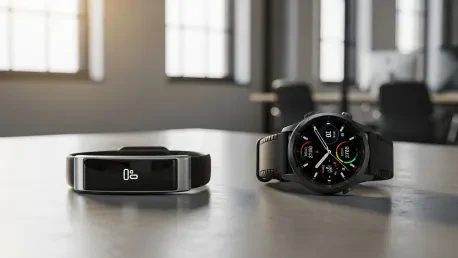

The decision of what to strap to your wrist has become increasingly complex as the once-clear boundary between single-purpose fitness bands and feature-rich smartwatches continues to dissolve. Choosing the right wearable is no longer a simple matter of activity tracking versus smartphone notifications; it’s about finding the precise balance of functionality, battery life, design, and cost that fits a specific lifestyle.
Understanding the Wearable Landscape
The wearable technology market has traditionally been divided into two distinct camps. Fitness trackers, exemplified by the popular Fitbit series and Garmin Vivosmart, carved out a niche by focusing on core health metrics like steps, sleep, and heart rate. Their primary appeal was simplicity, long battery life, and an accessible price point. In contrast, smartwatches such as the Apple Watch, Samsung Galaxy Watch, and high-end Garmin Fenix models were conceived as extensions of a smartphone. They offered robust notifications, third-party applications, mobile payments, and even cellular connectivity, bundling comprehensive health features into a more powerful package.
However, this clear distinction is rapidly fading. The evolution of the market is now defined by hybrid devices that merge the strengths of both categories. A prime example of this trend is the upcoming Huawei Band 11 Pro, a device that integrates traditionally smartwatch-exclusive features like integrated GPS and a premium aluminum frame. This shift signals a move toward a new class of wearable that offers advanced functionality without the typical smartwatch compromises on price and battery life.
Head-to-Head Feature Comparison
Design, Build, and Display
Historically, fitness trackers have been characterized by their utilitarian designs, often featuring lightweight plastic bodies and basic, functional displays. Smartwatches, conversely, have leaned into premium materials like stainless steel and titanium, boasting larger, more vibrant screens that mimic traditional watch aesthetics. The Huawei Band 11 Pro directly challenges this paradigm. It introduces a premium aluminum alloy frame with elegant curved edges, moving far beyond the expected build quality for a tracker and creating a more sophisticated look and feel.
Display technology is another area where the lines are blurring. While many trackers offer modest screens, the Huawei Band 11 Pro is equipped with a 1.62-inch AMOLED display that rivals what is found on many entry-level smartwatches. With a sharp 482 x 286 resolution and an exceptional peak brightness of 2,000 nits, it ensures outstanding visibility even in direct sunlight. Despite its more premium metal construction, the device remains incredibly light at just 14g, offering comfort that many bulkier smartwatches cannot match.
Core Health and Fitness Tracking
A critical differentiator for serious athletes has always been the presence of integrated GPS. Most smartwatches include this feature, allowing for accurate, phone-free tracking of runs, hikes, and bike rides. Fitness trackers have typically relied on a connected smartphone’s GPS to save on cost and battery. The Huawei Band 11 Pro disrupts this standard by incorporating its own built-in GPS, placing it in direct competition with more expensive smartwatches for users who demand precise workout data.
While both categories routinely include a standard suite of sensors for heart rate and SpO2 monitoring, the value often lies in the software’s ability to analyze and present this data meaningfully. Furthermore, durability is a key consideration for active users. Here again, the Band 11 Pro proves its mettle, offering 50-meter water resistance and an IP67 rating for dust and water protection. This level of ruggedness is on par with many smartwatches designed for swimming and other demanding activities.
Smart Features and Battery Life
Smartwatches maintain a clear advantage in deep software integration, offering access to extensive third-party app stores, LTE connectivity for true independence from a phone, and advanced notification management. However, advanced fitness trackers are closing the gap on core smart features. The Huawei Band 11 Pro, for instance, enables users to answer Bluetooth calls and send quick replies to text messages directly from their wrist—conveniences once exclusive to the smartwatch category.
Battery performance remains the most significant point of divergence. The powerful processors and bright displays in smartwatches often necessitate daily charging, a routine many users find inconvenient. Fitness trackers, in contrast, are celebrated for their endurance. The Huawei Band 11 Pro exemplifies this benefit, with its 300 mAh battery delivering up to 14 days of typical use on a single charge. This longevity, combined with its expected price point of $50 to $100, presents a compelling value proposition, offering advanced features at a fraction of the cost of a smartwatch that may cost three to five times more.
Real-World Use Cases and Limitations
For potential buyers, the choice between these devices hinges on practical trade-offs. The advantage of a fitness tracker is most apparent for users who prioritize core health metrics, exceptional battery life, and affordability above all else. A hybrid device like the Huawei Band 11 Pro is the perfect solution for someone who wants advanced, accurate workout tracking and basic smart conveniences without the daily charging demands or high cost of a full-fledged smartwatch.
Conversely, the smartwatch remains the superior choice for users seeking a true companion to their smartphone. The ability to install third-party apps—from navigation and music streaming to productivity tools—is a capability that even the most advanced fitness trackers lack. This absence of a robust app ecosystem is a significant limitation for a device like the Band 11 Pro when compared directly to the versatility of an Apple Watch or Galaxy Watch.
This leads to the hybrid dilemma. While devices like the Huawei Band 11 Pro offer immense value by packing premium features into an affordable package, they represent a compromise. They may not provide the polished, seamless software experience or the extensive app support of a dedicated smartwatch. The decision ultimately rests on whether a user prefers a focused, efficient health device with some smart perks or a powerful, versatile wrist-computer that requires more maintenance.
Final Verdict and Recommendations
The wearable market has evolved beyond a simple binary choice, with the primary trade-offs now revolving around battery life and price versus advanced smart features and app ecosystems. Advanced fitness trackers like the Huawei Band 11 Pro champion the former, while flagship smartwatches continue to dominate the latter.
Choose an advanced fitness tracker like the Huawei Band 11 Pro if your priorities are long battery life, core health monitoring with accurate, integrated GPS, and helpful smartwatch-like conveniences such as answering calls and sending quick replies, all at a highly accessible price point. It is the ideal device for the focused user who wants performance without complexity.
Choose a smartwatch like an Apple Watch or Samsung Galaxy Watch if you want a seamless extension of your smartphone on your wrist. If you value access to a vast library of third-party apps, utilize mobile payments frequently, and are willing to adopt a daily charging routine, a smartwatch offers a level of connectivity and versatility that a fitness tracker cannot match.