
The pursuit of sustainable energy has finally reached the human skin, transforming the warmth of a pulse into a consistent power source for wearable technology. Researchers from the Chinese Academy of Sciences have pioneered a material that bridges the gap between rigid industrial generators and the soft requirements of consumer electronics. This advancement centers on a specialized irregular, hierarchical-porous polymer, or IHP-TEP, which manages the difficult task of being both a thermal insulator and an electrical conductor.
By targeting the inefficiency of previous organic materials, this technology addresses the fundamental “figure of merit” challenge in thermoelectrics. Traditionally, materials that conduct electricity well also conduct heat, which quickly equalizes the temperature gradient necessary for power generation. This innovation represents a departure from that limitation, offering a pathway toward devices that never need a charging cable.
Fundamentals of Flexible Thermoelectric Technology
Thermoelectric technology operates on the Seebeck effect, where a temperature difference across a material creates an electric voltage. In the context of wearables, the human body acts as a constant heat source while the ambient air serves as the cold sink. The challenge has always been the low efficiency of polymers compared to heavy, toxic, and brittle inorganic counterparts like bismuth telluride.
This new polymer-based approach is revolutionary because it integrates seamlessly into the broader technological landscape of the Internet of Things. It moves beyond the laboratory by utilizing lightweight organic molecules that are inherently compatible with flexible substrates. By focusing on molecular-level control, the technology enables a continuous energy harvest from the thermal energy that humans naturally dissipate into the environment.
Structural Engineering of IHP-TEP Materials
Hierarchical-Porous Architecture and Thermal Insulation
The defining characteristic of the IHP-TEP material is its microscopic, sponge-like structure. This hierarchical-porous architecture is specifically designed to block phonons, which are the primary carriers of heat in solids. By creating a complex network of tiny gaps, the material traps thermal energy on one side, reducing thermal loss by a staggering 72% compared to non-porous films.
This insulation is critical because it maintains the temperature gradient required for electricity production even when the material is thin. Unlike bulky traditional insulators, this porous framework achieves high thermal resistance without sacrificing the slim profile necessary for a comfortable watch strap or a piece of smart clothing. It effectively decouple heat flow from the structural integrity of the device.
Molecular Packing and Charge Transport Optimization
While the pores block heat, the solid regions of the polymer are engineered for high-speed electrical transport. The confinement within these microscopic spaces forces the polymer molecules to pack into highly ordered, dense arrangements. This optimization of molecular alignment creates clear “highways” for electrical charges to move through the material with minimal resistance.
Recent tests indicate that this structural alignment has boosted charge mobility by over 25%. This dual-action design—where one part of the structure hinders heat while the other facilitates electricity—solves a long-standing engineering paradox. The result is a performance benchmark that significantly exceeds previous organic thermoelectric records, making the material a viable candidate for practical power applications.
Recent Advancements in Conversion Efficiency
The latest developments in IHP-TEP have pushed conversion efficiency to levels once thought impossible for pure polymers. By refining the spray-coating application process, engineers have ensured that the material maintains its performance even when applied to irregular, 3D-printed surfaces. This shift in manufacturing allows for the creation of complex energy-harvesting geometries that maximize skin contact.
Industry behavior is already shifting toward these “active” materials as the demand for medical biosensors grows. The ability to generate power from a mere few degrees of temperature difference allows for the continuous monitoring of vital signs without the bulk of a traditional lithium-ion battery. These efficiency gains suggest that the era of “dead” wearables—devices that stop working when the user forgets to charge them—is nearing its end.
Real-World Applications and Integration Methods
The versatility of this polymer allows for integration into sectors ranging from healthcare to sports science. For instance, medical patches utilizing IHP-TEP can power glucose monitors or EKG sensors indefinitely, using nothing but the patient’s body heat. In the consumer sector, smartwatches could see their operational life extended or their battery requirements reduced, leading to thinner and more ergonomic designs.
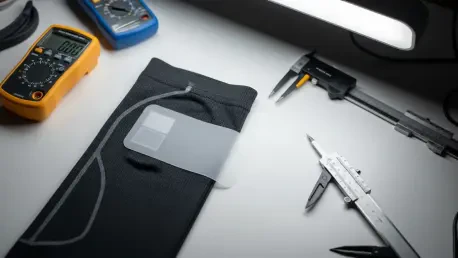
Integration is remarkably simple compared to traditional electronics. Because the material is a flexible polymer, it can be applied via spray-coating or industrial printing directly onto textiles. This makes it possible to turn an entire jacket or a compression sleeve into a distributed power plant. Such implementations are already being explored for military applications where reducing the weight of carried batteries is a tactical necessity.
Technical Hurdles and Scalability Constraints
Despite the impressive performance metrics, several hurdles remain before the technology achieves ubiquitous adoption. The long-term durability of the porous structure under repeated mechanical stress—such as the constant bending of a wrist—requires further validation. While the material is flexible, the micro-pores must remain intact to maintain their thermal insulation properties over years of daily use.
Furthermore, environmental factors like moisture and sweat can potentially degrade organic polymers over time. Protecting the active material with breathable yet waterproof encapsulants is an ongoing area of development. Scalability also faces the challenge of maintaining uniform pore distribution across large surface areas, which is essential for consistent power output in mass-produced smart garments.
Future Outlook for Self-Charging Wearables
The trajectory of this technology points toward a fundamental shift in how we perceive energy. In the coming years, we may see the total elimination of charging ports in low-power electronics. As conversion efficiencies continue to climb, even the small thermal gradient of a person resting in a cool room will be enough to maintain the functionality of advanced digital interfaces.
Breakthroughs in hybrid materials, combining these polymers with other organic conductors, could further increase power density. This would allow for more power-hungry features, such as high-brightness displays or cellular connectivity, to be supported entirely by ambient energy. The long-term impact will be a cleaner, more autonomous ecosystem of devices that exist as extensions of the human body.
Summary and Final Assessment
The development of IHP-TEP represented a pivotal moment in the evolution of flexible electronics. By mastering the delicate balance between thermal resistance and electrical conductivity, researchers provided a blueprint for truly autonomous wearable systems. The technology successfully demonstrated that organic materials could compete with traditional semiconductors in specialized applications.
The shift toward spray-coated, energy-harvesting polymers offered a scalable solution to the battery limitations that previously stifled the growth of the smart clothing industry. This review found that while structural durability remains a point for further refinement, the performance gains and ease of integration established a new standard for the field. Ultimately, the move toward self-charging systems reduced our reliance on the grid and paved the way for a more seamless integration of technology into daily life.