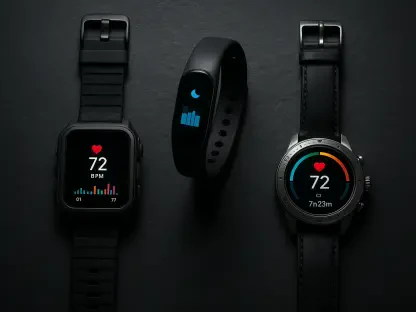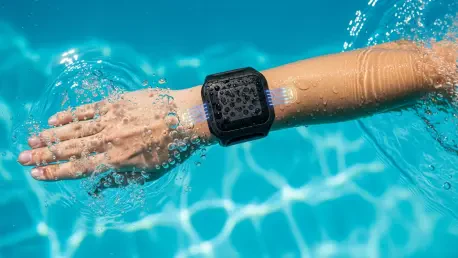

The landscape of competitive and recreational swimming has reached a pivotal juncture where the integration of biometric sensors and ruggedized materials allows for a level of performance analysis previously reserved for laboratory settings. As the distinction between general consumer electronics and professional-grade aquatic gear continues to blur, manufacturers are delivering sophisticated hardware capable of maintaining peak functionality in chemically treated or high-salinity environments. This shift is characterized by a move away from simple lap counting toward complex telemetry that captures stroke mechanics, physiological stress, and hydrodynamics in real-time. For the modern athlete, these advancements represent a significant departure from traditional training methods, offering a digital mirror that reflects every micro-adjustment made beneath the surface. The current market now provides a spectrum of choices ranging from heads-up displays in goggles to minimalist rings designed for continuous recovery monitoring, forcing swimmers to evaluate which data points are most critical to their progression.
Technical Standards: Understanding Ingress Protection and Pressure Ratings
Navigating the complexities of water resistance requires a comprehensive understanding of Ingress Protection (IP) and Atmosphere (ATM) ratings, which serve as the primary benchmarks for device durability. An IPX8 rating represents the standard for many modern gadgets, indicating that the internal circuitry is protected against continuous submersion in water deeper than one meter; however, this rating does not account for the dynamic pressure encountered during high-velocity swimming. In contrast, ATM ratings provide a more accurate measure of the physical force a device can withstand at specific depths, with 5ATM generally serving as the baseline for pool-based lap swimming. Professional-grade equipment frequently reaches 10ATM or higher, providing the necessary overhead for activities involving significant impact, such as platform diving or high-speed open-water sprints. Understanding these distinctions is paramount for athletes who require their hardware to remain operational under the varying pressures of a rigorous training cycle.
It is equally vital for users to acknowledge that water resistance is not a permanent state but a deteriorating quality that requires proactive management. The specialized seals, adhesives, and gaskets that create a watertight barrier are subject to natural degradation caused by exposure to ultraviolet light, extreme temperature fluctuations, and the caustic nature of swimming pool chemicals. Chlorine and salt water act as erosive agents that can eventually compromise the integrity of physical buttons and charging ports, leading to catastrophic failure if the device is not maintained properly. As these materials age over several years, their elasticity diminishes, making the hardware more susceptible to moisture intrusion. Consequently, a device that was rated for 50 meters of depth at the point of purchase may lose a significant portion of its protection after a year of heavy use in a chlorinated environment, necessitating regular inspections and adherence to manufacturer rinsing protocols to extend its operational lifespan.
Engineering Specialized Hardware: Real-Time Feedback and Mechanical Integrity
The Form Smart Swim 2 has redefined the training experience by embedding an augmented reality display directly into the lens of the goggles, providing swimmers with an unobstructed view of their live metrics. This innovation eliminates the need for an athlete to break their streamline position to check a wrist-mounted device, thereby maintaining the mechanical efficiency of each stroke. The onboard sensors utilize advanced algorithms to detect turns and stroke types with high precision, displaying pace and heart rate data in the user’s line of sight. While this technology offers a transformative advantage for pacing and interval training, it introduces specific ergonomic challenges, such as a slightly reduced field of peripheral vision. Additionally, the integrated nature of the display means that swimmers who require prescription lenses must often seek specialized third-party inserts, highlighting a gap in the current market for fully customizable high-tech eyewear.
For those operating in more demanding environments, the Garmin Descent G2 demonstrates a commitment to mechanical integrity through its use of inductive buttons. Standard physical buttons require openings in the watch case that serve as potential points of failure, but inductive technology uses magnetic sensors to detect a press through a completely sealed chassis. This design choice significantly reduces the risk of water ingress at high pressures, making it a preferred option for triathletes and deep-water divers who demand absolute reliability. The device excels at distinguishing between various swim styles, such as freestyle, breaststroke, and butterfly, while also offering dedicated logging for drill sets where arm movement might otherwise confuse a standard accelerometer. By combining professional-grade diving hardware with refined athletic tracking software, this approach provides a robust solution for those who transition between competitive pool environments and the unpredictable conditions of the open ocean.
Mainstream Integration: Versatility and Software Disparities
The Apple Watch Ultra 3 has solidified its position as a versatile tool for swimmers who require a device that functions seamlessly across both athletic and daily life contexts. Its specialized “Water Lock” feature is designed to disable touch sensitivity during a swim to prevent phantom taps caused by water droplets, ensuring that the workout tracking remains uninterrupted. Upon completion of a session, the device utilizes a high-frequency sonic vibration to physically eject trapped water from the speaker and microphone cavities, a mechanical process that preserves the longevity of the audio components. Beyond the pool, the inclusion of satellite connectivity provides an essential safety layer for open-water swimmers, allowing for emergency communication even when far from terrestrial cellular networks. This combination of specialized aquatic features and broad ecosystem integration makes it an appealing choice for athletes who prioritize multi-functional utility.
In contrast to the expansive feature sets of premium smartwatches, the Fitbit Charge 6 offers a minimalist alternative that focuses on core metrics within a compact form factor. Maintaining a 5ATM rating, it provides essential data such as lap counts, active zone minutes, and heart rate tracking without the bulk or price point of a high-end wearable. However, the experience for many users has been complicated by a shifting industry trend toward AI-driven coaching and summary-based metrics at the expense of raw data access. Recent software updates across the platform have prioritized simplified “readiness scores” and automated suggestions, which some dedicated athletes find less useful than the granular, uninterpreted logs required for professional analysis. This tension between user-friendly summaries and technical data transparency reflects a broader challenge in the wearables market, as companies seek to appeal to a general audience while maintaining the precision demanded by competitive swimmers.
Adaptive Strategies: Recovery Monitoring and Technical Maintenance
The Oura Ring represents a significant shift toward passive health monitoring, emphasizing the importance of what occurs outside the water as a primary driver of performance. With its durable 10ATM-rated titanium construction, the ring is capable of withstanding the rigors of competitive swimming, yet its primary value lies in its ability to track recovery through heart rate variability and sleep staging. By focusing on the body’s physiological response to training loads, the device provides insights into when a swimmer has reached a state of overtraining or when they are sufficiently rested for a maximal effort. This holistic perspective has gained substantial traction among elite competitors who recognize that the quality of their next session is dictated by the precision of their recovery. The transition toward these unobtrusive, long-term monitoring tools suggests a future where athletic gear is categorized less by its real-time feedback and more by its ability to provide a continuous narrative of the user’s health.
Athletes who achieved the most consistent results successfully integrated these diverse hardware options into a disciplined maintenance and data management strategy. They established a routine of rinsing their equipment in fresh water immediately after every session to prevent the crystallization of salt or the accumulation of chlorine on sensitive sensor windows. By prioritizing devices with inductive buttons or magnetic charging interfaces, they effectively minimized the most common points of mechanical failure associated with long-term aquatic use. Furthermore, many experienced swimmers navigated the complexities of subscription-based software models by utilizing third-party applications to export their raw data, ensuring they maintained a permanent record of their progress independent of changing corporate platforms. They also took the proactive step of replacing internal gaskets or seeking manufacturer refurbishments every twenty-four months to ensure that the water resistance of their primary tracking tools remained intact throughout their training cycles.