
In a striking display of investor confidence that underscores the transformative power of artificial intelligence in legacy industries, AI-native commercial insurance platform Nirvana Insurance has successfully closed a preemptive $100 million Series D financing round. This latest capital infusion, led by Valor Equity Partners with substantial continued support from existing investors Lightspeed Venture Partners and General Catalyst, has propelled the company’s valuation to an impressive $1.5 billion. The funding arrives on the heels of its Series C round, with its valuation nearly doubling in a short period, signaling powerful market traction and a deep conviction from the investment community that the company is fundamentally reshaping the commercial insurance landscape. At its core, this financial milestone is a testament to a technological approach that promises to bring precision, efficiency, and fairness to the high-stakes world of trucking insurance, an industry long overdue for a modern overhaul.
The Core of the Disruption
Overhauling an Antiquated Industry
For years, the commercial trucking industry has navigated a challenging landscape defined by an insurance model struggling to adapt to contemporary logistics and technological advancements. This system traditionally assesses risk by looking at historical averages rather than the immediate, dynamic realities of the road. Such reliance on outdated methodologies fostered a volatile market, marked by escalating premiums and a concerning rise in trucking company insolvencies. Legacy carriers, bound by long-standing practices, often employed broad pricing strategies that did not adequately distinguish between a fleet with an impeccable safety record and another with persistent problems. This inefficiency not only imposed unfair costs on safe operators but also fueled systemic instability. Nirvana Insurance identified this core weakness as a prime opportunity for disruption, setting out to substitute the industry’s subjective and frequently imprecise risk evaluations with an objective, data-driven framework that accurately mirrors the unique operational profile of every fleet.
The Power of Predictive Analytics
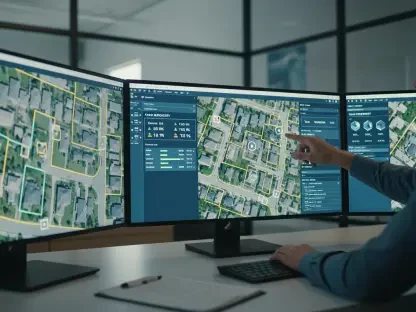
The engine driving Nirvana’s rapid ascent is its sophisticated, AI-powered operating system, a technology designed to bring modern data science to every facet of the insurance lifecycle. This platform leverages a continuous stream of real-time telematics and comprehensive fleet data, moving far beyond the static, historical information used by traditional insurers. The company’s predictive models are meticulously trained on an expansive dataset encompassing over 30 billion miles of fleet driving data, a scale that enables what the company terms “real-time intelligence.” This intelligence is applied across all core functions, including underwriting, pricing, and claims processing, allowing for a far more granular and accurate assessment of risk. By analyzing factors such as driving behavior, route conditions, vehicle health, and weather patterns in real-time, the system can anticipate potential issues and price policies with a level of precision previously unattainable in the commercial auto market. This proactive, data-centric approach is the foundation of its competitive edge.
Tangible Benefits and Future Horizons
From Data to Dollars
The transition from legacy methods to a data-first model delivers substantial and measurable benefits directly to trucking fleets. By using objective, real-time information to price risk, Nirvana can offer tangible incentives for safety and efficiency that are simply not possible under older underwriting paradigms. This translates into immediate advantages for its customers, including upfront safety discounts of up to 20%, which reward fleets for strong operational practices from day one. Furthermore, the AI-driven system dramatically accelerates the underwriting process, providing quotes and binding policies in a fraction of the time required by incumbent carriers. When incidents do occur, claims resolution is also expedited, as the platform’s rich data provides a clearer and more immediate picture of events. This starkly contrasts with the average-based, often slow-moving methodologies of traditional insurers, creating a value proposition centered on speed, accuracy, and fairness that resonates deeply within the trucking community.
A Vision for an AI-Powered Future
While customers reap significant rewards, Nirvana’s AI-powered strategy also generates powerful internal advantages that fuel its profitability and long-term vision. The precision of its predictive models results in superior, top-decile loss ratios, allowing the company to maintain more profitable underwriting in a notoriously difficult market. This financial strength, bolstered by the new $100 million in funding, is being strategically reinvested. The capital is earmarked for the continued development of its AI operating system and the expansion of its insurance solutions beyond its current offerings. Investors view the company not as an incremental improvement on an old system but as a “generational company” fundamentally rebuilding insurance for the AI era. They cite its flawless execution, proprietary data advantage, and profound machine learning expertise as the key drivers behind its success in solving deep-seated problems within a massive, data-rich legacy industry, setting the stage for future growth.
A New Blueprint for the Industry
Nirvana’s ascent to a $1.5 billion valuation was not merely a financial milestone; it was a validation of a new paradigm for the insurance sector. The company’s success demonstrated that by leveraging massive datasets and sophisticated machine learning, it was possible to move beyond the traditional, reactive model of risk management to a proactive, predictive one. This approach not only solved fundamental pain points within the trucking industry but also provided a blueprint for how other legacy sectors rich in data could be fundamentally rebuilt for the AI era. The flawless execution and deep technical expertise behind its operating system established a new competitive benchmark, proving that the future of insurance belonged to those who could turn real-time information into actionable intelligence and superior financial outcomes.