
The sudden evolution of wearable technology has reached a pivotal juncture where a wrist-worn device is no longer just a digital tether but a self-sufficient entity capable of making decisions. At the Google I/O 2026 conference, the tech giant unveiled Wear OS 7, an operating system that fundamentally redefines the relationship between humans and their hardware. This iteration moves beyond the era of static alerts, introducing a paradigm where the watch anticipates needs through proactive assistance. By embedding the Gemini agentic AI model directly into the core architecture, Google has transformed the smartwatch into a miniature supercomputer that manages real-world logistics without requiring a secondary screen. The initial launch is slated for the latter half of 2026, coinciding with flagship releases like the Pixel 5 and the Samsung Galaxy Watch 9 series. While these premier devices will showcase the software immediately, owners of hardware from brands like OnePlus or Xiaomi will face a staggered rollout into 2027. This phased approach highlights the ongoing challenge of fragmentation, but it also ensures that each manufacturer can tailor the sophisticated AI capabilities for optimal performance.
Evolution of Artificial Intelligence and Interface Design
Agentic Intelligence and Autonomous Workflows
The primary differentiator for Wear OS 7 lies in its transition from reactive commands to sophisticated agentic intelligence. Unlike previous iterations that relied on basic voice recognition to set timers or answer simple questions, the integrated Gemini model can process complex, multi-step tasks across various applications. For instance, if a user receives a confirmation for a dinner reservation, the agentic AI can automatically cross-reference digital grocery lists, suggest a ride-sharing service based on current traffic, and even adjust smart home thermostats before departure. This level of autonomy represents a departure from the traditional hub-and-spoke model where the smartphone acted as the primary brain. By processing these intents locally and securely, the operating system minimizes the cognitive load on the user. The result is a device that feels less like a gadget and more like a personal assistant that understands the context of a busy professional life without needing constant manual input or repetitive screen navigation.
Moreover, this autonomy extends to how the system handles communication and scheduling conflicts dynamically throughout the day. When a meeting is rescheduled, Wear OS 7 does not simply show a notification; it analyzes the impact on the user’s entire afternoon, suggesting window adjustments for workouts or commute times. This proactive nature is supported by the Gemini Intelligence engine, which has been fine-tuned to operate within the thermal and power constraints of a wearable form factor. Developers have focused on ensuring that the AI can anticipate user needs based on historical patterns and environmental cues, such as location or biometric stress levels. By automating the mundane tasks of digital life—like sorting through non-urgent emails or coordinating calendar invites—the software allows users to stay present in their physical surroundings. This shift effectively positions the smartwatch as the primary interface for the ambient computing era, where technology fades into the background while still remaining powerful and ready to act.
Dynamic Wear Widgets and Real-Time Interaction
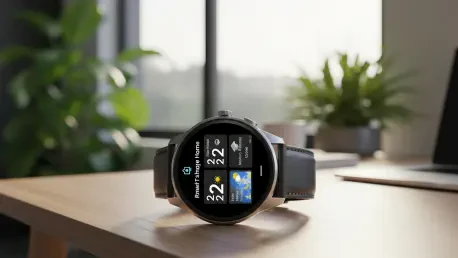
Accompanying the backend intelligence is a radical shift in how information is visualized, specifically through the replacement of the long-standing Tiles system with Wear Widgets. These new interface elements move away from the circular constraints of the past, offering more versatile 2×1 and 2×2 layouts that resemble the functionality of modern smartphone home screens. These widgets are designed to be data-rich and highly interactive, allowing users to control complex smart home scenes or view detailed weather maps without opening a full application. The flexibility of this design language ensures that developers can prioritize information density, making better use of the limited screen real estate available on modern watches. This visual overhaul is not merely aesthetic; it is a functional necessity to support the more complex data streams generated by the agentic AI. By providing a more modular layout, Wear OS 7 allows for a higher degree of personalization, ensuring that the most critical tools are always accessible.
In addition to the widget system, the introduction of Live Updates brings a new layer of persistence to the user experience. This feature allows the watch to maintain a constant, low-power display of time-sensitive information, such as the countdown for a rideshare arrival, live sports scores, or the remaining duration of a fitness interval. Previously, users had to navigate back to specific apps or wait for a notification to see these updates, which disrupted the flow of activity. With Wear OS 7, this information lives on the periphery of the watch face, updating in real-time while remaining unobtrusive. This persistence is crucial for a device that is meant to be checked in glances rather than studied for long periods. By integrating these live data streams directly into the core UI framework, Google ensures that the watch remains an effective tool for monitoring the world around the user. The synergy between interactive widgets and live status indicators creates a cohesive environment that reduces the friction in navigation.
System Standardization and Technical Optimization
The transition to Wear OS 7 marked a definitive moment when smartwatches transcended their origins as smartphone accessories to become truly autonomous digital companions. By centering the experience around agentic AI and standardized health metrics, the platform addressed the historical pain points of fragmentation and over-reliance on a secondary device. Users who adopted this new software found that their daily routines were significantly streamlined, as the Gemini model took over the logistical heavy lifting of scheduling and notification management. For developers, the shift necessitated a more disciplined approach to app design, focusing on the modularity of widgets rather than bloated full-screen applications. This evolution suggested that the future of wearable technology would be defined not by how much data it could show, but by how intelligently it could filter and act upon that data. Organizations looking to capitalize on this trend focused on integrating their services into the agentic workflow to remain relevant.
To maximize the potential of this ecosystem, manufacturers prioritized hardware that supported local AI processing to maintain privacy and speed. Consumers were encouraged to transition their most frequent digital tasks to the wrist, reducing overall screen time and fostering a more balanced relationship with technology. Developers began optimizing their backends to support the Live Updates framework, ensuring that users received instantaneous data without high power consumption. As the rollout continued into 2027, the focus shifted toward expanding these agentic capabilities to broader IoT environments, making the watch the central remote for a connected life. The industry recognized that success was no longer measured by hardware specifications alone, but by the seamlessness of the software’s proactive interventions. Moving forward, the blueprint established by this operating system served as the foundation for the next decade of ambient computing. This strategic shift ensured that wearables remained indispensable tools in a complex digital landscape.