
Maintaining a pristine home environment has historically required either significant manual labor or a substantial financial investment in high-end autonomous appliances. The introduction of the Eufy Omni C28 signals a shift in this paradigm by bringing advanced self-cleaning features to a price point previously reserved for basic suction-only devices. While premium models often prioritize artificial intelligence and extreme suction power, this unit focuses on the practical mechanics of floor maintenance through its unique rolling mop system. Unlike traditional designs that may drag a static cloth or use dual rotating pads, the integrated roller works to continuously refresh itself during operation. This mechanism aims to solve the common issue of cross-contamination where a dirty mop head simply spreads grime across different rooms. By prioritizing functional hygiene over expensive sensor arrays, the device challenges the notion that effective automated mopping is an exclusive luxury.
1. Evaluating Mechanical Performance and Maintenance Facilities
The core of the cleaning system relies on a pressurized roller mop that maintains constant contact with the floor surface to tackle stubborn stains. During testing on various debris types, the mechanical action demonstrated a capacity to lift moderate mud and dust, although some deeply set liquids like dried juice required multiple passes to fully clear. A significant advantage of this specific model is the automated base station, which features an integrated drying system to manage moisture levels after a cleaning cycle concludes. The presence of drying fans ensures that the roller does not develop unpleasant odors or bacterial growth, though the process generates a consistent low-frequency hum for several hours. This trade-off between noise and hygiene is a crucial consideration for users who prefer to operate the device while at home. Strategic placement of the docking station in laundry rooms or secondary hallways effectively mitigates the auditory impact while maintaining efficiency.
2. Implementing Advanced Navigation and Multi-Floor Management
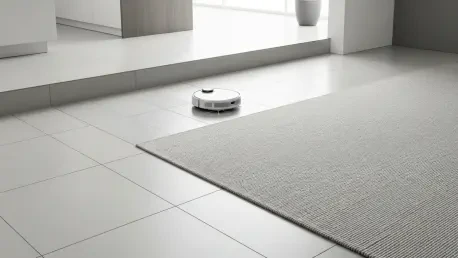
Software capabilities played a vital role in elevating the utility of the hardware beyond simple floor coverage. The system supported sophisticated multi-floor mapping, allowing the unit to store and switch between different environmental layouts without losing localized data. Users maximized this potential by manually relocating the device between levels and selecting the corresponding map within the control interface. This functionality provided a cost-effective solution for multi-story residences where purchasing multiple autonomous units was previously the only viable path. Future considerations for prospective owners involved prioritizing low-pile carpets, as the mop lifting mechanism functioned most reliably on shorter fibers to prevent dampness transfer. Integrating the vacuum into a pre-existing smart home ecosystem allowed for scheduled maintenance during work hours, which bypassed the noise of the self-drying phase. This strategic deployment ensured that the device delivered maximum value.