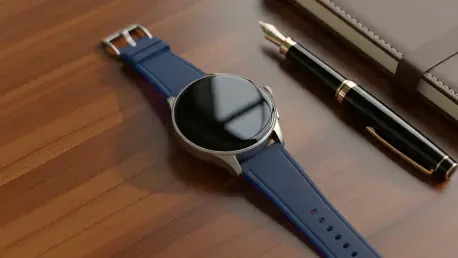

For many years, the wearable market forced consumers to choose between a gargantuan piece of wrist-worn hardware that looked like a miniature television or a slimmed-down tracker that lacked any real intelligence. This persistent design philosophy often left individuals with smaller wrists in a technological limbo, relegated to devices that sacrificed essential sensors for a more manageable diameter. Recent developments in the industry suggest a major correction is underway as manufacturers recognize that ergonomics should not dictate the ceiling of a device’s performance.
The anticipated arrival of the Oppo Watch X3 Mini represents a significant milestone in this evolution, moving away from the traditional “lite” branding that usually signals inferior hardware. While the flagship series is set for a mid-March debut, the specialized Mini variant is expected to follow shortly in April, specifically targeting those who demand high-end specifications in a refined, compact form factor. This pivot reflects a broader consumer trend toward subtle, integrated technology that complements personal style without overwhelming the physical presence of the wearer.
The Vanishing Act of the Bulky Wearable
The era of oversized smartwatches is slowly giving way to a more nuanced approach to industrial design. Historically, the challenge of fitting large batteries and complex sensor arrays led to the creation of bulky casings that felt more like experiments than accessories. However, as internal components became more efficient, the necessity for massive enclosures diminished, allowing for a more streamlined aesthetic that appealed to a wider demographic.
This shift is particularly evident among professional users who require a device that fits comfortably under a shirt cuff while maintaining a presence at high-level meetings. The transition away from cumbersome designs suggests that the industry is finally prioritizing user comfort over the sheer novelty of large screens. By focusing on a sleeker profile, manufacturers are proving that a wearable can be both a powerful tool and a discrete fashion statement.
Bridging the Gap: Size and Sophistication
The strategy behind the upcoming release cycle indicates a move toward hardware parity regardless of the physical dimensions of the watch. Unlike previous years where smaller models were stripped of advanced features like GPS or cellular connectivity, the current trend emphasizes a unified user experience across all sizes. This ensures that the Mini version remains a true flagship, offering the same level of sophistication as the standard model.
Moreover, the decision to launch the Mini slightly after the primary flagship suggests a focused marketing effort to highlight its unique positioning. By creating a dedicated space for the compact model, the manufacturer acknowledges that the small-wrist market is no longer a niche afterthought but a primary driver of growth. This approach bridges the gap between traditional horology, which has long mastered varied sizing, and modern silicon-driven technology.
Deconstructing the No-Compromise Compact Chassis
Achieving flagship performance in a downsized frame requires a sophisticated engineering approach, particularly concerning energy management. The expected implementation of a dual-chip architecture—pairing a high-performance Snapdragon W5 Gen 2 processor with a dedicated RTOS chip—allows the device to handle complex tasks without sacrificing longevity. This system effectively manages background health tracking, ensuring the smaller battery capacity does not become a daily inconvenience for the user.
In addition to internal efficiency, the use of premium materials like unibody titanium provides the structural integrity needed for a durable, swim-rated device. This construction ensures that the Mini designation applies only to the footprint and not to the ruggedness of the timepiece. Such a blend of high-end materials and intelligent power distribution sets a new benchmark for what a compact wearable can achieve in a competitive market.
Industry Insights: The Shift Toward Hardware Diversification
Market analysts on platforms like Weibo noted that this diversification mirrored successful trends in the smartphone industry, where “Pro” features migrated into smaller handsets. This shift allows consumers to select a device based on their physical comfort rather than technical limitations, a freedom that was previously unavailable in the smartwatch sector. By maintaining full feature sets, the industry effectively removed the barrier to entry for those who found previous flagship models too cumbersome.
Experts believed that this movement would force competitors to re-evaluate their own product tiers, likely leading to an increase in high-performance small watches across the board. The emphasis on health metrics and full smart functionality in a compact body reinforced the idea that the underlying technological platform must remain consistent. This trend signified a mature market where the focus shifted from what could be built to how it could best serve the individual.
Evaluating the X3 Mini for Your Daily Routine
Integrating a compact powerhouse into a daily schedule offered a glimpse into a more ergonomic future where technology felt truly personal. Users who prioritized a lighter, secure fit during physical activity discovered that a smaller watch provided the same depth of data as its larger counterparts without the added weight. This balance of form and function allowed for a seamless transition from the gym to professional environments, proving that a minimalist aesthetic did not require a sacrifice in utility.
The focus on dual-engine efficiency provided a reliable framework for multi-day health monitoring, even for those with demanding schedules. Moving forward, the industry signaled a clear path toward localized intelligence that respected physical proportions while delivering maximum power. The arrival of such devices encouraged a shift in consumer habits, where the choice of a wearable was finally dictated by personal preference rather than technical compromise.