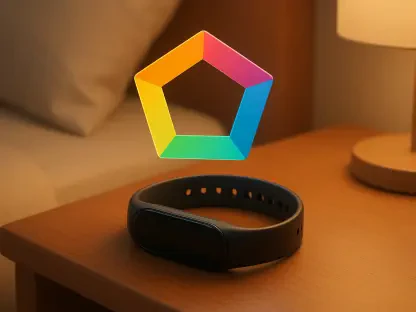

The incessant vibration of wrist-bound notifications has finally pushed many fitness enthusiasts to crave a digital detox that does not sacrifice their precious health data. The release of the Google Fitbit Air signals a radical departure from the traditional smartwatch trajectory, favoring a “disappearing” aesthetic over the notification-heavy displays of the past decade. By stripping away the screen, Google is betting on a demographic that values biometric accuracy and physical comfort above on-wrist utility, effectively rebranding the fitness tracker as a passive health sensor. This strategic pivot highlights a growing trend in the wearable industry where data collection becomes invisible, prompting a critical look at whether the convenience of a screenless life outweighs the loss of immediate feedback.
This exploration will delve into the hardware’s ergonomics, the integration of generative intelligence, and how this $99 device aims to disrupt the existing fitness landscape. For years, the market moved toward more pixels and brighter displays, but the fatigue associated with constant connectivity has created a vacuum. Google’s entry into the screenless arena suggests that the next phase of personal technology is not about more engagement, but about smarter, quieter background monitoring. This shift challenges the very definition of what a “wearable” should do, moving it from a secondary phone to a primary biological observer that stays out of the way.
The decision to omit the screen is as much about psychological well-being as it is about technical optimization. By removing the visual interface, the device encourages users to remain present in their physical surroundings rather than constantly checking a glowing glass rectangle for step counts or heart rate spikes. It reflects a maturing market where consumers are increasingly savvy about their digital habits and are looking for tools that support health goals without contributing to screen addiction. This transition marks the beginning of an era where technology serves as a silent partner in the pursuit of longevity and performance.
Analyzing the Intersection of Minimalist Design and Generative Intelligence
Prioritizing Physicality: The Comfort and Durability of Screen-Free Hardware
The most striking feature of the Fitbit Air is its focus on “set it and forget it” ergonomics, utilizing a sleek form factor that eliminates common failure points like cracked glass or scratched displays. Expert reviews highlight that by removing the screen, Google has optimized the device for high-intensity activities where bulkier watches often cause discomfort, such as weightlifting or contact sports. The low profile allows it to slide under athletic tape or sleeves without snagging, making it a favorite for those who find traditional smartwatches too cumbersome for their specific training regimens.
However, this minimalist approach introduces a significant point of debate: the “identity crisis” of a wrist-worn device that cannot tell the time. While the variety of performance bands ensures a customizable fit, the absence of a display forces users to re-evaluate their habitual relationship with their wrist, moving from active interaction to passive monitoring. Some testers noted that the instinct to glance at the wrist remains strong, leading to moments of frustration when the device offers only a blank surface in return. This design choice effectively filters the user base, attracting those who already wear a traditional timepiece or those who prefer no watch at all.
The Mobile Hub: Managing Health Data in the Google App-Centric Era
Because the Fitbit Air lacks a visual interface, the user experience shifts entirely to the Google Health mobile application, creating a centralized but dependent ecosystem. This transition represents a major industry shift toward “silent collectors”—devices that record data in the background while the smartphone serves as the exclusive dashboard for visualization and settings. While professional critics find the streamlined interface intuitive for long-term trend analysis, long-time Fitbit enthusiasts have raised concerns about the loss of real-time progress checks.
The risk here lies in the friction of needing a secondary device for even basic tasks, which challenges the assumption that less hardware always leads to a better user experience. For many, the convenience of a quick wrist glance is replaced by the multi-step process of unlocking a phone and navigating an app. Yet, for others, this separation is a benefit, as it prevents the constant anxiety of micro-monitoring stats throughout the day. The app-centric model forces a more deliberate engagement with one’s health data, often leading to more meaningful interpretations of the recorded metrics during dedicated review sessions.
Gemini at the Helm: Personalized Insights via Generative AI Integration
A disruptive innovation within the Fitbit Air is the inclusion of an AI coach powered by Google’s Gemini technology, designed to replace static reports with conversational health guidance. This feature allows users to log complex data—like nutrition or sleep quality—through natural language processing, significantly reducing the manual effort typically required for health maintenance. Users can simply speak to their phone to log a meal or describe their energy levels, and the AI integrates this qualitative data with the biometric readings from the sensor.
Despite its forward-thinking potential, early adopters note that the AI remains a work-in-progress, with occasional bugs and sensitivities regarding complex health topics. This shift toward “AI-first” fitness suggests a future where wearables are less about tracking steps and more about providing a personalized, narrative understanding of one’s biometric data. The coaching aspect aims to bridge the gap between “what” is happening to the body and “why” it is happening, offering suggestions for recovery or intensity adjustments based on the holistic data set.
A High-Value Challenger: Positioning the Fitbit Air Against Premium Competitors
When placed alongside screenless incumbents like the Whoop tracker, the Fitbit Air emerges as a high-value alternative that leverages the broader Google ecosystem to lower the barrier to entry. While it offers a more accessible price point for both hardware and annual subscriptions, it faces competitive hurdles regarding battery life, averaging about half the duration of its more expensive rivals. The financial commitment is significantly lower, making professional-grade tracking accessible to a wider audience that might have been intimidated by the high recurring costs of boutique fitness brands.
This comparative analysis reveals a strategic play by Google to capture the “data-focused athlete” market, offering a sophisticated sensor for those who already wear a traditional watch on their opposite wrist. The success of this experiment hinges on whether the deep integration with Google AI Pro can overshadow the device’s functional trade-offs and shorter charging cycles. While competitors may offer longer endurance, the Fitbit Air provides a seamless connection to the productivity and health tools many users already use daily, creating a compelling case for ecosystem loyalty.
Critical Takeaways: Determining the Ideal Use Case for Minimalist Wearables
The Fitbit Air is not a universal replacement for the smartwatch but rather a specialized tool for those who find traditional screens distracting or uncomfortable. For the best experience, users should leverage the AI coach for nutrition logging and prioritize the device for sleep and high-intensity recovery tracking where its low profile is most advantageous. It is highly recommended for “double-wristing” enthusiasts—people who want health data but prefer the aesthetics of a mechanical watch. By treating the device as a dedicated sensor rather than a timekeeper, users can maximize its benefits without feeling the lack of a display.
To maximize the value of the device, users should embrace the Google Health app’s predictive insights while acknowledging that the lack of a clock is a permanent, intentional design constraint. Success with the Fitbit Air requires a mindset shift from active checking to reflective analysis. It is an ideal choice for athletes who prioritize durability over features like music control or wrist-based messaging. Ultimately, the device finds its strength in its limitations, providing a focused environment where the only priority is the accurate measurement and interpretation of the human body’s signals.
The Verdict on Disappearing Tech: Shaping the Next Chapter of Wellness
The Google Fitbit Air served as a bold experiment in the evolution of personal health monitoring, proving that high-level biometric tracking did not require a glowing screen. Its reception highlighted an ongoing shift toward “ambient technology,” where the most powerful tools were the ones that became part of the background. As generative AI continued to refine how people interpreted their body’s signals, the screenless model became a viable standard for those seeking a distraction-free lifestyle. The device effectively moved the needle from active gadgetry to meaningful health intelligence, showing that less could indeed be more.
Future iterations will likely focus on extending the battery life and further refining the conversational accuracy of the AI coach. For those looking to adopt this technology, the focus should remain on long-term data trends rather than immediate gratification. The experiment demonstrated that when the screen disappeared, the quality of the data and the intelligence of the insights became the primary metrics of success. This shift prepared the market for a new era of wellness where the hardware was nearly invisible, but the impact on lifestyle was more profound than ever before. Owners of the device found that their relationship with health became more private and more intentional. Progress in this space will inevitably depend on how well these “invisible” tools can provide actionable advice without demanding constant attention.