
The escalating costs of home insurance premiums have become a significant financial pressure for homeowners, often viewed as a necessary but ever-increasing expense with little room for negotiation. Many have invested in smart home technology for convenience and security, yet the return on that investment has largely been measured in comfort rather than concrete financial savings. However, a fundamental shift is underway, transforming these connected devices from simple lifestyle enhancements into powerful tools for proactive risk management, creating a new dynamic where a safer home directly translates into a more affordable one. This evolution is not a distant concept but a present-day reality, driven by innovative collaborations that are reshaping the core principles of the insurance industry itself.
The New Model of Proactive Insurance
From Reaction to Prevention
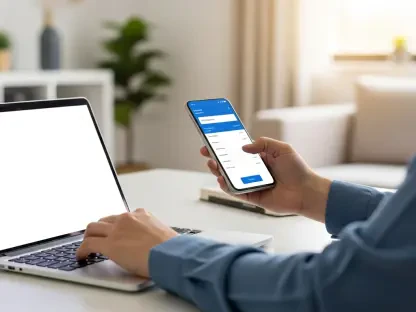
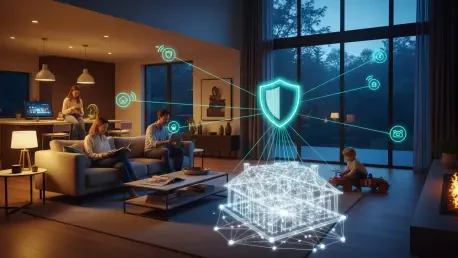
The traditional relationship between a homeowner and their insurance provider has long been a reactive one, centered almost entirely on the aftermath of an unfortunate event like a fire or a flood. The new “Smart Home Savings” service, a collaboration between Samsung Electronics and Hartford Steam Boiler (HSB), fundamentally upends this paradigm. By leveraging Samsung’s SmartThings platform, the program creates a direct data link between connected home appliances and participating insurance carriers. Homeowners can voluntarily opt into this service at no cost through the SmartThings application, granting permission for specific data about the protective functions of their devices to be shared. For instance, a smart washing machine equipped with a leak sensor can detect the earliest signs of a water line failure and immediately report it. This single piece of data transforms the home’s risk profile from an unknown variable into a known, managed entity. Insurers, armed with this real-time information, can more accurately assess risk and, in turn, offer policy credits that result in tangible premium reductions for the consumer, marking a significant transition from a model of compensation to one of prevention.
Validating the Concept Through Pilot Success
The theoretical benefits of a data-driven insurance model were put to the test in a successful pilot program conducted with major insurance carriers in Florida during 2025. This real-world trial was crucial in demonstrating that the integration of smart home data could produce meaningful and consistent premium reductions for participating homeowners. The success of the pilot served as a powerful proof of concept, confirming that consumers were willing to share specific, non-invasive device data in exchange for lower insurance costs and that the data itself was valuable enough for insurers to justify the discounts. This validation provided the necessary momentum for a broader rollout, with Samsung and HSB now expanding the program to additional states across the U.S. Furthermore, the positive results have catalyzed plans for an ambitious global expansion, with a launch in Europe and other international markets scheduled for later this year. This strategic, phased approach, built on a foundation of proven success, ensures that the model is both stable and scalable as it enters new markets and engages with a wider array of insurance partners and consumer demographics.
Building an Open and Scalable Ecosystem
Fostering Industry-Wide Adoption
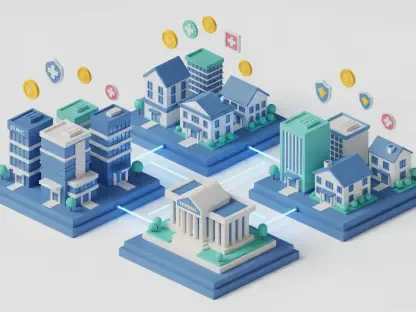
A critical component of the initiative’s long-term vision is its commitment to an open and scalable framework, designed to avoid the pitfalls of a closed, proprietary system. The service architecture is built in alignment with the Home Connectivity Alliance (HCA) Insurance Interface Specification, a standardized protocol that creates a level playing field for the entire industry. By making this specification publicly available, the program establishes a pro-competitive model that invites any U.S. insurance company to participate. This open-door policy is designed to accelerate innovation and foster healthy competition, which ultimately benefits the end consumer. As more insurers join the ecosystem, homeowners will have a greater choice of providers offering smart home discounts. This approach also encourages other smart-home brands to integrate with the platform, creating a virtuous cycle where a growing number of compatible devices leads to more comprehensive home monitoring, more accurate risk data for insurers, and greater potential savings for consumers. The emphasis on an open standard is a strategic decision to ensure the model’s longevity and relevance in a rapidly evolving market.
A Paradigm Shift Solidified
The successful integration of smart home data into insurance underwriting represented a pivotal change in how risk was assessed and managed. By providing a direct financial incentive, the program effectively bridged the gap between the perceived value of smart technology and its practical application in home safety. This model moved beyond simply rewarding homeowners for owning safety devices; it created a dynamic partnership where the home itself actively participated in its own protection. The data shared from connected appliances provided insurers with an unprecedented, near real-time view of a property’s risk level, allowing for a more nuanced and fair pricing structure. Homeowners, in turn, were empowered to take control of their insurance costs through the technology they already used daily. This symbiotic relationship fostered a new standard, solidifying the idea that a connected home was not just a smarter home, but a fundamentally safer and more financially sound one.