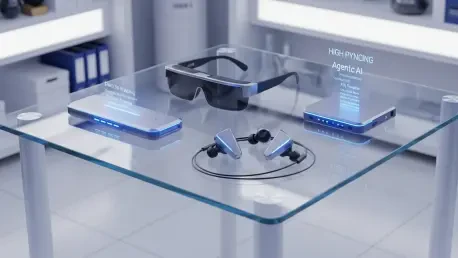

The 2026 Mobile World Congress in Barcelona officially signaled the sunset of the smartphone-centric era as manufacturers collectively pivoted toward a future defined by ambient intelligence and high-performance wearable ecosystems. For more than a decade, the mobile industry revolved around the iterative improvement of the handheld slab, but the demonstrations on the show floor this year suggest that the primary computing hub has finally begun its migration from the pocket to the wrist, the ears, and the face. This transition is not merely a change in form factor but a fundamental reimagining of how humans interact with digital information through devices that are always on and always sensing. By integrating agentic artificial intelligence directly into the hardware we wear, the industry is moving away from reactive tools that require manual input toward proactive assistants that understand environmental context in real time. The sheer density of innovation seen at the Fira Gran Via underscores a mature approach where the experimental concepts of previous years have been replaced by robust, infrastructure-heavy solutions ready for mass adoption. This shift toward a “body-first” computing paradigm represents the most significant architectural change in consumer electronics since the original launch of the modern smartphone. As the boundaries between the physical and digital worlds continue to blur, the focus has shifted toward creating a seamless, invisible layer of technology that enhances human capability without demanding constant attention.
A New Foundation: The Shift in Wearable Silicon
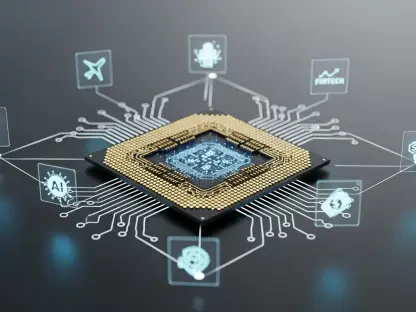
The technological cornerstone of this new era is the Snapdragon Wear Elite chipset, an architectural reset by Qualcomm that addresses the chronic limitations of previous wearable platforms. By moving to a sophisticated 3nm manufacturing process, this new silicon has finally overcome the thermal management and energy consumption hurdles that have historically restricted the power of smartwatches and smart glasses. This advancement is not just about raw speed; it is about the efficiency required to maintain a high-performance state within the tight physical constraints of a wrist-worn device. The new architecture provides a massive leap in processing capabilities, allowing for more complex sensor fusion and higher-resolution displays without compromising the multi-day battery life that consumers now demand. This foundation ensures that the next generation of devices can handle the rigorous demands of continuous health monitoring and real-time data processing, effectively turning the wearable into a localized powerhouse that no longer needs to offload every task to a paired smartphone. The 3nm node allows for a 500% increase in computational density, providing the headroom necessary for the sophisticated software environments that are currently defining the market from 2026 to 2028.
Beyond mere performance metrics, the inclusion of a dedicated Neural Processing Unit (NPU) within the silicon signifies a pivot toward what industry leaders are calling the “Ecosystem of You.” This local AI engine allows wearables to run billion-parameter models directly on the device, ensuring that personal data remains private and that responses are instantaneous rather than dependent on cloud latency. This move toward on-device intelligence is critical for the development of agentic AI, where the device can anticipate user needs based on biometric markers and environmental cues. Instead of acting as a secondary screen for notifications, the smartwatch has evolved into an independent AI engine capable of deep contextual understanding and autonomous decision-making. This technological shift is a departure from the “companion device” philosophy, positioning wearables as the central intelligence hub for a user’s digital life. As these devices become more autonomous, the reliance on high-bandwidth, low-latency local processing becomes the defining competitive advantage for hardware manufacturers. The result is a more responsive and secure user experience that feels less like a gadget and more like a cognitive extension of the individual.
The Evolution: Intelligent Audio and Real-Time Translation
The audio segment at the congress demonstrated that earbuds have transcended their original purpose as music delivery systems to become essential interfaces for persistent AI interaction. Samsung’s latest hardware departure, featuring a refined “blade” design and a premium brushed-metal finish, highlights a trend where aesthetics are finally catching up with advanced functionality. The integration of intuitive head gestures allows users to navigate digital interfaces hands-free, such as nodding to accept a call or shaking the head to dismiss a notification, which is particularly useful in active or professional environments. Furthermore, the inclusion of native, real-time interpreter modes supporting dozens of languages suggests that the ear is the most logical site for the “universal translator” concept to take root. This vision-first approach to audio hardware emphasizes the role of the ear as a persistent, low-friction gateway to digital assistants like Gemini, which can now provide whispered contextual information without the user ever needing to look at a screen. This seamless integration of voice and gesture marks a significant milestone in making technology feel more natural and less intrusive in social situations.
Democratization was a major theme in the audio space, with companies like Motorola and Bose collaborating to bring high-end AI noise filtering and premium sound tuning to more accessible price points. The focus has moved toward “CrystalTalk AI,” a technology that utilizes aggressive neural filtering to isolate human speech from chaotic urban environments, ensuring that voice commands and calls remain clear regardless of external conditions. Meanwhile, specialized hardware like the TimeKettle W4 has solved the long-standing problem of translation accuracy in loud spaces by employing AI bone-conduction pickups. By capturing vibrations directly from the user’s vocal cords, these devices bypass ambient noise entirely, providing professional-grade accuracy for cross-lingual communication. This shift indicates a broad industry consensus that language translation and voice clarity are the definitive “killer apps” for the wearable sector. As these technologies become standard across various price tiers from 2026 to 2028, the barriers to global communication are being dismantled by hardware that fits comfortably in a pocket or an ear. The sophistication of these audio interfaces is turning the simple act of wearing earbuds into a continuous, augmented experience of the surrounding world.
Performance vs Utility: The Smartwatch Paradox
The smartwatch market is currently navigating a complex tension between providing elite sports performance and maintaining the general-purpose utility of a modern operating system. High-performance models like the Huawei GT Runner 2 push the boundaries of materials science, utilizing titanium alloys and ultra-bright 3,000-nit displays to ensure legibility and durability in extreme outdoor conditions. These devices are increasingly targeting the professional athlete demographic with specialized features like “Marathon Mode,” which offers real-time pacing and physiological insights. However, the hardware excellence of these specialized trackers often runs into the limitations of proprietary software ecosystems, which struggle to provide the same level of third-party app integration found in more open platforms. This divide creates a distinct choice for consumers: a highly durable, long-lasting sports tool or a more versatile, app-rich digital assistant. The challenge for manufacturers in the coming years will be to bridge this gap, creating hardware that is rugged enough for a mountain peak but software-capable enough for a boardroom. This evolution is driving a rapid improvement in how biometric data is interpreted, moving from simple step counting to complex recovery and readiness modeling.
Conversely, the resurgence of the Wear OS ecosystem, led by the Xiaomi Watch 5, demonstrates a renewed focus on battery innovation and novel human-machine interfaces. By adopting silicon-carbon battery chemistry, manufacturers are now achieving nearly three weeks of usage in power-saving modes, effectively neutralizing the “battery anxiety” that once plagued the smartwatch category. Perhaps more revolutionary is the introduction of electromyography (EMG) gesture controls, which detect the electrical signals traveling through the wrist to the hand. This allows a user to trigger specific AI functions or navigate menus through simple finger snaps or pinches, providing a discreet way to interact with technology without touching a screen or speaking aloud. This level of integration represents a move toward more intuitive control schemes that leverage the body’s own electrical system to interface with the digital world. By combining these advanced controls with deep integration into AI platforms, the modern smartwatch is becoming a sophisticated input device that can control everything from smart home systems to virtual workspaces. The focus remains on reducing the friction between human intent and machine execution, making the smartwatch a truly indispensable part of the user’s physical presence.
The Visionary Path: Practical Augmented Reality
Vision-based wearables at the 2026 congress occupied the critical space between high-concept prototypes and commercially viable consumer goods. Google’s latest foray into smart glasses suggests a future where augmented reality is indistinguishable from traditional eyewear, moving away from the bulky, tech-heavy aesthetics of the past. By partnering with established lifestyle and fashion brands, the tech industry has acknowledged that social acceptance is the primary hurdle for head-worn devices. These glasses are designed to be worn all day, providing a subtle heads-up display for navigation, notifications, and AI-driven object recognition without overwhelming the user’s field of vision. This “information-first” philosophy focuses on enhancing the real world rather than replacing it, offering a more practical utility for the average consumer. The emphasis is on lightweight frames and high-quality optics that can support prescription lenses, ensuring that the technology serves the user’s existing needs rather than demanding a change in lifestyle. This approach reflects a mature understanding of the market, where the goal is to provide a helpful digital layer that complements daily activities.
In the more immersive segment of the market, devices like the RayNeo Air 4 Pro are redefining the concept of a portable workspace by offering high-fidelity virtual displays that mimic a 200-inch screen. These “screen-on-face” solutions are increasingly popular among mobile professionals and gamers who require a massive visual area without the physical bulk of traditional monitors. While not fully autonomous AR headsets, these glasses function as ultra-lightweight peripherals that can connect to laptops, phones, or gaming consoles, providing a private and immersive viewing experience. The industry is also seeing the rise of monocular designs, such as those from Xgimi’s MemoMind brand, which prioritize simple notifications and AI summarization for users on the move. These devices represent a strategic pivot toward “lite” AR, where the hardware is optimized for specific tasks like reading text or following directions rather than complex 3D gaming. By focusing on low latency, high brightness, and ergonomic comfort, manufacturers are preparing the ground for a wider adoption of vision tech from 2026 onward. The trend is clear: the most successful vision wearables will be those that prioritize utility and style, making the transition to a glass-based interface feel like a natural evolution of the modern wardrobe.
Invisible Technology: The Medical and Biological Frontier
The most forward-looking developments at the congress centered on the advancement of smart contact lens technology, which promises to make wearable tech almost entirely invisible. Companies like Xpanceo have moved beyond the laboratory stage to demonstrate integrated lenses that house microdisplays, wireless power components, and advanced biosensors within a single biocompatible layer. These devices are no longer just science fiction; they are becoming viable medical tools, particularly for the management of chronic conditions like glaucoma. By providing continuous intraocular pressure monitoring and transmitting the data to a smartphone, these lenses can replace invasive clinical tests with a simple, non-stop sensing solution. This represents a broader shift toward “bio-integrated” technology, where the device becomes a part of the user’s physical biology to provide real-time health insights that were previously impossible to obtain outside of a hospital. The move toward this invisible frontier suggests that the ultimate goal of the wearable industry is to remove the “device” from the equation entirely, leaving only the benefits of constant connectivity and monitoring.
The road ahead for these biological wearables involves navigating complex regulatory landscapes and ensuring long-term safety for the wearer, yet the progress shown in 2026 indicates that public availability is a near-term reality. As the industry moves from 2026 toward 2028, the focus will likely shift from purely medical applications to general consumer features, such as basic navigation overlays or notification pings delivered directly to the eye. This convergence of healthcare and consumer electronics creates a new paradigm where the “quantified self” is not just a collection of step counts but a deep, real-time understanding of internal physiology. The integration of AI into these biological sensors will allow for predictive health alerts, where a lens might detect the early signs of a medical issue before the user feels any symptoms. In conclusion, the hardware and software strategies established at this year’s congress have set a definitive course for the industry. The transition from pocket-bound gadgets to body-integrated intelligence is well underway, and the next few years will see these technologies move from the halls of Barcelona to the daily lives of millions. The primary takeaway for developers and consumers alike was that the era of “using” technology is being replaced by an era of “wearing” intelligence, forever changing the human relationship with the digital world.