
Simon Glairy is a recognized expert in the fields of insurance and Insurtech, with a specialized focus on risk management and AI-driven risk assessment. With residential power solutions becoming more sophisticated, he offers a deep dive into the practicalities and benefits of integrating high-capacity battery systems into a modern household to ensure both efficiency and resilience.
The discussion covers the critical infrastructure upgrades required for home storage, the nuances of selecting a resilient battery system, and the financial impact of leveraging off-peak energy tariffs to slash utility costs.
When preparing a home for a high-capacity battery, what specific electrical panel and infrastructure upgrades should a homeowner anticipate to ensure everything runs safely and efficiently?
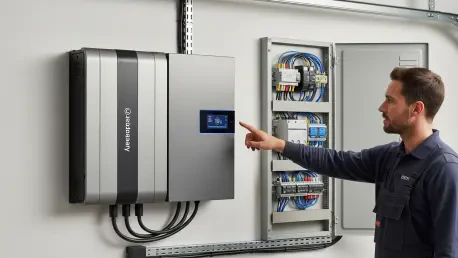
You have to look at your electrical foundation because a battery isn’t just another appliance; it’s a major power hub. In many cases, you will need to upgrade your wiring and the main electrical panel to handle the increased load, especially if you are also running an EV charger or a heat pump. For my own setup, I had to secure permission from the local distribution network operator to install a new cut-out with a significantly larger fuse. While the utility company often handles this upgrade for free, the paperwork can be a waiting game, so having a professional installer manage that liaison is a lifesaver. It’s about more than just wires; it’s about ensuring your home’s heart can handle the pulse of modern energy demands without missing a beat.
The installation process involves more than just plugging in a device, so what should people look for when selecting a professional team and deciding where to physically place these heavy units?
Finding the right team is paramount, so I always suggest shopping around for multiple quotes and scrutinizing reviews before committing to a provider like the Greener Energy Group. During the initial site visit, a good installer will walk you through the logistics, such as running heavy-duty cables from the unit back to your main fuse board. While many modern systems like the EcoFlow PowerOcean are rugged and weatherproof for outdoor placement, I chose to tuck mine away in the garage to keep it sheltered. These units are surprisingly slim at just 188 millimeters deep—about 7.5 inches—making them unobtrusive even in tight spaces. You also have to consider temperature; while this model includes internal heating for freezing winters, a garage or basement provides a more stable environment for long-term battery health.
With so many energy storage options on the market, what specific features or technical specifications should a homeowner prioritize to future-proof their investment?
I look for longevity and flexibility, which is why a 15-year warranty is such a compelling safety net for any homeowner. The EcoFlow system really shines because of its modularity, allowing you to expand storage capacity up to a massive 45 kWh as your family’s needs grow. I initially installed a 6-kW hybrid inverter along with two 5-kWh battery packs, keeping an eye on adding solar panels down the road. In hindsight, I realized that starting with three or four battery units would have been even better to fully capture the potential of the system. It’s a sleek, metallic gray piece of tech that doesn’t just look good; it provides the peace of mind that you can scale up without replacing the entire core infrastructure.
Once the system is live, how does it actually change the way a household consumes energy, and what kind of financial impact can a family realistically expect?
The real magic happens when you sync the battery with a smart energy tariff, like the Intelligent Octopus Go plan I use. I’ve configured the system to gulp down cheap electricity between 11:30 pm and 5:30 am, then it begins discharging the moment the rates spike at 5:31 am. For a family of four where I’m working from home all day, this shift in consumption habits is transformative. It’s incredibly satisfying to watch the smartphone app and see the house running entirely on stored, low-cost power during peak hours. By strategically managing these windows, I’ve managed to cut my electricity bill in half, turning a massive monthly expense into a much more manageable figure.
What is your forecast for the future of residential energy storage?
I believe we are moving toward a reality where every home acts as its own miniature power plant, seamlessly integrating storage with renewable sources like solar. As battery chemistry improves and modular systems become the standard, we will see these units becoming as common as a water heater or a furnace. The financial incentives will only grow as utility grids become more volatile, making self-sufficiency the ultimate goal for the modern homeowner. We are on the cusp of a total democratization of energy, where the consumer finally has the tools to dictate their own costs and carbon footprint.