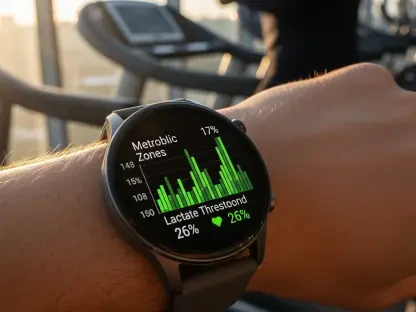

With us today is Simon Glairy, a leading voice in wearable technology and Insurtech, whose work focuses on how these devices are reshaping our understanding of personal health and risk. We’ll be exploring the key trends from the past year, from rings that double as clinical companions and smartwatches that measure your diet, to the AI coaches that are changing how we train and even the exoskeletons that are augmenting human ability. Simon will help us understand the practical implications of these innovations, the strategic thinking behind the industry’s biggest players, and what these advancements mean for the everyday user.
The Oura Ring 4 now integrates blood test results and glucose data. How does this shift a device from a wellness tracker to a clinical companion, and what are the practical implications for users managing their health? Please share a specific user scenario.
That’s the pivotal evolution we saw in 2025. A device shifts from wellness to clinical when it moves from simply tracking your activity to providing proactive, medically relevant insights. The Oura Ring 4 accomplished this by creating a direct bridge between your daily biometrics and your internal biochemistry. It’s no longer just about sleep stages; it’s about context. The integration with Dexcom, for example, allows someone with diabetes or pre-diabetes to see the immediate, second-by-second impact of their sleep quality or a stressful day on their glucose levels. It transforms the data from a passive log into a powerful feedback loop. Imagine a user who feels constantly run down. Instead of just guessing, they can now use the Health Panels feature directly in the app to book a blood test. When the results come back, the platform can correlate their low iron levels with the fatigue and poor recovery scores it has been flagging for weeks through its Symptom Radar, providing a complete, actionable picture of their health that a simple step counter never could.
Whoop 5.0 and the Garmin Index Sleep Monitor both offer screenless tracking for those who dislike wearing watches. How do their core philosophies differ, and for which specific user profiles would you recommend one over the other? Please detail the key trade-offs.
They solve a similar problem with fundamentally different philosophies. Whoop’s approach is holistic and all-encompassing. It’s a self-contained ecosystem designed to be your primary 24/7 health monitor. With its focus on Healthspan and calculating a “Biological Age,” its goal is to provide a long-term, comprehensive view of your life. I’d recommend Whoop 5.0 to a data-driven individual who is committed to a subscription, hates wearing a watch at any time, and wants a single platform to analyze everything from sleep to strain, complete with medical-grade ECG and blood pressure insights. The trade-off is that you’re buying into their entire system.
The Garmin Index Sleep Monitor, on the other hand, is a specialist, a problem-solver within an existing universe. Its philosophy is supplemental. It acknowledges that many people love their powerful, feature-packed Garmin watches during the day but find them too chunky to wear to bed. So, it’s designed for the dedicated Garmin athlete who wants the most comfortable and accurate overnight data—HRV, blood oxygen, skin temperature—to feed into the metrics they already live by, like Training Readiness. The key trade-off here is that it’s not a standalone device; its value is almost entirely dependent on you already being deeply invested in the Garmin ecosystem. It’s an accessory, not a centerpiece.
The Apple Watch Ultra 3 focuses on on-device AI and display brightness, while Samsung’s Galaxy Watch 8 introduced an Antioxidant Index. What does this divergence suggest about their strategies, and how should a consumer weigh novel health metrics against raw performance and ecosystem integration?
This divergence really highlights the two dominant strategies in the smartwatch market today. Apple is playing the long game of refinement and ecosystem dominance. With the Ultra 3, they focused on the S11 chip for faster on-device Apple Intelligence. Their strategy isn’t to chase novel sensors but to perfect the core user experience, making the watch an even more seamless and indispensable extension of the iPhone. They are betting that a flawless, fast, and reliable “do-everything” device is more valuable to their user base than any single new health metric.
Samsung, competing in the more fragmented Android world, is pursuing a strategy of feature-led innovation. They need to give consumers a compelling, tangible reason to choose them over the competition. Introducing something like the Antioxidant Index—a score for your dietary health derived from the BioActive sensor—is a brilliant way to do that. It’s a unique, understandable metric that addresses a major health concern. This, combined with certified Sleep Apnea detection and Vascular Load Monitoring, shows a strategy focused on becoming the undisputed leader in health-specific insights. For a consumer, the choice comes down to priorities. If you are deeply embedded in the Apple ecosystem and value speed, app support, and a polished experience above all, the Ultra 3 is the logical choice. If you are an Android user motivated by cutting-edge health data and want your watch to provide unique insights that others don’t, the Galaxy Watch 8 makes a very compelling case.
The Hypershell X Ultra exoskeleton uses AI gait recognition to assist hiking. What are the key technological hurdles to making such devices mainstream, and what steps are needed to move them from a niche gadget to a common mobility aid? Please describe the user experience.
The user experience is genuinely transformative. When you first put it on, it feels a bit strange, but the moment you start moving, the AI-powered gait recognition kicks in with such smoothness that it’s uncanny. It doesn’t feel like a machine is pushing you; it’s more like an invisible force is augmenting your own strength, making your leg muscles feel super-powered. We found it could make a grueling 10-mile mountain hike feel like it was half the distance. The biggest hurdle to making this mainstream is moving beyond the “sci-fi gadget” perception. This involves challenges in industrial design, battery life, and weight reduction. For it to become a common mobility aid, it needs to be lighter, more discreet, and significantly more affordable. The next steps involve iterating on the form factor to make it less obtrusive, perhaps integrating it more seamlessly with clothing or backpacks. Furthermore, building trust through clinical validation for mobility assistance and securing partnerships with health or outdoor organizations will be crucial to shift its image from a niche toy for tech enthusiasts to a legitimate tool that enhances accessibility for a wider population.
The Ray-Ban Meta Gen 2 glasses now feature all-day battery and advanced AI for real-time translation. What specific daily tasks are most transformed by this technology, and what social or privacy challenges still need to be addressed for wider adoption?
The most transformed tasks are those that require you to be present in the moment while still accessing digital information. The all-day, eight-hour battery is the absolute key here; it turns the glasses from an occasional novelty into a reliable daily companion. For a tourist, the experience of looking at a menu or a sign in a foreign language and having the Llama 4 AI translate it in real-time, right in your ear, is game-changing. It removes a massive layer of friction from travel. Similarly, for a content creator, the ability to capture high-quality 3K Ultra HD video from a first-person perspective, hands-free, opens up entirely new creative possibilities. The challenge for wider adoption remains social acceptance and privacy. People are still wary of being recorded without their knowledge, and the discreet nature of the glasses makes that a constant concern. For these to become truly ubiquitous, we need clearer social norms and perhaps more obvious indicators for when the device is recording. Addressing the privacy concerns of how the AI processes and stores the data it “sees” and “hears” will be paramount for building the public trust necessary for them to be worn as casually as regular sunglasses.
Platforms like Strava and Whoop now use AI to offer dynamic coaching and calculate a “Biological Age.” How is this data-driven personalization changing training, and what are the potential limitations of relying on an algorithm for long-term health advice? Please elaborate with an anecdote.
This personalization is fundamentally changing the relationship between an athlete and their training plan. It’s moving us from static, one-size-fits-all programs to a dynamic, responsive model. Strava’s acquisition of Runna, for example, means your training plan can now adjust on the fly based on your actual performance, not just a pre-set schedule. Whoop’s AI Coach takes it a step further into a conversational model. I remember asking it directly, “How does my late-night eating affect my REM sleep?” and it came back with a personalized analysis based on my own data, showing a clear correlation. That’s incredibly powerful. However, the limitation is that these algorithms are only as good as the data they are fed, and they lack human intuition. They can tell you what happened but can’t always understand the why beyond the data points. An algorithm might see a high heart rate and recommend rest, but it can’t know if that was from a stressful work meeting or an exciting life event. Relying solely on an algorithm for long-term advice risks creating a generation of athletes who are great at optimizing metrics but may lose the intuitive sense of their own bodies, which is a crucial part of long-term health and avoiding burnout.
Garmin brought its high-end LED flashlight to the lightweight Forerunner 970 running watch. Beyond running in the dark, what are some less obvious, real-world scenarios where this feature proves indispensable for an athlete, and how does it change their daily routine?
It’s one of those features that sounds like a small convenience but quickly becomes indispensable in an athlete’s daily life. Of course, it’s fantastic for pre-dawn or late-night runs, but its real value lies in the countless moments in between. Think about an ultramarathoner fumbling for a headlamp in a drop bag at a chaotic aid station in the middle of the night; having a powerful light already on their wrist is a massive advantage. I’ve heard from trail runners who use it to quickly scan the path for snakes or trip hazards without breaking stride. For a triathlete, it’s perfect for finding their gear in a dimly lit transition area before a race starts. It completely changes the small routines—no more using your phone’s weak light to find your keys in a dark car after a gym session or rummaging through a gear bag in a tent on a camping trip. It becomes a go-to utility tool that’s always accessible, freeing them from carrying an extra piece of equipment and streamlining their entire routine, both in and out of training.
What is your forecast for the wearables industry?
My forecast is a continued shift away from discrete, single-purpose gadgets toward integrated, invisible health systems. The future isn’t about having a separate device for sleep, another for fitness, and another for notifications. It’s about ambient sensors woven into things we already use—rings, glasses, clothing, and even our environment—that work together to create a holistic, real-time picture of our well-being. We’ll see a deeper integration of biomarkers, moving beyond motion and heart rate to include things like hormone levels, hydration, and metabolic health, analyzed by AI to provide predictive and highly personalized advice. The biggest challenge and opportunity will be in making sense of this data deluge, turning it into simple, actionable insights that don’t just tell us we slept poorly but can proactively suggest the specific behavioral or dietary change needed to fix it. The winning platforms will be those that make this complex science feel effortless and deeply human.