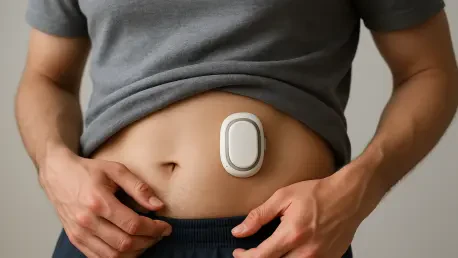

For decades, understanding the mysterious inner workings of the human gut has relied almost entirely on the notoriously unreliable method of patient self-reporting, a limitation that is now being challenged by a significant advancement in personal health technology. This wearable gut health monitor represents a pivotal step forward in gastroenterology. This review explores the evolution of this technology, its key features, initial scientific findings, and the impact it is poised to have on both clinical and consumer applications. The purpose is to provide a thorough understanding of the technology, its current capabilities, and its potential future development.
An Introduction to a CGM for the Gut
A pioneering smart wearable developed at the University of Maryland introduces a new paradigm for digestive health. The device’s core principle is to function as a non-invasive monitor that attaches to underwear, providing continuous, real-time data on gut metabolism. It functions as a potential equivalent to the Continuous Glucose Monitor (CGM) for diabetes management.
This technology directly addresses a long-standing gap in gastroenterology by aiming to replace historically inconsistent self-reporting methods. By capturing objective data directly from the source, it promises a far more accurate and detailed picture of digestive processes, offering insights previously unattainable through patient recall alone.
Core Technology and Key Features
Electrochemical Hydrogen Sensing
The primary technological component of the monitor is its advanced electrochemical sensors. These sensors are specifically designed to detect hydrogen gas, a unique and direct byproduct of microbial fermentation occurring within the gut. This process is central to how the microbiome breaks down food that the body cannot digest on its own.
The significance of this feature lies in its ability to provide a direct, objective, and digital readout of microbiome activity. This transforms the abstract concept of gut health into a quantifiable metric, offering an unprecedented window into the complex digestive process and how it responds to diet and other factors in real time.
Non-Invasive Continuous Monitoring
The wearable’s form factor is a key advantage, designed to be discreetly snapped onto standard underwear for seamless integration into daily life. This allows for continuous, 24/7 data collection without requiring any conscious effort from the user, capturing a complete and uninterrupted data stream.
This method of continuous monitoring stands in stark contrast to traditional diagnostic approaches, which rely on sporadic tests or patient journals. The device’s ability to gather information during all activities, including sleep, ensures that crucial data points often missed by self-reporting are accurately recorded, providing a holistic view of gut function.
Groundbreaking Scientific Findings
Initial use of the technology has already yielded significant discoveries, as detailed in a study published in Biosensors and Bioelectronics. One of the most striking findings was that healthy adults produce flatus an average of 32 times per day, a figure more than double the long-standing medical estimate of 14.
This discrepancy serves as a powerful validation of the device’s accuracy and sensitivity. More importantly, it underscores the profound limitations and inherent inaccuracies of patient self-reporting, which can be skewed by memory bias and an inability to track subconscious bodily functions.
Real-World Applications and Use Cases
The technology’s real-world applications span both personal wellness and clinical practice. For individuals managing conditions like Irritable Bowel Syndrome (IBS) or specific food intolerances, the monitor offers a powerful tool for identifying trigger foods and better managing symptoms through personalized data.
In a clinical setting, this device empowers doctors to move beyond guesswork and patient recall. They can create highly accurate, personalized diet and probiotic plans based on objective fermentation data. The licensing of the technology to the startup Ventoscity signals a clear and determined path toward a consumer version of the device.
Challenges and Future Development
Despite its promise, the technology faces the challenge of establishing scientific baselines for what constitutes “normal” gut activity across diverse populations. Without this foundational data, interpreting individual results remains a significant hurdle for widespread clinical adoption.
To mitigate these limitations, a large-scale U.S.-wide study, the ‘Human Flatus Atlas,’ is planned to build a comprehensive data set of normal gas production patterns. Other potential hurdles include scaling production to meet consumer demand and navigating the complex regulatory pathways required for a medical-grade device.
The Future Outlook for Gut Monitoring
The technology is heading toward broad accessibility and enhanced capabilities. Commercialization efforts by Ventoscity are focused on bringing a consumer-friendly version to market, which could democratize access to personal gut health data and empower individuals to take a more proactive role in their wellness.
Looking further ahead, the long-term impact could be a fundamental shift in the field of gastroenterology. Future iterations of the device may integrate more advanced sensors to detect other biomarkers, moving the field away from subjective patient accounts and toward objective, data-driven diagnostics and truly personalized treatment protocols.
Conclusion and Overall Assessment
The wearable gut health monitor represented a breakthrough technology with the potential to revolutionize how digestive health was understood and managed. Its ability to provide non-invasive, continuous, and objective data marked a pivotal moment for both clinical practice and personal wellness. The device empowered users and clinicians alike with actionable insights into the complex workings of the gut microbiome, paving the way for a new era of personalized gastroenterology.