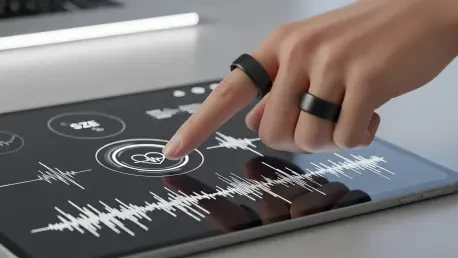

The ability to foresee a debilitating migraine attack before it strikes has long been a goal for the one billion people affected globally, transforming the management of this condition from a reactive scramble for relief to a proactive strategy of prevention. Wearable migraine prediction technology represents a significant advancement in the personal digital health sector. This review explores the technology’s evolution, key features, performance metrics, and the impact it has had on proactive health management. The purpose of this review is to provide a thorough understanding of the technology, its current capabilities, and its potential future development.
An Introduction to Predictive Health Wearables
Predictive health wearables operate on the principle of continuous physiological monitoring to forecast potential health issues before symptoms become apparent. This technology has evolved substantially from early-generation wellness trackers, which primarily focused on counting steps and monitoring basic sleep patterns. The contemporary landscape is defined by a sophisticated array of sensors capable of capturing nuanced biometric data, enabling a more granular analysis of an individual’s health status.
This technological progression is part of a broader shift toward preventive and personalized healthcare. Instead of waiting for a condition to manifest, these devices empower users with data-driven insights to make preemptive lifestyle adjustments. In the context of migraine management, this marks a pivotal change, offering a tool that learns an individual’s unique physiological patterns to anticipate attacks, thereby moving beyond generalized advice and toward highly personalized health interventions.
Key Features and Technological Components
Biomarker Monitoring and Data Analysis
The core of wearable migraine prediction lies in its ability to capture and interpret subtle physiological signals that often precede an attack. Advanced sensors embedded within devices like the Ultrahuman Ring Air continuously monitor key biomarkers, including heart rate variability (HRV), sleep quality, body temperature, movement patterns, and stress load. These metrics serve as a digital fingerprint of an individual’s autonomic nervous system and overall well-being.
Sophisticated algorithms are then employed to analyze this stream of data, establishing a personalized baseline for each user. The system’s primary function is to detect meaningful deviations from this established norm. For example, a sudden drop in HRV or a significant disruption in sleep architecture could be flagged as a potential precursor to a migraine. By correlating these physiological shifts with user-reported migraine events, the technology learns to identify the unique combination of factors that trigger an attack for a specific individual.
Personalized Behavioral Interventions
Translating predictive data into actionable guidance is what elevates this technology from a mere monitoring tool to a proactive health companion. Once the system identifies a heightened risk of a migraine, it provides guided, personalized interventions designed to mitigate that risk. This approach moves far beyond generic advice, offering recommendations tailored to the user’s immediate physiological state and known triggers.
For instance, based on an individual’s data, the system might suggest a specific hydration target, recommend a particular sleep schedule, or prompt gentle movement to alleviate rising stress levels. These interventions are designed to be both timely and relevant, empowering the user to take concrete steps to potentially avert an impending attack. This feedback loop between data collection, analysis, and behavioral guidance is central to the technology’s value proposition.
Recent Innovations and Strategic Developments
The field has been significantly advanced by strategic partnerships that bridge the gap between consumer technology and medical science. A prime example is the collaboration between Ultrahuman and Click Therapeutics, which integrated deep expertise from the FDA-authorized digital therapeutics sector into the development of the Migraine PowerPlug. This alliance lends a crucial layer of medical credibility to the feature, assuring users that the underlying algorithms and interventions are informed by clinical rigor.
Furthermore, a key trend shaping this technology is the increasing focus on a more holistic view of health, particularly for women. Recognizing that hormonal fluctuations are a major migraine trigger, recent developments include the integration of cycle-tracking data from platforms like Clue. This allows the predictive model to account for menstrual cycle phases, offering a more comprehensive and accurate risk assessment for a significant portion of the migraine-suffering population.
Real-World Applications in Personal Health
In practice, this technology transforms a general wellness device into an indispensable medical companion for individuals with migraines. Users report a newfound sense of control, as the device helps them connect the dots between their daily habits, physiological state, and migraine occurrences. This continuous feedback fosters a deeper understanding of personal triggers that may have previously been difficult to identify.
The primary use case is the shift from reactive treatment to preemptive action. By receiving an early warning, a user can implement the suggested behavioral interventions or take other preventive measures, potentially reducing the frequency or severity of attacks. This application empowers individuals to become active participants in their health management, turning their wearable from a passive data collector into an active partner in their well-being.
Challenges and Current Limitations
Despite its promise, the technology faces the significant technical hurdle of accounting for the highly individualized and diverse nature of migraine triggers. Factors can range from specific dietary components and environmental allergens to changes in barometric pressure and sensory stimuli. Developing an algorithm that can reliably parse and predict based on such a wide array of potential inputs for every user remains a complex challenge.
Moreover, earning and maintaining user trust is contingent upon extensive clinical validation. While initial pilot programs have been successful, widespread adoption requires robust evidence demonstrating the technology’s effectiveness across diverse populations. Substantiating its claims with scientifically sound data is essential for it to be accepted not just by consumers but also by the broader medical community as a legitimate tool in migraine care.
The Future of Wearable-Driven Preventive Care
The trajectory for this technology points toward more sophisticated and integrated predictive algorithms. Future iterations will likely incorporate additional data sources, such as environmental information, dietary logs, and even genetic markers, to create an even more precise and personalized predictive model. As machine learning models are trained on larger and more diverse datasets, their accuracy is expected to improve significantly.
This advancement is poised to have a substantial long-term impact on the competitive smart ring and broader wearables market. By offering medically relevant, predictive insights, companies are setting a new standard for consumer health technology, moving beyond fitness tracking to become integral components of personal health management. This trend will likely pressure competitors to develop similar capabilities, ultimately accelerating innovation across the entire sector.
Conclusion and Overall Assessment
The emergence of wearable migraine prediction technology has marked a groundbreaking shift in personal health management, moving the paradigm of migraine care from reactive to proactive. By leveraging continuous biomarker monitoring and personalized algorithms, these devices have provided users with an unprecedented tool to understand their unique triggers and take preemptive action. The integration of expertise from the digital therapeutics field and the inclusion of holistic health data have further solidified its standing as a serious medical companion.
While challenges related to the complexity of migraine triggers and the need for continued clinical validation remain, the technology has successfully established a new benchmark for consumer health wearables. It has not only improved the quality of life for many individuals with migraines but has also reshaped the competitive landscape, pushing the entire industry toward a future of more intelligent, predictive, and personalized preventive care.