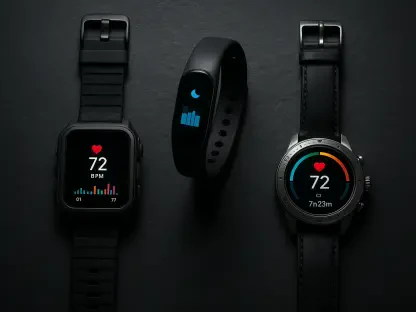

As a seasoned specialist in risk management and AI-driven health assessment, Simon Glairy has spent years dissecting how biometric data influences both personal wellness and institutional insurance modeling. His work frequently centers on the intersection of wearable technology and long-term healthspan, making him a primary voice in the discussion surrounding the next generation of fitness trackers. In this deep dive, we explore the nuances of the Whoop 5.0, a device that has transitioned from the wrists of elite athletes like LeBron James and Cristiano Ronaldo into the hands of the everyday health enthusiast. We delve into the shift from aesthetic-focused wearables to hardcore data-gathering tools, the practical hurdles of a screenless interface, and the evolving economics of the subscription-based health model.
The conversation covers the minimalist design philosophy of the hardware, the shift toward raw biometric transparency over simplified user interfaces, and the role of generative AI in making complex physiological data actionable for the average person. We also address the technical limitations regarding app synchronization and the surprising discrepancies in caloric tracking when compared to industry giants like the Apple Watch.
The screenless, minimalist design is intended for constant wear, even while charging. How does this lack of a visual interface fundamentally change the way a user interacts with their own physiological data compared to a traditional smartwatch?
The absence of a screen forces a psychological shift where the device moves from being a constant source of notification-driven anxiety to a silent, background observer. By making the Whoop 5.0 roughly 7 percent smaller than its predecessor, the brand has achieved a profile so slim and lightweight that you genuinely forget it is there during daily movement. This design choice prioritizes the integrity of the data collection because the knit bands allow for a fluid range of motion without the restriction or “bite” of a traditional watch chassis. In my testing, I found that I never woke up with a stiff or sore wrist, which is a common complaint with bulkier trackers. Instead of glancing at your wrist every ten minutes to check a step count, you engage with your health as a retrospective narrative through the app, which changes the relationship from reactive checking to proactive analysis.
Whoop has been described as a tool for those who love “hardcore numbers” rather than just a casual activity tracker. In your expert opinion, how does the app’s focus on sleep, recovery, and strain metrics provide a more comprehensive risk profile than simple step counting?
Moving away from the gamification of “closing rings” toward a focus on heart rate variability and VO2 Max estimates allows for a much more sophisticated understanding of internal strain versus external output. While many devices give you a surface-level “all clear,” Whoop’s app puts the raw numbers front and center, focusing on the three pillars of sleep, recovery, and strain to tell you if your body is actually prepared for the day’s demands. For example, after a night where I only managed a few hours of sleep, the device was blunt in its assessment, warning me to take it easy to avoid overtraining, whereas a simple step tracker would have just seen a lack of movement. This level of detail, including cardiovascular and musculoskeletal strain insights, provides a 24/7 biometric monitor that acts more like a clinical tool than a consumer toy. It is about understanding the “healthspan” rather than just the daily activity, which is why the Peak membership even includes tracking for blood oxygen levels and skin temperature to monitor for underlying health shifts.
The Whoop Coach is a significant pivot toward using AI to interpret complex biometrics. How effective is this AI at translating abstract data into actual lifestyle changes for someone who isn’t a professional athlete?
The Whoop Coach, which is currently in its beta phase, acts as the vital bridge for the user who might see a plummeting recovery score and have no idea how to respond. It processes the bounty of data collected by the 5.0 and starts a literal conversation, making suggestions for training adjustments based on how your body is responding to stress. I found it far more accessible than trying to manually decipher a graph of heart rate zones or respiratory rates on my own. Instead of just telling you that your recovery is at 30 percent, the AI suggests specific changes to your routine, helping you understand the “why” behind the numbers. It transforms a list of biometrics into a personalized roadmap, which is essential when you consider that the average person doesn’t have a team of sports scientists at their disposal like the celebrities who use this gear.
While the device is designed to be worn 24/7, including in the shower, there have been reports of physical discomfort related to the band’s material. Based on your experience, how does the physical maintenance of the device impact the “always-on” promise?
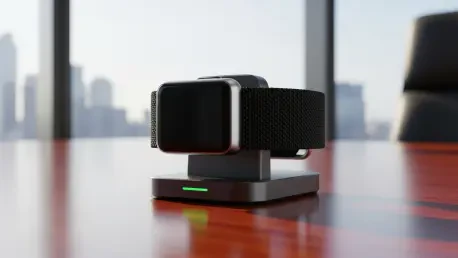
There is a significant gap between the theoretical design and the practical reality of wearing a fabric-based tracker in wet environments. While the charger is ingenious because it slides directly onto the device so you never have to take the tracker off, wearing it into the shower or while washing dishes leads to what I can only describe as a miserable sensation. The knit band becomes waterlogged and takes an incredibly long time to dry against your skin, which feels heavy and damp for hours afterward. If you want to maintain that 24/7 data stream without the irritation, you almost have to have a second dry band ready to swap in, or simply accept that the “never take it off” marketing has its limits in everyday life. It’s a small detail that highlights a friction point in the user experience that no amount of high-end biometric data can fully compensate for.
You’ve noted that when synced with other ecosystems like Apple Health, the Whoop 5.0 tends to offer much more conservative calorie counts. What does this discrepancy tell us about the accuracy of wearable technology and the “truth” of our activity levels?
This is one of the most fascinating points of friction, where I saw my Apple Watch report 400 active calories for a morning walk while the Whoop 5.0 recorded only 200 for the exact same activity. Both devices are pulling from the same weight, heart rate, and step count data, yet the algorithms reach vastly different conclusions about the energy expenditure. This suggests that Whoop is using a much more conservative, perhaps more realistic, model for caloric burn that doesn’t over-credit the user for low-intensity movement. It raises a difficult question for the consumer: do you want the device that makes you feel better about your workout, or the one that potentially provides a more rigorous, albeit lower, number? For someone focused on elite training or weight management, that 200-calorie difference is massive over the course of a week, and it highlights why relying on a single source of truth in wearables can be risky.
The subscription model of Whoop is quite different from competitors like Oura or Fitbit, as the hardware is essentially “free” with the membership. How should a savvy consumer evaluate the total cost of ownership over a three-year period?
The pricing structure is deceptively cheap at the outset because you aren’t paying $400 upfront for a device like you would with an Oura Ring or a high-end Apple Watch. For instance, the Peak membership is $239 annually, and while that is a lower entry point than the $468.99 you’d spend on an Oura in year one, the math shifts significantly the longer you stay in the ecosystem. By year three, you’ve spent over $700 on Whoop memberships, which is where it becomes more expensive than almost any other tracker on the market. The upside is that because the membership is the product, you can often upgrade to the latest hardware without an extra fee, and you can move between the One and Peak tiers without changing your device. However, if your membership expires, the device becomes a “brick”—it is rendered null without the active subscription, which is a major factor for anyone who wants to truly own their hardware.
What is your forecast for the evolution of screenless wearables like the Whoop 5.0 as AI and medical-grade sensors become more integrated into our daily lives?
I believe we are heading toward a bifurcated market where “smartwatches” become communication hubs while “wearables” like the Whoop 5.0 evolve into invisible medical monitors. We are already seeing this with the Whoop MG tier, which at $359 a year offers AFIB detection and blood pressure insights, moving closer to clinical-grade utility. As AI coaches move out of beta and become more predictive, these devices will stop just reporting what happened yesterday and start telling us what will happen tomorrow—predicting illness or burnout before we feel the first symptoms. The challenge will be overcoming the “processing lag” I experienced, where the app can be slow to load data or drains the phone battery by needing to stay open constantly. Once the sync technology catches up to the sensor quality, these screenless bands will likely become the standard for anyone serious about long-term health risk management.