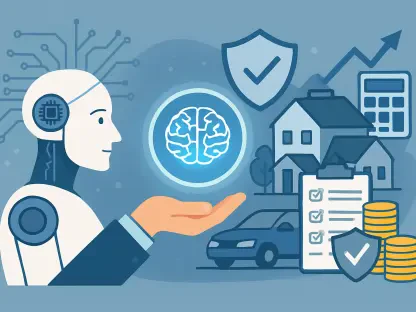

Insurers must move beyond the transactional apathy of the past by using specific, insurance-trained capabilities to ensure accuracy and transparency while navigating a pivotal moment where operational efficiency often conflicts with the fundamental human need for support during life’s most stressful moments. For decades, the insurance sector has been defined by a reputation for bureaucratic opacity, dense legal jargon, and a reactive posture that only engages with customers after a loss has occurred. However, the strategic deployment of advanced artificial intelligence is beginning to dismantle these barriers by automating the administrative drudgery that historically consumed the majority of an insurance professional’s workday. By streamlining these repetitive tasks, technology is paradoxically creating the emotional and temporal space necessary for agents to provide genuine, high-value human connection when policyholders need it most.
Optimizing Internal Workflows to Foster Empathy
Alleviating Administrative Burdens for Insurance Professionals
The primary theme reshaping the modern insurance landscape involves the systematic removal of manual labor from the decision-making process through intelligent automation. Industry leaders emphasize that the objective of implementing AI is not merely to increase the speed of transactions for the sake of efficiency, but rather to expand the internal capacity of the workforce. When an insurance agent no longer has to spend hours searching through disparate legacy systems or manually processing routine paperwork, they regain the cognitive bandwidth necessary to handle complex and sensitive cases with the appropriate level of care. This transformation allows the employee to transition from a data-entry clerk into a specialized advisor who can listen to a customer’s concerns without being distracted by the immediate pressure of administrative backlogs.
Furthermore, the integration of specialist AI agents into the daily workflow of insurance employees provides a sophisticated support structure that enhances job satisfaction and reduces burnout. By utilizing AI orchestration systems, companies can provide their staff with immediate access to approved, contextually relevant information during live interactions. This technology acts as a digital co-pilot, surfacing the exact policy nuances or historical data needed to resolve a query in real-time. As a result, the “human” element of the service is significantly improved because the employee is fully prepared for a meaningful conversation, having already been briefed by the system on the specific context of the situation. This prevents the repetitive and frustrating information-gathering phases that often alienate customers and leave staff feeling like cogs in a massive machine.
Reducing Information Asymmetry for Better Customer Experiences
Modern AI tools are bridging the long-standing gap between what the insurer knows and what the customer understands, effectively eliminating the information asymmetry that has historically plagued the industry. Systems such as agent hubs and orchestration layers allow for the seamless flow of data, ensuring that both the policyholder and the representative are looking at the same accurate, up-to-date information. This transparency builds a foundation of trust that is essential for a human-centric service model. When a customer calls to inquire about a claim, the AI ensures the agent is already aware of the digital steps the customer has previously taken, which prevents the customer from having to repeat their story multiple times. This continuity makes the interaction feel like a personalized relationship rather than a disjointed series of cold transactions.
Moreover, the use of specialized premium explanation tools demonstrates how technology can humanize the financial aspects of insurance. Rather than providing a generic notice of a price increase, AI can analyze a policyholder’s unique risk profile and market conditions to offer a clear, personalized breakdown of why a premium has changed. This level of clarity helps the customer feel understood as an individual rather than just a policy number. By automating the delivery of these complex explanations, insurers can ensure that every policyholder receives a high standard of communication that is both accessible and informative. This proactive approach to transparency reduces the friction that typically occurs during renewal periods and fosters a sense of partnership between the company and its clients, reinforcing the idea that the insurer is acting as a helpful guide rather than an invisible adversary.
Shifting Paradigms Toward Proactive Prevention
Transitioning From Reactive Claims to Preventative Protection
A transformative trend in the industry is the move away from a post-loss model toward a proactive relationship supported by real-time asset intelligence. Traditionally, insurance has been a reactive service where engagement only occurs after a disaster has taken place, creating an inherently stressful and sometimes adversarial dynamic. By utilizing AI-driven monitoring systems, insurers can now identify and mitigate risks before they manifest into catastrophic losses. For instance, in property insurance, autonomous systems can detect minor water leaks or electrical anomalies early, alerting the policyholder and even dispatching repair services automatically. This fundamental change in the service model shifts the insurer’s role from a simple financial payer to a supportive partner dedicated to the safety and well-being of the customer’s assets.
This shift toward prevention fundamentally alters the human experience of insurance by reducing the emotional trauma associated with major property damage or personal loss. When an AI system prevents a basement from flooding or identifies a mechanical failure in a commercial facility, the “claim” process is entirely bypassed in favor of a frictionless resolution. This proactive stance effectively reduces the alert fatigue and operational inertia that facility managers and homeowners often face when trying to manage risks manually. Instead of living in a state of reactive anxiety, policyholders can feel a greater sense of security knowing that their insurance provider is actively working in the background to protect their interests. This transition creates a service that feels more human because it prioritizes the prevention of hardship over the mere reimbursement of it.
Cultivating Partnerships Through Continuous Engagement
The evolution of AI allows for a model of continuous protection that builds a deeper, more consistent relationship between the insurer and the policyholder. In the past, the only touchpoints for a customer were the annual renewal and the occasional claim, leading to a sense of detachment from the provider. By leveraging predictive analytics and constant data streams, insurers can now offer ongoing value through personalized risk-management advice and real-time updates. This creates a supportive environment where the customer feels the presence of the insurer as a helpful ally in their daily life. The relationship becomes one of mutual interest in safety, which humanizes the brand by aligning the company’s goals directly with the policyholder’s desire for a stable and risk-free environment.
Furthermore, this continuous engagement model helps to dismantle the “us versus them” mentality that often defines the insurance industry. When an insurer provides tools that help a small business owner avoid fire hazards or a homeowner maintain their roof, they are demonstrating a tangible commitment to the customer’s success. AI plays a critical role here by filtering through vast amounts of data to provide only the most relevant and actionable insights, ensuring that the communication is helpful rather than intrusive. This personalized attention makes the service feel bespoke and attentive, mimicking the high-touch care of a traditional boutique agency while scaling it for millions of users. The result is a more resilient and trusting relationship that stands the test of time, proving that technology can be used to strengthen human bonds rather than dilute them.
Safeguarding Accuracy and Ethical Boundaries
Demystifying Policy Complexity with Personalized Logic
One of the most significant barriers to a human-centric insurance experience is the inherent complexity of the products, which often leave customers feeling alienated and confused. Artificial intelligence is now being used to translate dense policy language into personalized, accessible narratives that resonate with an individual’s specific life circumstances. By utilizing large language models trained specifically on insurance regulations and policy structures, companies can offer interactive explanations that answer a customer’s specific “what if” questions. This capability empowers the policyholder with knowledge, transforming a confusing financial contract into a clear and understandable tool for financial security. When a customer truly understands what they are buying, they feel more confident and respected by the company.
However, the pursuit of clarity must be balanced with a rigorous commitment to accuracy to avoid the risk of industrializing errors. Because AI systems can generate responses with a high degree of confidence even when they are incorrect, insurers must implement strict governance frameworks to ensure the information provided is factually sound. The industry is moving toward a standard where every AI-generated explanation is grounded in “golden sources” of truth, such as the actual filed policy documents and state-specific regulations. This ensures that the push for a more human, conversational interface does not come at the expense of financial and legal precision. By maintaining this high bar for accuracy, insurers can protect the integrity of the customer relationship and ensure that the transparency they provide is meaningful and reliable.
Defining the Limits of Automation in Sensitive Situations
While AI can significantly enhance the efficiency and accessibility of insurance, industry leaders agree that it should never serve as a barrier to human contact in moments of genuine vulnerability. The “humanity” of the industry is most evident during traumatic claims, such as those involving significant loss of life, severe injury, or the destruction of a home. In these scenarios, the nuances of empathy, compassion, and moral judgment are beyond the capabilities of even the most advanced machine. Therefore, the most effective insurance models clearly define the boundaries where AI automation ends and human intervention begins. By identifying high-emotion triggers within the customer journey, systems can automatically escalate sensitive cases to a trained professional who has the emotional intelligence required to offer real support.
Success in this area depends on using AI as an enabler for the human representative rather than a replacement for them. The technology can handle the data-heavy aspects of a claim—such as verifying coverage or calculating initial estimates—so that when the human agent picks up the phone, they can focus entirely on the person’s emotional needs. This strategic division of labor ensures that the policyholder is not met with a cold, automated response during a crisis, but rather with a person who has the time and resources to be truly helpful. By preserving the human touch for the “moments of truth,” insurers can use AI to build a service that is both technologically advanced and deeply compassionate, ultimately proving that automation can be the greatest ally of a more human insurance experience.
Advancing Human-Centric Strategic Implementation
Insurers pursued a strategy that prioritized long-term customer outcomes over short-term digital engagement metrics to ensure that technology served a human purpose. This involved a shift in how success was measured, moving from simple response times to qualitative assessments of whether a customer felt truly supported and understood. Leadership teams across the industry recognized that the true value of AI lay in its ability to remove the administrative frictions that previously prevented meaningful human engagement. By investing in specialized, insurance-trained AI systems, organizations created a more transparent and accessible environment where policyholders felt empowered by information rather than overwhelmed by it.
The transition to a proactive risk-management model also played a vital role in humanizing the industry by aligning the insurer’s business goals with the safety of the policyholder. Practical steps were taken to integrate real-time asset intelligence into standard policies, which allowed for the prevention of losses before they occurred. This move successfully transformed the perception of insurance companies from distant financial entities into active partners in risk mitigation. Ultimately, the most successful firms were those that used AI to reinvest in their workforce, providing agents with the tools and capacity to deliver a higher standard of empathetic service. By balancing technological precision with human judgment, the industry demonstrated that automation could indeed make insurance a more personal and supportive experience.