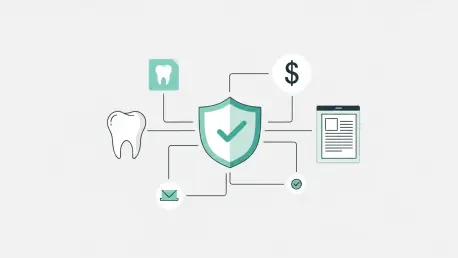

The administrative backbone of many dental practices has long been buried under a mountain of paper records and manual spreadsheets that demand hours of painstaking human oversight to function. Historically, insurance reconciliation represented one of the most significant operational bottlenecks, requiring office managers to manually cross-reference Explanation of Benefits documents against internal patient ledgers. This process was not only prone to human error but also consumed valuable time that could have been spent on patient care or strategic growth. As clinical technologies advanced, the back-office remained surprisingly analog, forcing practitioners to deal with fragmented data and delayed payments. However, the landscape has shifted dramatically as sophisticated software now integrates directly into the revenue cycle to handle these complex financial tasks. By automating the verification of patient deductibles and insurance portions, practices have started to reclaim their weekends and evenings, moving away from a reactive administrative model toward a proactive, data-driven approach that prioritizes financial accuracy.
The Mechanics: Intelligent Automation in Insurance Posting
Document Ingestion: Converting Unstructured Data to Actionable Insights
Artificial intelligence has introduced a layer of sophistication that goes far beyond simple optical character recognition by utilizing natural language processing to interpret the nuances of dental billing. Modern platforms are capable of ingesting vast quantities of unstructured data from a variety of sources, including physical paper scans, downloaded PDF files, and direct digital feeds from insurance carrier portals. Instead of a human staff member sitting at a desk to type in individual line items, the AI engine identifies the specific relationship between the service rendered and the payment received. It can accurately extract critical details such as coinsurance percentages, remaining deductibles, and specific procedure codes without requiring manual intervention for every transaction. This transition toward automated document ingestion allows the dental practice to maintain a continuous flow of financial information, ensuring that the patient ledger is updated in near real-time as soon as the carrier issues a payment notification.
The architectural shift toward a platform-native automation layer ensures that every piece of incoming financial data is processed through a unified matching engine that eliminates data silos. By funneling all communications into a single digital ecosystem, these systems prevent the common problem of fragmented software where payment information exists in one portal while patient records reside in another. The AI compares the expected reimbursement amount, which is calculated at the time of the initial claim submission, with the actual payment issued by the insurance company. This level of granular analysis is essential for identifying patterns in underpayments or overpayments that might otherwise go unnoticed in a manual workflow. Furthermore, the ability of the software to log into multiple insurance portals simultaneously to retrieve electronic remittance advice saves staff members from the tedious task of managing dozens of different passwords and navigation paths. This centralized approach creates a robust digital trail that links every dollar received to clinical events.
Exception Management: Balancing Automated Posting with Human Oversight
To maintain the highest standards of financial integrity, AI-driven reconciliation tools utilize sophisticated logic to distinguish between routine, accurate payments and those that require a human expert’s eye. When the software identifies a payment that aligns perfectly with the expected amount and patient responsibility, it posts the transaction directly to the practice management system ledger without any manual oversight. This “straight-through processing” model handles the vast majority of standard transactions, significantly reducing the daily workload of the billing department. However, when the system detects a discrepancy—such as a denied claim, a partial payment, or an unexpected deductible application—it does not simply ignore the issue. Instead, the AI flags the transaction and moves it into a dedicated exception queue. This queue serves as a prioritized task list for the office staff, allowing them to focus their professional expertise exclusively on the complex cases that actually require negotiation or further investigation with the insurance carriers.
This nuanced approach to exception management ensures that no financial detail is lost in the transition to automation while simultaneously improving the overall accuracy of the practice’s books. By isolating errors and discrepancies into a specialized workspace, the system provides staff with all the necessary context to resolve issues quickly, including direct links to the original EOB and the relevant patient history. The AI also learns from these exceptions, becoming more adept at recognizing specific carrier behaviors or common coding errors over time, which further reduces the number of flags in subsequent billing cycles. This collaborative dynamic between human intelligence and machine precision creates a fail-safe environment where the mundane tasks are handled with speed and the complex problems are handled with care. The result is a more resilient financial operation that can withstand fluctuations in staffing or changes in insurance policies without experiencing a drop in productivity or an increase in aging accounts receivable.
Strategic Integration: Path to Operational Excellence
The implementation of automated insurance reconciliation marked a turning point for the dental industry by resolving a decades-old friction point between providers and payers. Practices that adopted these intelligent systems successfully moved away from manual workflows and embraced a more transparent, efficient, and profitable operational model. To capitalize on these advancements, practitioners prioritized the consolidation of their financial data into unified platforms that supported deep digital integration with insurance carriers. They also invested in training for their administrative teams, shifting the focus from clerical tasks to strategic oversight and enhanced patient communication. Looking ahead, the focus remained on refining these algorithms to handle even more complex reimbursement structures and expanding the use of real-time claim adjudication. By removing the administrative weight of manual reconciliation, dental offices finally achieved the balance between clinical excellence and financial health, ensuring long-term sustainability in an increasingly digital marketplace.