
Vision insurance plans are facing legislative scrutiny for allegedly forcing local optometrists to use out-of-state labs that increase patient wait times for eyewear. This contentious issue was just one facet of a comprehensive two-day hearing recently conducted by the Mississippi Senate Insurance Committee. The proceedings were designed to vet a diverse array of legislative proposals ahead of the upcoming governing sessions, drawing on expert testimony from medical professionals, labor specialists, and public safety advocates. Lawmakers are currently tasked with modernizing the state’s insurance and safety codes to better align with the rapid technological and economic shifts observed in 2026. The objective of these discussions was to identify and mitigate various friction points that hinder professional equity, public safety, and the financial stability of essential services. By synthesizing data-driven arguments regarding distracted driving, pharmacy compensation, and the evolving gig economy, the committee aimed to establish a cohesive framework for future regulation. This high-level review serves as a precursor to potential statutory changes that could reshape the landscape for both providers and consumers across the Magnolia State.
The overarching theme of the hearings revolved around the necessity of adapting long-standing regulations to the realities of a digital-first society. For instance, the transition toward a freelance-dominated workforce and the increasing reliance on smartphone technology have created regulatory gaps that current laws fail to bridge. Public safety officials highlighted the escalating dangers of modern distracted driving, which has evolved far beyond simple text messaging to include video streaming and social media interaction. Simultaneously, medical providers expressed deep concerns regarding the administrative burdens imposed by insurance companies, specifically the rising frequency of claim denials and the lack of fair compensation for specialized clinical services. As the committee moves forward, it must balance these competing interests—protecting the financial viability of local businesses and healthcare providers while ensuring that insurance premiums remain affordable for the general public. These hearings provided the essential groundwork for navigating these complexities in the months ahead.
Addressing Public Safety and Infrastructure Vulnerabilities
Tackling the Escalating Crisis of Distracted Driving
The persistence of smartphone usage among motorists remains a primary concern for Mississippi safety advocates. Recent data shared by AAA and Cambridge Mobile Telematics indicates a troubling trend where Mississippi drivers rank significantly lower in safety standings compared to other states. According to smartphone sensor data, motorists in the state are actively engaged with their devices for approximately 8% of the time they are behind the wheel. This behavior translates to more than two minutes of every hour spent handling a phone while the vehicle is in motion, representing a rate that is 31% higher than the national average. Despite the anti-texting laws implemented over a decade ago, the nature of distraction has evolved to include video calls, streaming content, and social media recording. Experts emphasized that the current legal framework is no longer sufficient to deter these multifaceted digital engagements, which contribute to nearly 60% of traffic fatalities across the state’s roadways.
To combat this trend, advocates are strongly urging the adoption of a comprehensive hands-free law. Such legislation, modeled after successful initiatives in states like Ohio, would prohibit drivers from holding or propping up a mobile device for any reason while operating a motor vehicle. The goal is to provide law enforcement officers with clearer probable cause for intervention, moving beyond the ambiguity of current regulations that often make enforcement difficult. Proponents argued that a hands-free mandate would still allow for the use of integrated vehicle technology, such as Bluetooth earpieces and dashboard infotainment systems, ensuring that connectivity is not entirely severed but is instead managed safely. Statistical projections suggest that if Mississippi could successfully align its driver behavior with the national average, at least 15 lives could be saved annually. This proposed shift in policy is viewed as a necessary step to cultivate a culture of focused driving and reduce the frequency of preventable tragedies on state highways.
Enhancing Roadside Protections for Stranded Motorists
The conversation regarding public safety extended to the vulnerabilities faced by individuals on the shoulders of the state’s high-speed corridors. Currently, Mississippi’s Move Over law provides critical protections for law enforcement officers, emergency medical responders, and tow truck operators by requiring passing motorists to change lanes or slow down significantly. However, safety advocates are now calling for this protection to be expanded to include all stranded motorists and vehicles parked on the shoulder due to emergencies, such as mechanical failures or flat tires. Data suggests that secondary crashes—incidents occurring because of a stationary vehicle on the roadside—result in an average of two deaths per month in Mississippi. By broadening the scope of the existing law, the state could significantly decrease the risk for everyday citizens who find themselves in precarious positions along the highway.
Expanding the Move Over law is seen as a low-cost, high-impact method for enhancing general public safety. Witnesses at the hearing pointed out that the current lack of a formal requirement for drivers to move over for civilian vehicles creates a dangerous environment for both the stranded motorist and those attempting to offer assistance. This legislative update would bring Mississippi in line with a growing number of states that recognize the inherent danger of high-speed traffic passing within inches of a stationary vehicle. Lawmakers discussed the potential for increased public awareness campaigns to accompany any legislative change, ensuring that the driving public understands their responsibility to protect all individuals on the roadside. The committee noted that while emergency responders are trained to manage these environments, the average citizen is much more exposed, making the expansion of these protections a vital priority for the upcoming legislative sessions.
Ensuring Professional Equity in the Medical Marketplace
Resolving Reimbursement Disparities for Pharmaceutical Services
The Mississippi Pharmacy Association presented a compelling case for addressing the compensation gap that currently affects pharmacists statewide. For years, pharmacists have been expanding their clinical roles, providing essential services such as chronic disease management, asthma education, and inhaler training. However, while physician offices and clinics are able to bill insurance companies for providing these same educational services, pharmacists are frequently denied any form of reimbursement for their expertise and time. This lack of financial parity has created a significant hurdle for retail pharmacies attempting to maintain a full scope of practice. Dr. Buddy Ogletree and other pharmacy experts argued that the issue is not about expanding what pharmacists are legally allowed to do, but rather ensuring they are paid fairly for the specialized care they already provide to their communities.
To facilitate a legislative solution, the committee has requested a detailed breakdown of the specific services pharmacists intend to bill for, alongside a comprehensive actuarial analysis of the potential impact on insurance premiums. Proponents of the reimbursement bill highlighted data from states like Kentucky, where similar professional equity laws resulted in negligible increases in consumer premiums, often as low as 0.03%. This suggests that compensating pharmacists for their clinical contributions does not necessarily lead to a financial burden for the broader insurance market. Instead, it supports a more integrated healthcare model where patients can receive high-quality education and management from their most accessible healthcare provider. As the committee reviews these requests, the focus will remain on crafting a bill with precise language that avoids the ambiguities of previous attempts, ensuring that pharmacists can continue to serve as a vital link in the state’s healthcare infrastructure.
Managing Regulatory Tensions Within the Vision Care Sector
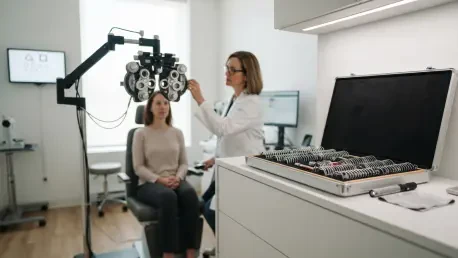
The vision insurance industry is currently at the center of a heated debate involving patient choice and the autonomy of local practitioners. Independent optometrists, such as Dr. Steven Reed, have voiced significant concerns over what they characterize as predatory business practices by large-scale vision plans. These concerns focus on the use of patient steering tactics, where insurance companies utilize digital communication to direct patients away from local doctors toward corporate-affiliated retail outlets and out-of-state laboratories. Such practices often include sending real-time text messages to patients while they are physically present in an optometrist’s office, a tactic that many practitioners find disruptive to the doctor-patient relationship. Furthermore, the requirement to use specific labs often leads to extended wait times for eyewear, causing frustration for patients who expect timely service from their local providers.
In contrast, representatives for the vision insurance industry maintain that their business models are designed to optimize cost efficiencies for the consumer. J.P. Weiske, representing the National Association of Vision Care Plans, argued that the current system allows for lower out-of-pocket costs and that the legislature should avoid interfering in private contractual agreements between doctors and insurance networks. However, the industry did acknowledge that the practice of texting patients during medical appointments is an area where policy refinement could be beneficial. The committee is now tasked with determining if the vision care market requires more robust regulation to prevent monopolistic behaviors while still preserving the cost-saving benefits that insurance plans provide. The goal is to find a middle ground that protects the economic interests of local optometrists without inadvertently driving up the cost of vision care for Mississippi residents.
Reforming Administrative Systems and Financial Accountability
Combating the Rise of Strategic Claim Denials
A growing administrative crisis is affecting medical providers across the state as the rate of insurance claim denials reaches unprecedented levels. Testimony from healthcare executives, including Warren Herring of TrustCare Health, revealed that approximately 41% of Mississippi physicians now experience denial rates of 10% or higher. Even in the hospital sector, commercial insurers have been known to initially deny over 20% of in-patient claims. While nearly 97% of these claims are eventually paid after a lengthy appeal process, the delay serves as a significant financial strain on medical facilities. The process of appealing a single claim can cost a medical office up to $80 in labor and administrative resources, creating a war of attrition that often forces smaller clinics to abandon legitimate claims simply because the cost of recovery exceeds the payout.
In response to these challenges, providers are advocating for a pay first, audit later legislative framework. This system would mandate that insurance companies pay medical claims upfront, provided they meet basic criteria, while allowing the insurer the right to audit the services and recover funds later if discrepancies are found. This approach would shift the financial burden back to the insurers and discourage the use of denials as a cash-flow management tool. Additional proposals discussed by the committee include the implementation of strict time limits on how far back an insurer can claw back funds and the introduction of interest penalties for claims that are found to be wrongfully denied. By establishing these safeguards, the state could reduce the administrative friction that currently hampers the efficiency of the healthcare delivery system, ensuring that providers can focus on patient care rather than navigating complex bureaucratic hurdles.
Sustaining the Economic Viability of Emergency Medical Services
Mississippi’s emergency medical services (EMS) are currently navigating a period of financial instability, particularly in rural regions where the cost of maintaining 24-hour readiness often outstrips the reimbursement received from insurers. Two years ago, the state passed HB 1489, a critical piece of legislation that increased reimbursement rates for EMS providers and allowed agencies to remain operational during a period of rising labor costs. Mark Davis of DeSoto County EMS noted that this funding was instrumental in providing necessary raises for paramedics, helping to prevent a mass exodus of personnel to private clinics or out-of-state providers. However, this protective measure is currently scheduled to expire in 2028, leading to urgent calls for the legislature to make these reimbursement increases permanent. Without these protections, many rural ambulance services could face closure, leading to dangerously long response times for life-threatening emergencies.
The committee is now exploring how to maintain the financial health of EMS providers while also protecting patients from the practice of balance billing. Adam Beck of America’s Health Insurance Plans suggested that while funding is necessary, the state must ensure that increased insurance payouts do not translate into higher premiums for the general public. The challenge for lawmakers is to find a sustainable funding model that recognizes the unique role of ambulance services as an essential public utility, similar to fire or police departments. Discussions touched upon the possibility of creating a dedicated state fund or establishing a permanent minimum reimbursement threshold that reflects the actual cost of providing emergency care. As the sunset date for the current law approaches, the committee’s findings will be crucial in determining whether Mississippi can maintain a reliable and responsive emergency medical infrastructure for all its residents, regardless of their geographic location.
Adapting Labor Policies for a Modern Freelance Economy
Integrating Independent Contractors into Benefit Frameworks
The economic landscape of Mississippi has shifted dramatically with the growth of the gig economy, which now includes an estimated 270,000 independent contractors. These workers contribute over $12 billion annually to the state’s economy, yet they often lack access to the basic benefits that traditional W2 employees enjoy. Real estate agents, delivery drivers, and specialized consultants frequently find themselves without health insurance or retirement options because providing such benefits could legally disqualify their status as independent contractors. Under current labor laws, if a company attempts to offer a benefit package to a contractor, it risks a legal reclassification that carries heavy tax and regulatory penalties. This rigid distinction between employment types has left a significant portion of the workforce without a viable safety net, even as their contributions to the state’s growth continue to increase.
Lawmakers are now considering how to modernize labor definitions to reflect the reality of the 2026 workforce. Witnesses from Americans for Prosperity argued that the state needs to create a more flexible environment where workers can enjoy the freedom of independent contracting without sacrificing long-term financial security. The committee explored the idea of allowing companies to offer optional benefit contributions as a competitive advantage in the labor market, provided that these contributions do not automatically trigger an employer-employee relationship. This shift would require a delicate rebalancing of state labor and insurance codes to ensure that both the flexibility of the gig model and the protection of the worker are maintained. By addressing these barriers, Mississippi could become a more attractive destination for skilled independent professionals and entrepreneurs, further diversifying the state’s economic base.
Establishing Portable Benefits Through Safe Harbor Legislation
One of the most innovative solutions discussed during the hearings was the concept of portable benefits. This model allows workers to accumulate benefit contributions from multiple different clients or companies, with the benefits tied to the individual rather than a specific employer. Advocates for this approach pointed to a pilot program in Georgia, where digital platforms contribute a percentage of earnings into a portable account that workers can use for health insurance premiums or retirement savings. By implementing safe harbor legislation, Mississippi could provide companies with the legal protection they need to contribute to these funds without the risk of misclassification lawsuits. This would enable a new level of financial stability for the 1099 workforce, allowing them to carry their benefits from one contract to the next seamlessly.
The adoption of portable benefits is seen as a forward-thinking response to the evolving nature of work. Similar laws have already been passed in 11 other states, providing Mississippi with a roadmap for implementation that minimizes market disruption. During the testimony, it was highlighted that such a system would be particularly beneficial for younger workers who are more likely to engage in freelance or project-based employment. The committee expressed interest in how these benefit accounts could be managed by third-party providers to ensure transparency and ease of access for the workers. As the state looks toward the future of labor, the establishment of a portable benefits framework represents a critical step in reconciling the needs of a modern economy with the traditional goals of worker security and insurance coverage.
Synthesizing the Legislative Path Forward
The Mississippi Senate Insurance Committee successfully concluded its review of the state’s most pressing insurance and safety priorities, establishing a clear agenda for the upcoming sessions. By engaging with a broad spectrum of stakeholders, the committee identified critical areas where existing regulations failed to protect the interests of local providers and the safety of the public. The testimony provided a comprehensive look at the friction points within the healthcare, transportation, and labor sectors, ranging from the high cost of insurance claim appeals to the dangers of digital distraction on the roadways. These findings emphasized that a one-size-fits-all approach to insurance regulation is no longer viable in an increasingly complex and technologically driven society.
Lawmakers subsequently focused on developing actionable solutions that address these challenges without placing an undue burden on state resources or consumer premiums. The move toward a hands-free driving culture and the expansion of roadside safety laws were recognized as essential steps for reducing traffic fatalities. In the healthcare arena, the push for pharmacist reimbursement equity and the reform of claim denial processes were seen as vital for maintaining a robust and fair medical marketplace. Furthermore, the committee’s exploration of portable benefits for independent contractors signaled a commitment to adapting state policy to the realities of the modern workforce. These discussions laid the foundation for a more resilient insurance framework that aimed to balance innovation with protection, ensuring that Mississippi remained a competitive and safe environment for all its citizens.