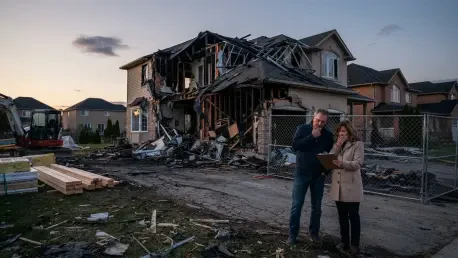

Underinsurance remains an invisible risk during the life of a policy and only reveals itself when the sum insured fails to cover a modern rebuild. The Australian housing market is currently grappling with a deceptive economic paradox that places thousands of homeowners at significant financial risk. While residential property values have softened in many regions due to rising interest rates and affordability constraints, the actual cost of physical reconstruction has surged to unprecedented levels. This divergence creates a knowledge gap where homeowners mistakenly believe that stagnant or falling market prices justify a reduction in their insurance coverage. This misunderstanding stems from a fundamental confusion between market value—what a buyer pays for a home and land—and replacement value, which is the total cost required to rebuild from scratch. While market prices are driven by consumer sentiment and lending policies, rebuild costs are dictated by global supply chains and the health of the construction sector.
The Economic Drivers: The Rising Costs of Reconstruction
The Catalyst: Material and Labor Market Pressures
The primary catalyst for rising rebuild costs is a combination of persistent labor shortages and expensive raw materials. A lack of skilled tradespeople has not only driven up wages but has also extended project timelines, adding significant overhead to any reconstruction effort. Simultaneously, global supply chain disruptions have made essential building components harder to procure, ensuring that construction inflation consistently outpaces the general consumer price index. When a home is damaged today, the cost to secure a plumber, electrician, or carpenter is significantly higher than it was during the previous decade. These labor pressures are compounded by the fact that the workforce is aging, and the influx of new apprentices has not kept pace with the demand for specialized restoration services. Consequently, the hourly rates for emergency repairs and full-scale builds have reached levels that often exceed the limits set in older insurance policies.
Localized Inflation: Regional Variations and Capacity Constraints
Regional variations further complicate the calculation of insurance adequacy, with areas in Northern Australia and Queensland facing particularly acute cost spikes. In these locations, environmental risks and logistical hurdles significantly inflate the price of recovery, as transporting materials and mobilizing labor to remote sites requires substantial financial investment. Furthermore, the construction sector is currently operating at limited capacity while facing high demand, allowing builders to charge a premium for new projects. These operational factors mean that a standard policy which was sufficient just a few years ago may no longer cover the basic realities of the local building market. Homeowners in disaster-prone zones often find that the surge in demand following a localized event like a flood or fire leads to a demand surge in prices, effectively stripping away the purchasing power of their sum insured before the first brick is even laid on the foundation.
The Industry Challenge: Bridging the Communication Gap
Consumer Sentiment: Transparency at Policy Renewal
As premiums rise to account for heightened catastrophe risks and more expensive reinsurance, many policyholders feel a sense of premium fatigue that clouds their judgment. When insurance providers fail to explain the specific drivers behind these price hikes—such as construction inflation and global risk factors—consumers often feel their only recourse is to lower their coverage limits to save money. This lack of transparency erodes trust and leads to short-term financial decisions that can result in long-term ruin after a major disaster. Many individuals view their insurance through the lens of a monthly expense rather than a risk mitigation tool, unaware that a ten percent reduction in premium might lead to a fifty percent shortfall in rebuild funds. The industry is currently struggling to convey that the premium is not just a fee for service, but a reflection of the rising cost of the materials and labor required to restore a property to its original condition following a loss.
Strategic Guidance: The Role of Brokers and Educators
To bridge this communication gap, the insurance industry is being urged to move beyond simple price notifications and toward active consumer education. Brokers and insurers must provide policyholders with the tools, such as accurate rebuild calculators, to understand the why behind their premiums. By fostering a clearer dialogue about the actual costs of debris removal, professional fees, and modern building standards, the industry can help homeowners make informed decisions rather than reactive ones based on a misunderstanding of market values. This educational push involves explaining that even if land value remains high, the cost to clear a site and rebuild a home to current energy-efficiency and safety standards often exceeds the original purchase price of the property. When owners understand that professional fees for architects and surveyors can consume a large portion of their payout, they are more likely to opt for a sum insured that provides a realistic buffer against unforeseen costs.
Regulatory Evolution: The New Code of Practice
Financial Safety: Reforms to Cash Settlements
The upcoming updates to the General Insurance Code of Practice (GICOP) aim to protect consumers from the risks inherent in the modern claims environment. One of the most significant changes involves the regulation of cash settlements, which have historically transferred the risk of builder insolvency and rising material costs from the insurer to the homeowner. New requirements mandate clearer disclosures, cooling-off periods, and robust review mechanisms to ensure that a homeowner is not left with an insufficient payout that fails to cover a delayed rebuild. By forcing insurers to provide more detail on how a cash settlement is calculated, the code prevents situations where owners accept a payment that looks substantial today but becomes inadequate within months due to sudden spikes in construction costs. This reform ensures that the responsibility for predicting economic volatility remains with the insurance professionals rather than being unfairly shifted to individuals.
Timely Recovery: Accountability for Delays and Quality
To address the trauma of prolonged claims, the updated Code introduces a 12-month rule, where claims undecided after one year may be automatically accepted up to the policy limits. This places the burden of managing external construction delays and supply chain shortages on the insurer rather than the policyholder. Additionally, insurers are now held to higher standards of accountability for the conduct of their repairers and the technical quality of expert reports, ensuring that the promise of protection translates into a tangible, high-quality recovery. This rule incentivizes insurers to maintain more resilient repair networks and more efficient supply chain management. It acknowledges that the delay in a rebuild is not just a logistical inconvenience but a financial burden that can deplete a homeowner’s alternate living expense coverage. By setting a hard deadline, the industry is forced to be more proactive in securing contractors and materials before costs escalate.
Strategic Protection: Aligning Policy with Reality
Risk Identification: Recognizing the Silent Danger
Underinsurance is frequently described as a silent risk because it remains invisible until the moment a claim is filed. It is only after a fire or flood that a homeowner discovers their policy cannot cover the costs of contemporary construction standards or the premium prices of available builders. Recognizing this invisibility is the first step for homeowners to proactively reassess their policies and ensure that their coverage reflects the current industrial reality rather than an outdated valuation. Many property owners still rely on original purchase prices or bank valuations which are designed for mortgage security rather than reconstruction planning. This mismatch creates a false sense of security that only shatters when the first quotes from builders arrive. Proactive assessments involve looking at the specific features of the home, such as heritage requirements or specialty finishes, which are often overlooked in generic policies but add significant costs to any reconstruction.
Proactive Management: Strengthening the Safety Net
Action was taken by homeowners who chose to bypass market-driven valuations in favor of technical assessments of building costs. They utilized digital estimation tools to calibrate their coverage against the prevailing rates for skilled labor and materials. By shifting the focus from the resale potential of the land to the logistical complexities of modern construction, these individuals secured their financial futures. Insurance providers contributed to this shift by delivering granular data on rebuilding timelines and professional fees. This movement transformed insurance from a grudge purchase into a strategic asset for the community. The prioritization of accurate sum-insured values ensured that the safety net functioned as intended when localized disasters occurred. Ultimately, the industry moved toward a model where policy updates were driven by real-world economic indicators rather than the volatile and often misleading fluctuations of the local real estate market.