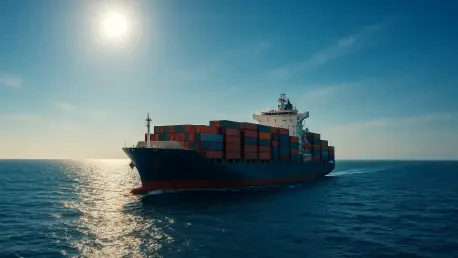

The global energy supply chain currently teeters on the edge of a systemic breakdown as regional tensions translate into a literal blockade of one of the world’s most vital waterways. The United States government has authorized a $20 billion federal backstop to restart maritime operations after a 90% collapse in vessel traffic through the Strait of Hormuz. This massive intervention by the Trump administration aims to counteract the paralysis caused by an environment where commercial insurance has become virtually unobtainable. With daily transits plunging from over 130 vessels to nearly zero, the maritime industry has faced an existential crisis that threatens not just regional trade but global macroeconomic stability. By stepping in where private markets have failed, the federal government is attempting to underwrite the physical risks of war, effectively becoming the insurer of last resort for a global fleet that has nowhere else to turn for protection against modern drone and missile threats in this high-risk zone.
Financial Mechanisms: The Federal Reinsurance Architecture
Risk Management: The Role of the Development Finance Corporation
The U.S. International Development Finance Corporation (DFC), in close coordination with the Department of the Treasury, has established a sophisticated financial architecture to manage the $20 billion facility. This reinsurance model operates on a rolling basis, providing a safety net for hulls, machinery, and cargo that have been abandoned by traditional providers. Private insurers, specifically the International Group of P&I Clubs, recently issued widespread 72-hour cancellation notices for war-risk coverage, leaving nearly 1,000 vessels stranded or seeking safe harbor. Without insurance, these ships are legally and financially unable to move, creating a bottleneck that has choked off essential revenue streams for producers and caused price spikes for consumers worldwide. The DFC’s intervention serves to absorb the political risk that has become too volatile for the private sector to price accurately, thereby creating a floor for the market and encouraging owners to re-engage.
Market Impact: Addressing the Insurance Cancellation Crisis
Implementation of this backstop requires a rigorous vetting process to ensure that federal funds are utilized for strategic interests and not wasted on high-risk, low-reward ventures. Unlike standard commercial policies, this federal reinsurance is specifically calibrated to address the unique threats posed by precision-guided munitions and unmanned aerial systems. The program will be funneled through a select group of preferred American insurance partners, which allows the government to maintain oversight while utilizing existing industry expertise for claims processing and underwriting. This public-private partnership is designed to bridge the gap until the security situation stabilizes sufficiently for the private market to return. By providing this liquidity, the administration is effectively neutralizing the insurance weaponization used by adversaries to disrupt the global economy, ensuring that the logistical flow of goods is maintained despite the heightened threat of military action.
Operational Security: Linking Financial Guarantees to Naval Support
Strategic Integration: Coordinating with Central Command Forces
A defining characteristic of this initiative is its deep integration with the U.S. Central Command (CENTCOM), signaling that the financial backstop is part of a larger security umbrella. DFC CEO Ben Black has noted that the insurance terms are being refined alongside military planners to ensure that covered vessels are following the safest possible transit corridors. This alignment implies that the U.S. Navy may soon transition from a purely defensive posture to one that involves active escorts for ships utilizing the federal reinsurance. President Trump has already hinted at the possibility of utilizing the Navy’s Fifth Fleet to provide direct protection, creating a dual-layered system of security. The first layer is financial, protecting the capital investment of shipowners, while the second layer is physical, protecting the lives of the crew and the integrity of the cargo. This synchronized approach is designed to restore confidence among maritime professionals.
Industry Standards: Ensuring Compliance and Fleet Readiness
The response from the maritime industry has been one of cautious optimism, as shipowners and operators weigh the federal guarantees against the physical dangers of the region. While the financial safety net is a welcome development, many companies are still evaluating the specific eligibility criteria required to access the funds. These criteria often include requirements for specific crew training, the installation of advanced tracking systems, and adherence to strict communication protocols with CENTCOM. Such mandates ensure that only the most prepared and professional operators are participating in the program, which in turn reduces the overall risk of the pool. The initiative is also prompting a broader discussion within the shipping community about the long-term role of government in maritime security. For many, this represents a fundamental shift in how freedom of navigation is maintained, suggesting that in the modern era, economic protection is just as essential as naval power.
Future Considerations: Strategic Next Steps for Global Logistics
The administration acted decisively by finalizing the operational details of the $20 billion facility, signaling a major shift toward economic statecraft. Industry leaders moved quickly to integrate these federal guarantees into their risk management strategies, while maritime logistics companies began recalibrating their routes for the 2026-2028 period. To maximize the benefits of this program, stakeholders must prioritize the adoption of the mandated security technologies and maintain open lines of communication with military liaisons. Moving forward, the focus should shift toward diversifying supply chains and investing in autonomous vessel technology that can minimize human risk in contested waters. Policymakers successfully established the foundation for a more resilient maritime sector, but the long-term solution required a sustained commitment to technological innovation and international cooperation. This initiative proved that financial safeguards are a necessary component of modern defense.