
Understanding the New Economic Reality in Aviation Risk
The global aviation industry currently grapples with a staggering financial reality as insurance claim costs surge at rates that significantly outpace historical norms and expectations. Modern data indicates a pervasive rise in expenses across every tracked category, with recent index findings showing increases ranging from 6% to 10.8%. This upward trajectory is no longer viewed as a temporary post-pandemic correction or a brief period of inflation but rather as a fundamental structural shift in how aircraft are maintained, repaired, and resourced in the current market environment.
This analysis explores the multi-faceted reasons behind these surging costs by examining the interplay between labor shortages, supply chain disruptions, and the evolving dominance of original equipment manufacturers. By deconstructing these trends, stakeholders can better understand the current landscape and prepare for a future where high claim costs remain a permanent fixture of the aviation sector. The following sections provide a detailed examination of why the industry has moved into this high-expense era and what can be done to manage the resulting financial risks.
From Post-Pandemic Correction to a Structural Paradigm Shift
To understand why claims are currently so high, it is essential to look at the historical context of aviation maintenance and how those foundations have shifted. Traditionally, the industry operated on relatively predictable cost increments where the rate of increase for airline engineer labor sat at approximately 3%. However, as the industry progressed into the current year, this rate doubled to 6%, indicating that the sector moved beyond a “catch-up” phase and entered a new era of permanent structural expense.
These background factors matter because they highlight that the current spike is not a cyclical anomaly that will naturally correct itself over time. The industry underwent a permanent change in its foundational cost base due to the mass retirement of seasoned professionals and the contraction of global manufacturing. Past developments created a “perfect storm” that continues to shape the present landscape, forcing insurers and operators to recalibrate their expectations for long-term financial risk management in a world of more expensive hardware.
Deconstructing the Key Drivers of Rising Claim Expenses
The Critical Impact: Labor Shortages and Technical Expertise
A primary driver of skyrocketing claim costs is a chronic shortage of skilled labor, which has reached a critical tipping point for many maintenance organizations. Years of limited apprenticeship intake, combined with a wave of retirements among experienced engineers, left the industry struggling to find qualified personnel to perform complex repairs. This scarcity has a direct impact on the bottom line, with general aviation labor costs surging by 10.5% while airline engineer labor costs rose at twice their historical rate.
The challenge lies not just in the quantity of workers but in the extreme level of expertise required for modern, high-performance aircraft. As planes become more technically complex, the demand for specialized engineers grows, allowing those with the necessary skills to command much higher wages. This labor crisis creates a persistent bottleneck in repair timelines, often leading to extended durations where aircraft remain on the ground, which further inflates the total value of insurance claims.
Supply Chain Volatility: The Power of Original Equipment Manufacturers
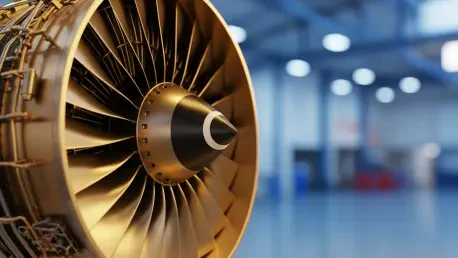
The role of original equipment manufacturers and the fragility of the global supply chain are also central to the rising cost of insurance claims. Major repairs and manufacturer-related expenses have seen a sharp increase of 10.8%, driven by a lack of alternative parts for newer airframes. A staggering example of this volatility is seen in the cost of fan blades for specific engine types, which skyrocketed by 135% over the last seven years, leaving operators with little room for negotiation.
This trend is compounded by the increasing pricing power of manufacturers who control proprietary technology and maintenance manuals. As aircraft technology becomes more specialized, operators are often left with few alternatives to expensive components and services. This lack of competition, combined with a tight supply of specialist materials, allows manufacturers to maintain high margins that are ultimately passed down through insurance claims. The rising cost of physical components is now just as significant as the labor required to install them.
Global Maintenance Burdens: The Growing MRO Expense
Maintenance, repair, and overhaul facilities are also seeing substantial cost growth, with facility expenses rising by 8.2% across the global market. This increase is felt across the board, from engine-related repairs to light aircraft piston propeller strikes, which rose by 10.3%. These figures debunk the misconception that rising costs are limited to the commercial airline sector, proving that general aviation is facing equally aggressive financial pressures regardless of the aircraft size.
Regional differences and market-specific considerations add further complexity to this issue as aging infrastructure requires significant investment. In many regions, facilities require capital expenditures to handle modern, high-tech aircraft, and these costs are reflected in service pricing for every claim. Furthermore, as the industry moves toward more sophisticated diagnostic methodologies, the initial cost of assessment in a claim scenario has risen, adding another layer of expense before any actual repair work begins.
Looking Ahead: The Growing Financial Footprint of Aviation Maintenance
The future of the aviation industry suggests that these cost pressures are likely to intensify as the decade progresses toward 2030. Emerging trends, such as the transition to more fuel-efficient but technically intricate engines, will continue to push maintenance requirements into significantly higher price brackets. Industry forecasts align with this outlook, projecting that global spending on maintenance and repairs will rise from $136 billion to nearly $193 billion by the end of the decade.
Technological shifts, including the integration of more composite materials and digital twins in maintenance, may eventually offer some efficiencies, but the initial implementation phase keeps costs high. Economic and regulatory changes regarding environmental standards may also force more frequent and expensive engine overhauls to maintain efficiency. Professional predictions suggest that the “new normal” for aviation insurance will be characterized by persistent annual increases, necessitating a radical rethink of how risk is priced.
Strategic Mitigation: Best Practices for Navigating High Claim Costs
While the macro-economic environment is challenging, there are actionable strategies that businesses and professionals can employ to mitigate the impact of rising claims. One of the most effective approaches is the reinforcement of engineer training programs to address the labor gap. While there was a long period of underinvestment, recent efforts to bolster apprenticeships are beginning to show promise by ensuring a steady pipeline of talent for the coming years.
Furthermore, the role of independent adjusters has become increasingly vital in controlling claim inflation through rigorous audit scrutiny. Through closer dialogue with manufacturers and repair facilities, adjusters successfully negotiated lower costs on major repair quotes by identifying overcharges and unnecessary part replacements. For businesses, the best practice is to engage in proactive, strategic oversight of maintenance budgets and to utilize data-driven insights to find areas of financial resilience even in a high-cost environment.
Adapting to a High-Cost Aviation Environment
The skyrocketing costs of aviation insurance claims were the result of deep-seated structural issues rather than temporary market fluctuations. This analysis demonstrated that the combination of a chronic labor shortage, aggressive manufacturer pricing, and a projected $193 billion maintenance market created a challenging landscape for all industry participants. These factors, ranging from a 10.8% jump in major repair costs to a 135% increase in specific engine parts, highlighted a permanent shift in the industry’s economic foundation that required a new approach to risk.
This topic remained significant because the safety and financial viability of global aviation depended on a functional maintenance and insurance ecosystem. As the industry evolved, the ability to adapt to these high costs through strategic oversight, improved training, and rigorous auditing defined the success of various stakeholders. Ultimately, the aviation sector accepted that the era of low-cost repairs ended and pivoted toward more sophisticated methods of managing financial risk to ensure long-term stability and operational safety.