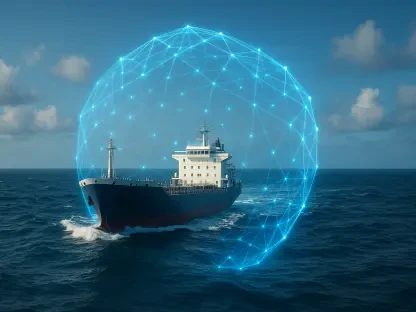

The rapid intensification of sea surface temperatures across the central and eastern Pacific has signaled the arrival of a super El Niño, a phenomenon that poses an unprecedented challenge to global economic stability. While meteorological technology has advanced significantly, providing early warnings with high precision, the risk models used by global businesses and the insurance sector remain dangerously outdated. These models often fail to account for the systemic complexity of modern commerce, where a single weather event in one region can trigger a cascade of failures across a globalized supply chain. As these climatic signals grow more intense throughout 2026, the discrepancy between environmental reality and analytical tools becomes a primary source of corporate vulnerability. It is no longer sufficient to simply track storm paths; organizations must understand how these physical shifts translate into operational paralysis. The industry must confront the reality that traditional assessment methods are ill-equipped to handle modern disruptions.
Beyond Physical Assets: The Network Vulnerability Gap
A fundamental disconnect exists between model design and modern economic reality, as traditional catastrophe models focus primarily on localized property damage rather than systemic disruption. These frameworks were originally built to estimate the repair costs for physical assets like warehouses and factories after a storm or flood event. However, in today’s highly integrated market, the actual cost of a climate event is often found in the ripple effect that occurs when a single node in a value chain fails. A warehouse remaining structurally sound after a storm is of little value if the roads leading to it are submerged or if the workforce cannot reach the facility. Modern models must evolve to quantify these intangible losses, moving beyond the simple valuation of bricks and mortar to assess the health of the entire network. Without this shift, companies will continue to underestimate their exposure to events that might leave their assets intact but their revenue streams severed by failures elsewhere.
In a globalized market, weather events do more than destroy buildings; they fundamentally shift customer demand and paralyze the fluid movement of goods across vast distances. Traditional risk models tend to break down when faced with integrated logistical failures because they treat every facility as an isolated island of risk. For instance, a super El Niño can disrupt major shipping lanes or alter the availability of raw materials in a way that bypasses traditional insurance triggers based on physical damage. This lack of visibility into the secondary and tertiary impacts of climate shifts creates a false sense of security among decision-makers. When supply chains are optimized for efficiency rather than resilience, even a minor disruption can lead to prolonged operational delays and significant financial losses. To address this, risk managers must incorporate dynamic logistical data into their forecasts, ensuring that the model reflects the actual movement of commerce rather than stationary assets.
Strategic Adaptation: Overcoming Bias and Ensuring Resilience
The transport and logistics sectors are sounding the alarm, urging organizations to move beyond passive observation toward active scenario planning as the window for preparation narrows. A significant hurdle remains the psychological limitation of catastrophe modeling, which often reinforces market expectations by simply playing back recent history in a loop. This historical bias prevents risk managers from identifying emerging vulnerabilities that have not yet been tested by a severe climate event in the current economic landscape. Agriculture and food supply chains stand out as the most vulnerable sectors due to their heavy reliance on regional infrastructure and stable water availability throughout the year. While forecasting provides a geographic roadmap, the true risk is hidden in how regional shifts disrupt global trade routes. Mapping these dependencies requires a granular level of detail that traditional assessments do not provide. Organizations must look deeper into their supply base to identify where changes might affect them.
The strategic path forward necessitated a comprehensive reevaluation of how operational resilience was integrated into the core of corporate strategy and risk mitigation. Success in this landscape was measured by the ability of insurers to price interconnected consequences rather than just direct physical losses. Organizations that navigated the super El Niño cycle shifted their focus toward historical auditing and direct engagement with suppliers beyond the primary tier. By analyzing the shocks observed during previous cycles like those in 1997 or 2015, companies developed robust contingency plans that prioritized flexibility over lean efficiency. These leaders moved away from static data and embraced dynamic simulations that accounted for the complex interplay between climate and commerce. The lessons learned during this period demonstrated that building systems capable of absorbing shocks was the only way to ensure viability. Ultimately, the transition toward proactive risk management redefined industry standards for operational resilience.