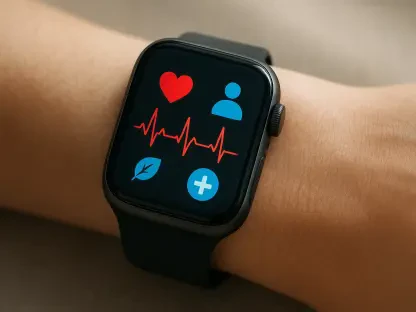

Millions of consumers currently strap advanced wearable devices to their wrists with the implicit trust that the biometric data displayed is as precise as a clinical assessment performed in a hospital. While marketing campaigns for these sleek gadgets emphasize life-saving potential and comprehensive wellness monitoring, independent evaluations continue to reveal significant discrepancies between real-world performance and laboratory standards. Experts in physiological monitoring have noted that although hardware has become more sophisticated from 2026 onward, the algorithms interpreting raw data often struggle with individual physiological differences. This gap between perceived accuracy and actual sensor output creates a false sense of security for many users who make significant lifestyle or medical decisions based on these metrics. Understanding why these inaccuracies persist requires a closer look at how photoplethysmography and sensors interact with diverse skin tones, activity levels, and health conditions during use.
Technical Sensor Discrepancies
Heart Rate Monitoring Gaps
Monitoring heart rate variability and active caloric burn has become the cornerstone of modern wearable technology, yet the reliability of these metrics remains surprisingly inconsistent across manufacturers. The primary technology utilized, known as photoplethysmography, relies on light sensors to detect blood volume changes, which can be easily disrupted by external factors such as ambient light, sweat, or skin pigmentation. Independent testing has shown that during high-intensity interval training, some top-tier devices miss peak heart rate readings by as much as fifteen percent, leading to skewed assessments of cardiovascular strain. These errors compound when the device attempts to calculate caloric expenditure, as the algorithms rely heavily on the accuracy of heart rate inputs. Consequently, a user might believe they have burned significantly more calories than they actually have, leading to nutritional imbalances or stalled fitness progress that the tracker cannot explain in real-time.
Motion Tracking Limitations
Movement-based tracking adds another layer of complexity to the accuracy problem because accelerometers and gyroscopes often fail to distinguish between purposeful exercise and incidental motion. For instance, mundane activities like folding laundry or typing on a keyboard can be misinterpreted as steps or light activity, inflating the daily movement totals by thousands of counts over a week. This lack of specificity is particularly problematic for individuals using these devices to manage chronic conditions like obesity or metabolic disorders, where precise energy balance is critical for health outcomes. Furthermore, the proprietary nature of the algorithms used by major tech companies prevents third-party researchers from fully auditing how data is filtered or corrected. This lack of transparency means that while a device might look high-tech, its internal logic might still be using outdated models that do not account for the wide range of human movement patterns or the specific biomechanics of different age groups.
Strategies for Reliability
Standardized Open Benchmarks
Addressing these systemic gaps requires a fundamental shift in how the industry approaches data validation and sensor calibration from 2026 into the future. Experts suggest that a move toward standardized open-source benchmarks would allow for more rigorous testing and comparison between different hardware platforms, reducing the variance currently seen in the market. Instead of relying on secret “black box” algorithms, manufacturers could adopt collaborative frameworks that incorporate vast datasets from diverse populations to improve the precision of their predictive models. Integration with medical-grade peripherals, such as chest strap monitors or blood pressure cuffs, also offers a pathway to calibrate wrist-based sensors in real-time, significantly narrowing the margin of error for critical biometrics. This hybrid approach ensures that the convenience of a smartwatch does not come at the expense of data integrity, providing users with a more honest reflection of their physiological state.
Personalized Calibration Methods
To truly close the gap in tracker accuracy, users and medical professionals sought more robust verification methods that moved away from passive observation. The implementation of personalized calibration sessions, where a device was tuned to an individual’s specific heart rate recovery and gait pattern, became a recommended standard for those requiring high-precision data. Furthermore, developers focused on creating contextual awareness within the software to better distinguish between environmental noise and actual physiological signals. These advancements allowed for the development of adaptive filtering techniques that accounted for skin tone and body composition more effectively than previous iterations. Future developments leaned heavily into cross-device synchronization and the use of edge computing to process data locally, ensuring that accuracy was prioritized over battery-saving compromises. By demanding transparency, the industry pushed toward a reality where digital health data finally matched clinical equipment.