
The illusion that a single geographic disaster remains confined within its own borders has evaporated, replaced by a reality where a minor tremor in a digital hub can paralyze markets across the Atlantic within minutes. In today’s volatile environment, the global risk landscape is undergoing a fundamental transformation, shifting from a series of isolated incidents to a state of continuous, cascading disruption. Traditional risk assessment models are struggling to keep pace with the sheer speed and complexity of modern threats because the core challenge lies at the intersection of climate shocks, geopolitical instability, and deep-seated supply chain dependencies. These elements no longer function as independent variables; instead, they interact in a contagion effect that can rapidly destabilize entire global systems. This market analysis explores how risk modeling is evolving to bridge the gap between technical assessment and the systemic reality of contemporary vulnerabilities, setting a new standard for organizational preparedness in a world where everything is linked.
Redefining Resilience in an Age of Interconnected Volatility
The current marketplace demands a radical rethinking of what it means to be resilient. For years, resilience was viewed as the ability to return to a baseline state after a shock, but in a world defined by perpetual motion and overlapping crises, there is no stable baseline to return to. Organizations now find themselves navigating a terrain where environmental disasters trigger economic shifts, which in turn fuel political unrest. This cycle creates a feedback loop that conventional risk management strategies were never designed to handle. The focus has shifted from protecting individual assets to safeguarding the integrity of the entire operational network, acknowledging that a failure in a distant, third-party node is just as dangerous as an internal malfunction.
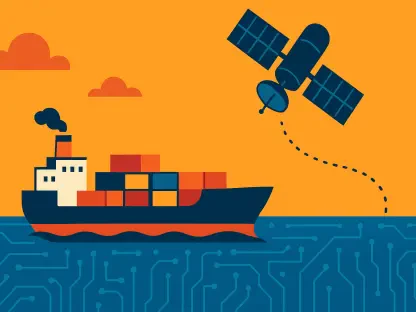
Modern risk intelligence must account for the reality that volatility is now a structural feature of the global economy rather than a temporary anomaly. This requires a move away from static, annual risk reviews toward a more dynamic, sensory-based approach to data. Firms are increasingly looking at “living” models that ingest real-time information from satellite imagery, social sentiment, and IoT sensors across the supply chain. By redefining resilience as a proactive, adaptive capability rather than a reactive safety net, businesses are positioning themselves to capitalize on the turbulence that often leaves less prepared competitors struggling to survive.
The Shift from Isolated Perils to Hyper-Interconnected Systems
To understand the current state of risk management, one must look at the historical transition from localized disruptions to global systemic shocks. For decades, underlying perils—such as severe storms or political unrest—were treated as discrete events with predictable geographic boundaries and linear consequences. However, the environment in which these events manifest has changed irrevocably due to the pursuit of lean manufacturing and just-in-time delivery. Modern global supply chains have been optimized for extreme efficiency, often at the expense of redundancy, creating a fragile landscape where a disruption in one geographic node can transmit impacts across the globe with unprecedented velocity.
This evolution toward hyper-interconnectivity means that the window for organizational response has narrowed to almost nothing. In the past, a regional disaster might take weeks to affect global markets, allowing companies time to adjust their procurement strategies or logistics routes. Today, the resulting shocks travel through the arteries of trade and digital infrastructure almost instantaneously. Recognizing this evolution is essential because it highlights why traditional, reactive strategies have become obsolete. The foundational concepts of risk must now account for the speed of contagion, requiring a transition from historical data extrapolation toward forward-looking, high-frequency simulations.
Moving Beyond the Limitations of Conventional Models
The Failure of Siloed Frameworks and the Correlation Gap
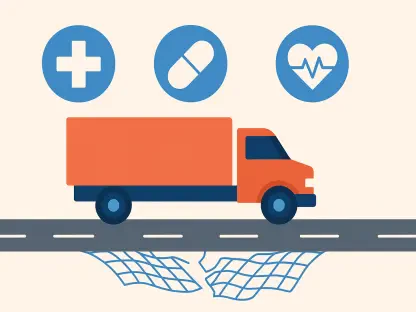
A critical aspect of the current risk discourse is the inherent inadequacy of legacy catastrophe models that dominate much of the insurance and financial planning sectors. Most existing frameworks were built to analyze individual perils—such as a single hurricane or earthquake—within siloed exposures, ignoring the knock-on effects that define the modern era. These models frequently fail to account for “correlation,” or the way multiple systems are stressed simultaneously by a single root cause. When a primary event, such as a major flood, triggers secondary failures like infrastructure collapse or supplier bankruptcy, traditional models often miss the connection entirely.
This gap is particularly evident in business interruption modeling, where the failure to recognize these triggers leads to a systematic mispricing of risk and a dangerous underestimation of total financial impact. When risk is viewed through a siloed lens, the true cost of a disaster is hidden behind a series of seemingly unrelated line items. To fix this, a systemic view of risk is becoming mandatory. Without integrating these correlations, organizations remain blind to how losses accumulate across various lines of business, leading to capital allocation strategies that are fundamentally disconnected from the reality of the threats they face.
Analyzing the Intersection: Climate and Geopolitical Concentrations
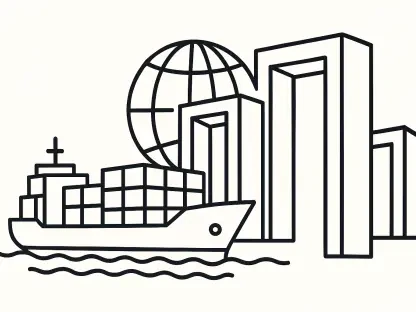
Another essential angle involves the overlap of climate exposure and geopolitical concentration, which represents a significant blind spot in modern modeling. Critical infrastructure assets, such as ports and data centers, are frequently located in regions that are simultaneously exposed to extreme weather and shifting political alliances. For instance, the global maritime industry’s heavy reliance on port technology and hardware manufactured in specific geopolitical hubs creates a massive vulnerability. A localized disaster or a political rift in that hub would ripple through port operations worldwide, regardless of the local weather conditions at those ports.
These complex, overlapping risks necessitate bespoke, engineering-based solutions that look beyond the physical boundaries of a single site to identify systemic dependencies. Investors are beginning to realize that owning a “green” or “resilient” building is meaningless if the regional power grid or water supply is located in a high-risk zone. The market is shifting toward a more granular level of analysis that maps out the intricate web of dependencies between physical assets and the broader socio-political and environmental systems they inhabit. This level of depth allows for a more accurate assessment of long-term viability in a fragmenting global order.
Overcoming the Failure of Imagination: Radical Scenarios
Depth in risk modeling also requires addressing the “plausibility trap,” where organizations base their continuity plans only on scenarios they deem likely or “realistic.” This conservative approach often leaves companies unprepared for low-frequency, high-impact events that are truly destabilizing to the global order. To combat this, industry leaders are pushing for radical scenario testing that includes looking outside the fence to understand the vulnerabilities of utility providers and regional infrastructure. Even if a company’s own facility is resilient, it remains non-operational if the local transport networks or telecommunications fail.
Addressing these complexities requires a grassroots approach that complements top-down digital models. By surveying employees and local managers, organizations can uncover hidden dependencies—such as a specific road that is the only access point for a crucial warehouse—that a satellite model might overlook. These human insights are vital for creating a truly robust risk profile. Moving from a mindset of “what is likely” to “what is possible” helps firms build the flexibility needed to handle the unexpected. This shift in perspective is the hallmark of an organization that has moved beyond mere compliance into a state of true strategic readiness.
Emerging Trends and the Future of Risk Intelligence
Looking ahead, several emerging trends are set to reshape the industry, most notably the transition toward “resilience by design.” Rather than treating disaster recovery as a reactive afterthought, organizations are beginning to embed redundancy and flexibility into the initial architecture of their operations and infrastructure. This shift is being driven not only by a desire for operational continuity but also by the evolving requirements of the global insurance market. As risks become more intricate, insurers are increasingly demanding evidence of credible, engineering-based resilience strategies before they are willing to grant comprehensive coverage or favorable terms.
Technological innovations, including AI-driven predictive analytics and digital twins of global supply chains, will likely play a pivotal role in this evolution. These tools allow for more sophisticated simulations, helping firms move from speculative planning to data-backed strategy that accounts for thousands of variables simultaneously. We can expect a regulatory shift as well, with more stringent requirements for systemic risk reporting across various jurisdictions. The future of risk modeling lies in its ability to provide a holistic view that integrates environmental, social, and geopolitical data into a single, cohesive framework that can be used for both defensive planning and offensive market positioning.
Strategies for Building a Robust Organizational Architecture
To navigate this complex landscape, businesses should adopt several actionable strategies rooted in a systemic view of risk. First, it is crucial to move away from siloed thinking; risk managers must collaborate across departments to identify how a disruption in one area, such as IT, affects others like logistics or customer service. Second, organizations should conduct thorough audits of their supply chains to identify geographic concentrations that pose both climate and geopolitical risks. Diversifying these dependencies is no longer just a best practice—it is a survival requirement in an era of regionalized trade blocks and erratic weather patterns.
Furthermore, firms should invest in resilience by design by building redundancies into critical systems, such as disconnected backup servers or alternative logistics routes that do not rely on a single global choke point. Engaging in radical stress testing that assumes the total failure of public infrastructure can help uncover hidden vulnerabilities that standard plans ignore. Finally, maintaining a transparent dialogue with insurers and stakeholders about these resilience efforts can lead to better coverage terms and more accurate risk pricing. By applying these insights, professionals can transform their organizations from vulnerable participants in a global network to robust entities capable of weathering systemic shocks while others falter.
Toward a Holistic Paradigm of Global Resilience
The traditional methods of assessing risk were no longer sufficient for a world defined by cascading threats and hyper-connectivity. The evolution of global risk modeling underscored that interconnectivity acted as the ultimate risk multiplier, and the failure to account for correlation led to a profound misunderstanding of potential financial loss. The integration of geopolitical realities with climate exposure became the next frontier for strategic planning, requiring a shift from planning for what was deemed plausible to building for what was considered extreme. This transition was not merely a technical update but a necessary cultural shift within the world’s most successful organizations.
This topic remained significant because the complexity of our global systems showed no signs of receding. Long-term viability depended on an organization’s ability to embed resilience into its operational DNA from the ground up. By adopting a holistic approach that accounted for the interconnected nature of modern threats, leaders were able to maintain stakeholder confidence and ensure stability during times of crisis. To maintain this edge, businesses should now audit their digital twins for “correlation blind spots” and ensure that their procurement strategies prioritize geographic diversity over marginal cost savings. The path forward proved clear: resilience was no longer an optional safeguard but a fundamental requirement for navigating an era of unprecedented global volatility.