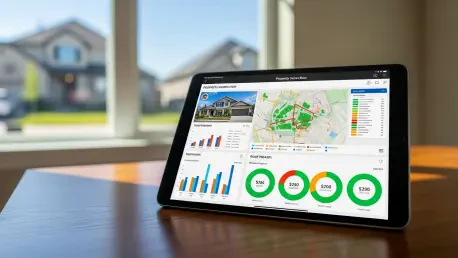

The rapid evolution of the residential insurance sector has been defined by a fundamental shift from traditional actuarial models to those powered by real-time proprietary data ecosystems. Porch Group has successfully navigated this transition by positioning itself at the intersection of home services and financial protection, allowing for a unique vantage point on risk. By capturing granular data through its inspection software and utility connection services, the company bypasses the vague generalizations that typically plague home insurance underwriting. This strategy does not just improve efficiency; it fundamentally alters the cost structure of customer acquisition and policy management. Instead of relying on expensive third-party lead generation, the organization uses its software presence to identify high-intent customers at the moment they purchase a home. This integrated approach allowed for a doubling of profit margins, proving that a software-first mindset is essential for success.
Part 1: Strategic Data Integration
Strategy 1: Asset Intelligence
The primary driver behind the significant margin expansion seen recently is the organization’s ability to access high-fidelity data that competitors simply cannot reach. Through its widespread adoption of home inspection software, the company gains insights into the specific condition of a property’s critical systems before any coverage is issued. While traditional insurers often rely on municipal records or homeowner surveys—which are frequently outdated—this firm utilizes current inspection reports to identify potential hazards like aging roofs or faulty wiring. This creates a data moat that protects the company from underpricing risks that would otherwise lead to significant losses. By pricing policies based on the actual health of the home rather than broad geographic averages, the underwriting team has achieved a level of precision that translates into higher net income. This granular focus ensures that the highest quality risks are retained, while riskier properties are priced appropriately for the firm.
Strategy 2: Cost Reduction
Building on the foundation of data-driven underwriting, the company has also mastered the art of vertical integration to drive down the expenses associated with finding new policyholders. In the traditional insurance world, customer acquisition costs are a major drag on profitability, often requiring massive marketing budgets and agent commissions. However, by providing essential software to home inspectors and moving companies, the firm creates a natural pipeline of customers who are already in the midst of a life-transition event. These homeowners are actively seeking services, and the organization can offer insurance at the point of sale with minimal friction. This synergy significantly reduces the reliance on external marketing channels, allowing the saved capital to be reinvested into product development and technology. The result is a self-sustaining cycle where every software user becomes a potential insurance client, maximizing the lifetime value of the relationship without the typical overhead costs.
Part 2: Operational Scale
Strategy 3: Risk Analytics
Precision in loss ratio management has been the second pillar of this financial turnaround, facilitated by advanced predictive analytics that analyze historical property performance. By applying machine learning algorithms to its massive database of home inspections and service histories, the company can predict which properties are most likely to experience claims over a multi-year horizon. This proactive approach allows for the implementation of preventative measures, such as recommending repairs or maintenance to policyholders before a minor issue becomes a catastrophic loss. Moreover, the integration of real-time data allows for dynamic pricing adjustments that reflect the actual risks present in the portfolio at any given time. This agility has enabled the organization to outperform industry benchmarks for loss ratios, even in regions prone to environmental volatility. The ability to distinguish between a well-maintained home and a neglected one has proved to be a decisive factor in doubling the insurance profit margins for the company.
Strategy 4: Future Growth
The final phase of this transformation involved the adoption of a capital-light reinsurance strategy that mitigated exposure to extreme events while maintaining high returns on equity. Decision-makers shifted the focus toward a hybrid model where the company retained the most profitable portions of the risk while transferring more volatile exposures to global reinsurance partners. This move stabilized the balance sheet and provided a consistent stream of fee income, which acted as a buffer against market fluctuations. Managers prioritized the automation of claims processing, utilizing digital tools to verify losses quickly and reduce the administrative burden on the staff. These steps collectively ensured that the infrastructure could scale without a corresponding increase in operational expenses. Moving forward, the industry learned that success required a move away from legacy systems toward modular platforms. Professionals realized that long-term stability was achieved by empowering customers with data-driven maintenance insights.