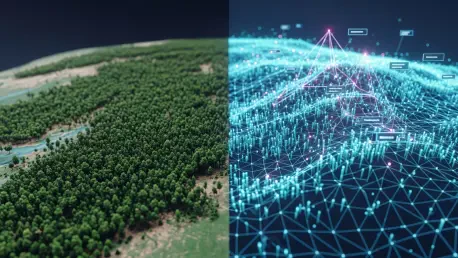

The traditional wood-paneled halls of Lloyd’s of London are currently witnessing a technological transformation that challenges centuries of conventional underwriting wisdom as climate volatility intensifies. By forging a partnership with MAP Underwriting, ZestyAI has officially exported its specialized risk decision platform to the heart of the global insurance industry. This collaboration signifies a major leap in how historical institutions manage the financial and physical volatility brought on by escalating wildfire events across the globe.
Navigating the New Frontier of Climate Risk in Global Insurance
The entry of ZestyAI into the London market serves as a pivotal milestone for both the tech firm and the Lloyd’s ecosystem. MAP Underwriting, a managing agency known for its technical precision, integrated the Z-FIRE technology to sharpen its management of California-based property portfolios.
This move suggests that even the most established insurers are now looking toward advanced AI to navigate an era defined by extreme weather. Integrating such systems into the historic Lloyd’s framework helps syndicates address the increasing unpredictability of international climate risks.
The Evolution of Wildfire Modeling and the Need for Predictive Intelligence
Historically, wildfire risk assessment relied on broad-scale modeling that offered a generalized view of threat levels across large geographic areas. These traditional methods often lacked the nuance required to distinguish between a property that is likely to burn and one that is well-protected.
As losses continue to mount, the London market has pivoted toward high-fidelity data to maintain the stability of its complex international books. Underwriters now prioritize predictive intelligence that can account for the rapid environmental changes occurring in high-risk zones.
Bridging the Data Gap: Core Features of Z-FIRE Technology
The transition from static maps to dynamic intelligence is powered by platforms that convert raw environmental data into actionable insights. ZestyAI’s platform provides a bridge between massive amounts of satellite imagery and the specific needs of an underwriter’s desk.
This technology transforms how risk is perceived by offering a real-time view of property vulnerability. It allows for a more fluid interaction between raw data and the final underwriting decision.
High-Resolution Property Analytics
Through the use of computer vision, the platform scrutinizes specific property features such as building materials and roof types. This level of detail allows for a much clearer understanding of how a specific structure might react when exposed to embers.
The analysis goes beyond the house itself to look at attached structures and localized surroundings. Such granularity ensures that every policy is backed by a specific physical assessment.
Machine Learning and Massive Loss Datasets
Predictive accuracy is achieved by training models on the industry’s most extensive wildfire loss datasets. By comparing past events with current property conditions, the AI identifies hidden patterns that human analysts might overlook.
This process enables the model to evolve as new fire seasons provide more data. Consequently, the accuracy of the platform continues to improve with every analyzed event.
Granular Environmental Assessment
The technology also captures property-level variations in topography and vegetation density. By assessing the defensible space around a building, the model provides a far more accurate picture of risk than regional averages.
Environmental factors like the slope of the land or the proximity of brush are factored into a single score. This ensures that the environmental context is never ignored during the evaluation.
Precision Over Approximation: What Sets AI-Driven Risk Assessment Apart
The shift from generalized maps to property-specific risk profiles allows for a more disciplined approach to underwriting. Instead of avoiding entire zip codes, insurers can now identify individual properties that meet safety standards even in high-risk zones.
This data-led perspective empowers firms to maintain a balanced portfolio without sacrificing growth. It creates a merit-based system for property owners who invest in fire mitigation.
ZestyAI and MAP Underwriting: A Strategic Partnership in Action
MAP Underwriting currently utilizes Z-FIRE to refine its California property reinsurance strategies. This expansion from the domestic U.S. market to international insurance hubs illustrates the growing global demand for hazard intelligence.
The partnership provided MAP with the clarity needed to make confident decisions in regions previously considered too volatile. It established a blueprint for how Lloyd’s syndicates can adopt American tech for global use.
Reflection and Broader Impacts
The adoption of these technologies represented a shift in how the industry perceives long-term liability. It highlighted the necessity of moving away from historical averages toward forward-looking data.
This transition was not without challenges, as legacy systems required significant updates to accommodate AI. However, the benefits of reduced uncertainty far outweighed the initial hurdles of implementation.
Reflection
Using predictive AI reduced pricing uncertainty and allowed for a more objective evaluation of risk. The industry recognized that granular data was the only way to stay ahead of rapidly changing environmental conditions.
The shift also prompted a deeper conversation about the role of technology in traditional underwriting. It proved that human expertise and machine intelligence could coexist effectively.
Broader Impact
This technological shift influenced global reinsurance trends by stabilizing markets facing climate-driven threats. It encouraged a more resilient insurance framework that prioritized data-backed discipline.
Long-term stability became more attainable as insurers gained the tools to price risk accurately. This contributed to a more sustainable market for both providers and policyholders.
The Future of Risk Assessment in an Unpredictable Climate
AI redefined the relationship between data and underwriting by providing a clearer lens through which to view environmental hazards. As predictive modeling became more integrated into the London market, it ensured the continued insurability of regions most exposed to the changing climate.
This evolution paved the way for more sustainable insurance practices that balanced risk with technological foresight. The industry successfully moved toward a model where data led the way in securing a volatile world.