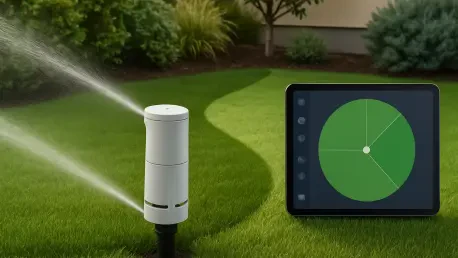

The traditional approach to residential landscape maintenance often involves a complex web of underground pipes and fixed sprinkler heads that frequently waste water by saturating sidewalks and driveways instead of the grass itself. Irrigreen has introduced a high-tech departure from these legacy methods by utilizing a unique water-painting technique designed to provide precise coverage tailored to the specific contours of a lawn. This system modernizes yard care by replacing standard multi-head layouts with a digitally controlled alternative that adjusts spray patterns in real-time. Unlike conventional irrigation setups that require extensive digging and intricate multi-wire configurations for every zone, the Irrigreen architecture utilizes a streamlined approach that significantly reduces labor. By moving away from the flood and hope mentality of the past, this technology promises a more sustainable approach for suburban water management. The focus on precision reflects a broader industry shift toward resource conservation and smart home integration, yet the transition from mechanical simplicity to digital complexity is not without its hurdles.
Streamlined Architecture and Documentation Challenges
The physical implementation of the Irrigreen system relies on a simplified daisy-chain architecture where up to sixteen individual sprinkler heads can be connected in sequence using a single two-wire control cable. This design choice drastically simplifies the installation process compared to traditional systems that require a dedicated wire for every valve. Furthermore, the central controller maintains backward compatibility, allowing homeowners to integrate up to eight traditional sprinkler valves, though the system’s most advanced precision features remain exclusive to the proprietary Irrigreen heads. However, the engineering sophistication of the hardware is frequently undercut by a frustrating lack of comprehensive documentation. Users are often left without a printed manual, forced instead to navigate a fragmented collection of online guides and instructional videos that can be difficult to follow during an active installation. This digital-only strategy often leaves homeowners feeling flummoxed when attempting to troubleshoot wiring issues or configure the initial zone layouts. While the hardware suggests a premium experience, the instructional resources often fall short of professional standards.
Software Dependencies and the Path Toward Reliability
The system’s heavy reliance on a mobile application for essential tasks like calibration and firmware management introduced significant technical friction during the deployment phase. Many users found that the app repeatedly failed to calibrate the specialized sprinkler heads to the local water pressure, a problem that was ultimately traced back to a firmware update that refused to install correctly. This software-induced paralysis rendered the advanced hardware temporarily non-functional, illustrating a growing trend where smart devices were hampered by inconsistent cloud dependencies. Although some units eventually resolved these glitches after several days of idling, the experience highlighted a steep learning curve for those expecting a seamless out-of-the-box solution. To mitigate these risks, future iterations of smart irrigation technology needed to prioritize offline functionality and robust error-handling protocols. Manufacturers were encouraged to provide physical backup documentation and more stable local control options to ensure that a simple software bug did not compromise the health of an entire landscape. Reliable yard care required a better balance between precision and software stability.