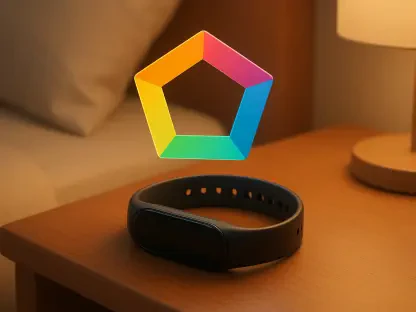

Modern tech consumers are increasingly reclaiming their cognitive focus by shedding the persistent glow of digital interfaces in favor of subtle technologies that monitor wellness without demanding constant attention. Despite its minimalist and faceless design, this tracker includes advanced hardware such as SpO2 and skin temperature sensors that are typically reserved for much more expensive flagship smartwatch models. This shift represents a fundamental change in how technology integrates into the human experience, moving away from loud notifications and toward a silent partnership in health management. By removing the glass screen, designers have focused on the raw utility of data collection, creating a device that feels more like an accessory than a high-tech machine. This philosophy prioritizes the wearer’s mental peace, ensuring that health metrics are captured accurately throughout the day without the distracting allure of social media alerts.
The Strategic Pivot: Ambient Health Tracking
Reclaiming Focus Through Minimalist Design
The move toward screenless wearables is driven by a collective exhaustion with the always-on nature of modern smartwatches, which often fragment user attention through haptic pings and visual clutter. By stripping away the display, the Fitbit Air eliminates the primary source of battery drain and user distraction, allowing the device to disappear into the background of daily life while maintaining professional monitoring. This absence of a screen is not a technical limitation but a deliberate lifestyle choice intended to promote digital mindfulness and reduce the cognitive load associated with managing another interface. Users are finding that they no longer need to check their wrists for every notification, instead relying on the companion application for analysis at a time of their choosing. This creates a more intentional relationship with data, where health tracking becomes a passive benefit rather than an active chore requiring constant visual engagement.
Beyond the psychological benefits of a screenless existence, the physical architecture of the device allows for a level of comfort that traditional smartwatches struggle to achieve. Without the bulk of a display or a high-resolution touch panel, the chassis is significantly thinner and lighter, making it ideal for continuous twenty-four-hour wear. This is particularly relevant for sleep tracking, as many users find large smartwatches cumbersome or uncomfortable to wear throughout the night. The streamlined design ensures that the sensors maintain consistent, high-quality contact with the skin, which is vital for obtaining accurate readings of peripheral oxygen saturation and body temperature. By optimizing the form factor for physical ergonomics rather than visual real estate, the device achieves a degree of unobtrusiveness that encourages long-term adherence to health monitoring protocols, ensuring there are no gaps in the user’s longitudinal health data.
High-Fidelity Bio-Sensing in a Compact Frame
Integration of medical-grade sensors into such a small footprint required a radical rethinking of internal component arrangement and thermal management. The inclusion of an SpO2 sensor provides critical insights into respiratory health and sleep quality, while the skin temperature sensor offers a leading indicator for systemic changes such as the onset of illness. These components are coupled with a highly efficient processing unit that manages data locally before syncing with the cloud, ensuring that privacy is maintained without sacrificing analytical depth. This hardware stack proves that faceless does not mean feature-light, as the device outpaces many entry-level smartwatches in the breadth of physiological metrics it can capture. The focus is squarely on the quality of the bio-signal, providing a dense stream of information that can be used to identify early warning signs of stress before they manifest as physical symptoms or health issues.
Power management in this category of wearables has been revolutionized by the removal of the power-hungry display, allowing the internal battery to focus entirely on sensor polling and data transmission. In an era where daily charging is a common frustration for smartwatch owners, the ability to go for weeks without a power source changes the utility of the device from a gadget to a reliable health utility. This longevity is supported by an optimized Bluetooth Low Energy implementation that maintains a persistent but low-impact connection to the smartphone ecosystem. The absence of a screen allows for a more ruggedized and water-resistant construction, as there is no fragile glass surface prone to cracking or leaking under pressure. This durability makes the device suitable for a wider range of environments, from high-intensity athletic training to professional settings where a glowing screen might be considered inappropriate, thus expanding the reach of health monitoring.
Establishing a New Standard for Personal Wellness
The emergence of the Fitbit Air signaled a decisive turn toward a more integrated and less intrusive future for personal health technology. It demonstrated that sophisticated biometrics did not require a bulky interface, and it successfully challenged the industry’s reliance on visual notifications as the primary value proposition of wearables. This development paved the way for a generation of devices that acted as silent guardians, providing users with the data needed to make informed lifestyle choices without demanding their constant attention. The focus should now shift toward refining the artificial intelligence models that interpret this raw data, ensuring that the insights provided are both clinically relevant and easy to act upon. Stakeholders should prioritize the creation of even more specialized sensors that can detect a broader array of biomarkers, while ensuring that the principles of digital minimalism and user privacy remain at the core of all future wearable designs.