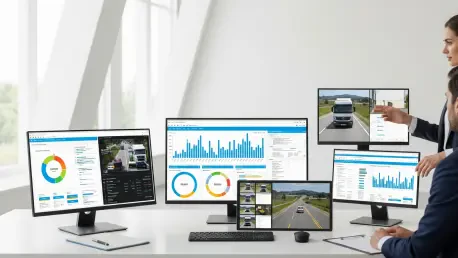

The traditional belief that commercial fleets must bear the full financial burden of telematics hardware to maintain ‘skin in the game’ is rapidly being dismantled by data-driven evidence from industry analysts. Historically, insurance carriers operated under the assumption that if a policyholder did not pay for their own equipment, they would lack the necessary incentive to utilize the technology effectively or prioritize safety improvements. However, extensive research conducted through 2026 reveals that the initial source of funding for these devices has virtually no correlation with the ultimate safety performance of the fleet. What matters far more than the initial capital expenditure is the operational framework established after the installation process is complete. By shifting the focus away from hardware costs and toward disciplined management practices, insurers are finding that they can drive much higher engagement levels. This realization allows for a more aggressive approach to subsidization, which removes the primary barrier to entry for smaller fleets while maintaining high standards for risk reduction.
Overcoming the Subsidization Paradox
Balancing Fleet Adoption with Program Quality
Financial subsidization serves as the most powerful tool available to insurance carriers looking to accelerate the adoption of telematics across their commercial portfolios. Many fleet owners are hesitant to invest thousands of dollars upfront for hardware and installation, especially when profit margins are thin and the immediate return on investment is not always obvious. When carriers absorb these initial costs, participation rates spike, allowing for a much broader data set to be collected from diverse driving environments. Critics once argued that this approach would lead to lower-quality data, but the reality is that the financial hurdle was simply preventing safety-conscious fleets from accessing the tools they needed. Comparative analysis between fleets that paid for their own equipment and those that received subsidies shows that performance outcomes are identical. Debunking the “skin in the game” myth allows insurers to move forward with subsidy models that prioritize widespread road safety over upfront equipment fees, ensuring that even smaller operations can benefit from high-level oversight.
The Differentiator Between Managed and Unmanaged Programs
The defining characteristic of a successful telematics deployment is not the hardware itself, but whether the program is actively managed or left to run on autopilot. Managed programs involve a structured approach where dedicated success managers work directly with fleet leadership to interpret complex data and identify specific high-risk behaviors. This active oversight ensures that insights are converted into actionable coaching moments, rather than just accumulating as raw data in a cloud environment. The disparity in results is significant; fleets with managed oversight consistently show a much higher reduction in accident frequency compared to unmanaged counterparts. By providing this additional layer of support, carriers ensure that fleets do not become overwhelmed by the sheer volume of information. This managed approach transforms telematics from a passive monitoring tool into a dynamic safety initiative that fosters a culture of accountability and continuous improvement across the entire driving staff, leading to long-term risk mitigation.
Leveraging Advanced Technology and Strategy
The Transformative Role of Video Telematics
The introduction of video telematics has created what many industry experts describe as a “sprinkler moment,” providing the crucial visual context that standard GPS data lacks. While basic telematics provides the “what” and the “where” of a driving event, video adds the “why” by capturing the actual environment surrounding an incident. For example, a hard braking event might be a sign of driver negligence, or it could be a life-saving maneuver to avoid an erratic motorist. Without video evidence, it is nearly impossible for managers to distinguish between these scenarios, often leading to unfair coaching or missed opportunities for improvement. Fleets that have upgraded to video-enhanced systems consistently realize an additional 25 percent improvement in safety scores compared to those using only basic tracking. This level of transparency protects drivers from false claims and provides the objective evidence needed for fact-based coaching sessions. As video becomes the industry standard, the fusion of visual context and behavioral data proves to be the most effective way to drive safety.
Strategic Frameworks for Long-Term Carrier Success
For insurance carriers, the primary strategic advantage of subsidized telematics lies in the ability to gather actionable data across an entire book of business rather than just a small subset of clients. This comprehensive visibility allows carriers to identify high-risk accounts early and intervene with management resources before significant losses occur. Moreover, a well-structured program serves as a powerful retention tool, as fleets integrated into a carrier’s safety ecosystem are less likely to shop for new coverage based solely on price. The relationship shifts from a transactional exchange of premiums to a strategic partnership focused on mutual success. Modern strategies have evolved to link ongoing subsidy levels directly to the safety performance and engagement of the policyholder, creating a new form of accountability based on active participation. By bridging the gap between carrier investment and fleet performance, insurers have created a scalable model that incentivizes continuous improvement and rewards those who take safety seriously.
Implementing Sustained Operational Discipline for Safety
The evolution of commercial auto telematics reached a pivotal turning point when the industry moved past the outdated hardware debate and embraced a management-centric philosophy. Organizations that succeeded in lowering their loss ratios did so by prioritizing active oversight, integrating video context, and fostering a culture of continuous driver development. These leaders recognized that the most effective strategy involved using subsidies to remove adoption barriers while simultaneously implementing rigorous management protocols to ensure the data was used effectively. Successful firms established a standard where telematics was not just a tool for monitoring, but the foundation of a comprehensive risk management strategy. They utilized performance-linked incentives to maintain long-term engagement and invested in success managers to bridge the gap between technical data and human behavior. By focusing on these operational disciplines, the industry successfully transformed telematics from a niche technology into a fundamental component of road safety and financial performance.