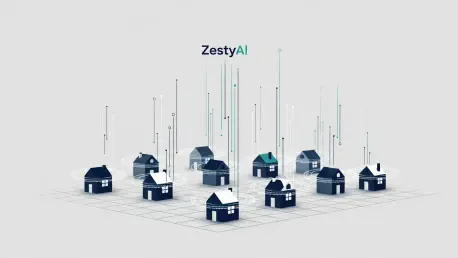

The traditional reliance on static, territory-wide risk mapping is rapidly collapsing under the weight of climate volatility, forcing carriers to seek more precise tools for survival. DUAL North America has positioned itself at the forefront of this shift by expanding its partnership with ZestyAI to implement property-specific intelligence. This evolution replaced the broad-brush approach of legacy systems with ZestyAI’s Z-FIRE and Z-STORM models, specifically targeting the high-stakes California homeowners market. By leveraging advanced machine learning, the industry moved toward a standard where individual structural characteristics dictate coverage rather than general geographic proximity.
Evolution of Risk Assessment: DUAL North America and ZestyAI
The insurance sector previously operated on regional risk modeling, which assessed territories based on aggregate historical trends. However, the emergence of specialty administrators like DUAL North America sparked a transition toward granular, technology-driven underwriting. Through the integration of ZestyAI’s InsurTech platforms, carriers can now evaluate catastrophe-prone regions with unprecedented accuracy.
This collaboration reflects a trend of using predictive AI and “Agentic AI” automation to manage markets where wildfire conditions have become increasingly unpredictable. By moving away from broad generalizations, these firms established a new precedent for evaluating risk. The adoption of Z-FIRE in California and Z-STORM for national hail and wind solutions signals a major shift in how the industry handles severe climate events.
Technical Comparison of Risk Modeling Methodologies
Data Granularity and Individual Structure Analysis
Traditional regional assessments often categorize an entire zip code under a uniform risk profile, ignoring the physical realities of individual homes. In contrast, ZestyAI’s property-level intelligence provided a surgical view of risk by analyzing specific features such as defensible space and vegetation density. The Z-FIRE model investigates local terrain and construction materials to distinguish between a vulnerable house and one built to withstand a blaze.
Predictive Capability and Machine Learning Integration
While legacy models look backward at general historical loss data, modern solutions utilize predictive automation to forecast future vulnerabilities. Z-FIRE offers precise estimates for wildfire impact, while the Z-STORM solution manages hail and wind perils across national portfolios. This proactive approach allowed underwriters to identify risks that historical data might miss, ensuring that pricing reflects the actual likelihood of a claim.
Regulatory Approval and Industry Standardization
Modern AI platforms successfully navigated the gap between innovation and governmental oversight by obtaining regulatory validation for carrier rate filings in California. Z-FIRE stood as the first AI-driven wildfire model to achieve this milestone, setting a new benchmark for the industry. This approval marked a departure from the reliance on outdated regional standards toward verified, science-based methodologies.
Operational Challenges and Implementation Considerations
Managing a portfolio in a volatile market required more than just better data; it demanded seamless integration into existing underwriting workflows. Transitioning from regional models to property-level data presented technical hurdles for legacy systems that were not built for such high-resolution inputs. Maintaining a disciplined strategy remained difficult when market pressures demanded rapid growth, yet the necessity of climate science ensured that coverage remained sustainable.
Strategic Recommendations: Catastrophe-Prone Markets
Carriers in high-risk zones benefited from prioritizing property-level AI like Z-FIRE and Z-STORM to achieve underwriting confidence. These tools provided a roadmap for offering sustainable coverage where traditional methods failed to provide adequate security. Strategic frameworks relied on verified, property-specific data to maintain a disciplined market presence, ensuring that policyholders received consistency despite environmental volatility.