
Basis risk remains a critical challenge for risk managers who must accurately align policy trigger thresholds with the physical fragility of their specific corporate assets. As weather patterns become increasingly erratic in the current climate of 2026, the limitations of traditional indemnity insurance are becoming more pronounced, particularly when dealing with localized and sudden perils such as hailstorms. The standard insurance model, which relies on manual damage assessments and lengthy claim cycles, often leaves businesses vulnerable during the critical weeks following a disaster. In response to this growing gap, Vortex Weather Insurance has fundamentally restructured its approach by offering direct access to its HailSafe parametric product. This strategic shift away from third-party distribution models allows businesses and brokers to bypass traditional bureaucratic hurdles, providing a more streamlined path to financial recovery. By focusing on objective data triggers rather than subjective loss inspections, the parametric model ensures that liquidity is available exactly when it is needed most. This expansion represents a significant step in the evolution of modern risk management, where speed and precision are no longer optional but essential for maintaining operational continuity in an era of heightened atmospheric volatility. By providing a transparent and data-backed mechanism for risk transfer, the industry is moving toward a more resilient framework that can better withstand the unpredictable nature of severe convective storms.
Comparing Risk Transfer Methodologies
Understanding the Shift: Indemnity vs. Parametric Models
The traditional indemnity model focuses on making a policyholder whole after a loss through a detailed post-event assessment, which historically served as the bedrock of the insurance industry. This process requires claims adjusters to physically inspect damage and verify repair costs, a methodology that is thorough but inherently slow, often resulting in a liquidity gap where a business lacks the funds to resume operations. In 2026, the complexity of modern supply chains and the high cost of business interruption mean that waiting months for a claim settlement is no longer a viable strategy for many enterprises. The friction inherent in manual adjustments often leads to disputes over the extent of damage or the cost of repairs, further delaying the infusion of necessary capital. Consequently, organizations are looking for alternative ways to secure their balance sheets against the immediate shocks of extreme weather events that can paralyze production or retail capabilities in an instant.
In contrast, parametric insurance like HailSafe bypasses the adjustment process entirely by covering the event rather than the specific physical loss. Payouts are triggered automatically based on objective parameters, such as a pre-defined hail diameter, ensuring a predictable and transparent financial response that prioritizes speed over subjective human assessment. This shift represents a fundamental change in the relationship between the insurer and the insured, moving away from a confrontational claims process toward a pre-arranged agreement based on verifiable environmental data. Because the parameters are set before the policy begins, there is no ambiguity regarding when a payout is owed, which allows corporate treasurers to plan with much greater certainty. This model is particularly effective for managing high-frequency, high-severity events where the primary concern is not just the cost of repair, but the immediate availability of cash to maintain payroll, service debt, or source replacement inventory.
Technical Mechanics: Objective Triggers and Verification
HailSafe operates on a refined logic tailored specifically for the hazards of hailstorms, utilizing objective trigger thresholds that are typically set at a hail diameter of 1.0 inch or greater. A key advantage of this product is its inherent flexibility, allowing clients to customize these thresholds based on the specific vulnerability of their assets, such as solar panels, greenhouses, or specialized heavy machinery. For instance, a facility with reinforced roofing might only trigger a payout at a 2.0-inch threshold, whereas a car dealership with exposed inventory might set a lower trigger to account for the fragility of automotive glass and bodywork. This level of customization ensures that the insurance policy functions as a precision instrument rather than a blunt tool, directly addressing the unique risk profile of the insured location. By aligning the trigger with the actual physical breaking point of the asset, risk managers can significantly reduce the potential for a mismatch between the event and the financial recovery.
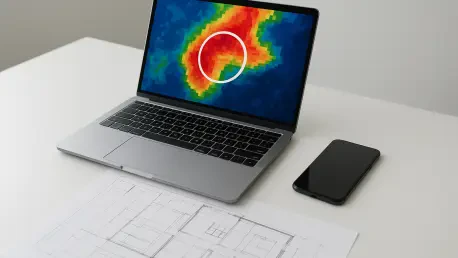
To ensure the integrity of the payout mechanism, the system employs a multi-layered data verification process that synthesizes information from high-resolution radar, National Weather Service reports, and expert meteorological analysis. This independent consensus minimizes disputes and ensures the payout process remains insulated from external influence or human error. In 2026, the use of NEXRAD radar data combined with ground-truth reports provides a granular view of storm activity that was previously impossible to achieve. This technological backbone allows HailSafe to pinpoint the exact moment and location where the hail threshold was exceeded, often down to the specific street address of a protected facility. Because the data is provided by a third party, both the insurer and the policyholder can trust that the trigger is based on scientific fact rather than a subjective interpretation of damage. This reliance on high-fidelity data feeds is what enables the rapid processing of payments, as the system can confirm a triggering event within minutes of the storm’s passage.
Targeted Industry Impact and Resilience
Resilience for Infrastructure: Energy and Agribusiness
Specific sectors with high exposure to the elements stand to benefit most from the expansion of parametric hail coverage, particularly those involved in the green energy transition. In the renewable energy sector, solar panels are particularly vulnerable to hail, where even minor impacts can lead to micro-cracking and significant revenue loss that is not always visible to the naked eye. These micro-cracks can degrade the efficiency of a solar farm over time, leading to long-term financial underperformance that traditional policies might not fully address until a total failure occurs. By providing immediate capital through a parametric trigger, operators can conduct rapid thermal imaging inspections and replace damaged modules before the cracks lead to catastrophic system failures. This proactive approach to maintenance, funded by rapid insurance payouts, is essential for maintaining the high uptime requirements of modern power purchase agreements and ensuring the financial viability of large-scale solar investments.
Similarly, in the agricultural sector, a single hailstorm can destroy a season’s worth of crops in a matter of minutes, making immediate cash flow essential for replanting or pivoting to alternative agricultural strategies. Traditional crop insurance often requires a full growing season to determine the final yield loss, leaving farmers without the necessary capital to salvage their operations in the immediate aftermath of a storm. HailSafe allows these businesses to hedge against high replacement costs and operational downtime by providing a reliable financial cushion that traditional crop or property insurance might not offer as quickly. In the current 2026 economic environment, where input costs for seeds, fertilizer, and labor remain high, the ability to receive a payout within days of a storm can be the difference between a farm’s survival and its bankruptcy. The speed of parametric payouts allows agribusinesses to maintain their workforce and fulfill supply contracts, preserving their market position even when nature intervenes.
Protecting Tangible Assets: Logistics and Real Estate
Logistics companies, automotive dealerships, and real estate managers also face unique risks from hailstorms that can damage hundreds of units of inventory or large-scale roofing systems simultaneously. For an automotive dealership, a single hailstorm can result in millions of dollars in “diminished value” across an entire lot of new vehicles, even if the damage is relatively minor. The administrative burden of filing individual indemnity claims for hundreds of cars is staggering and can take months to resolve, during which time the inventory remains unsellable. The parametric model facilitates a lump-sum payout that allows for rapid inventory turnover or property stabilization without the need for individual appraisals of every damaged item. This efficiency ensures that the dealership can quickly clear damaged stock and restock with fresh inventory, minimizing the long-term impact on sales targets and customer trust.
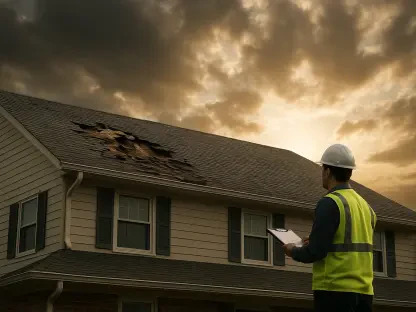
For commercial real estate portfolios, the primary concern following a hailstorm is often the integrity of the building envelope and the prevention of secondary issues, such as water intrusion through damaged roofing membranes. If a roof is compromised by large hail, the subsequent rain can cause extensive damage to the building’s interior, electronic systems, and tenant property. Traditional insurance might take weeks to authorize a full roof replacement, during which time the building remains vulnerable to further weather events. With the rapid liquidity provided by a parametric payout, property managers can engage emergency roofing contractors immediately to perform permanent repairs. This speed of action prevents the escalation of the claim and ensures that the property remains habitable and productive. By addressing the financial needs of the business in real-time, parametric solutions act as a vital bridge that protects the physical and financial health of commercial assets.
Market Trends and Operational Strategy
Democratizing Tools: The Direct Access Strategy
The decision to offer HailSafe directly to brokers and businesses reflects a broader trend toward the democratization of complex financial instruments within the InsurTech space. By removing intermediaries and simplifying the procurement process, the company increases the transparency and accessibility of sophisticated weather-hedging tools that were previously reserved for only the largest global corporations. This shift occurs during a hardening of the traditional insurance market, where rising premiums and shrinking coverage limits are leaving many mid-sized businesses dangerously underinsured. As traditional carriers retreat from high-risk zones due to the increasing frequency of convective storms, parametric providers are filling the void with sustainable, data-backed alternatives. Direct access empowers risk managers to take control of their weather exposure by providing them with the same high-level analytics and triggers used by institutional investors to protect their portfolios.
This evolution toward direct access is also driving a greater understanding of how weather risk can be quantified and managed as a discrete financial variable. When businesses can interact directly with the parametric platform, they gain a clearer understanding of the relationship between weather probability and insurance pricing. This transparency encourages companies to implement better physical mitigation strategies, such as installing hail guards or reinforced materials, which can then be reflected in their policy triggers and premiums. The direct model also reduces the “acquisition cost” of the insurance policy, ensuring that a greater percentage of the premium is directed toward the actual risk transfer rather than administrative commissions. In 2026, this efficiency is highly valued by CFOs who are under pressure to optimize every dollar spent on risk management. By streamlining the distribution of parametric products, the industry is making it easier for a wider range of businesses to build a robust defense against climate volatility.
Strategic Resilience: Integration and Technological Progress
During the recent transition to more advanced risk models, industry leaders integrated hyper-localized data and satellite-based sensors to enhance the accuracy of parametric triggers. This technological leap forward allowed for a more granular understanding of how individual hailstorms interacted with specific urban environments and industrial complexes. By moving beyond general regional weather reports, the system captured the precise intensity of events at the micro-level, ensuring that payouts remained tightly coupled with the actual conditions on the ground. These advancements represented a significant departure from older methods of weather monitoring, as the industry moved toward a more proactive and automated stance on risk detection. The integration of these tools into daily operations enabled firms to move from a reactive posture to one of prepared resilience, where financial protection was synchronized with real-time environmental changes.
Risk managers successfully navigated these changes by adopting a hybrid approach that combined traditional indemnity for catastrophic losses with parametric tools for immediate liquidity needs. They utilized the rapid payouts from products like HailSafe to cover the initial costs of debris removal, emergency repairs, and temporary relocation while the larger indemnity claims were being processed. This strategic foresight minimized the downtime of essential services and protected the long-term credit ratings of many organizations. Furthermore, the industry moved toward a standard of algorithmic pricing that adjusted in real-time to the shifting patterns of convective storms, providing a more accurate reflection of current risk levels. As these tools became more deeply embedded in corporate strategy, the focus shifted toward a holistic view of resilience that prioritized the speed of recovery as much as the depth of coverage. This comprehensive perspective ensured that businesses were better equipped to face the ongoing challenges of an unpredictable atmosphere.