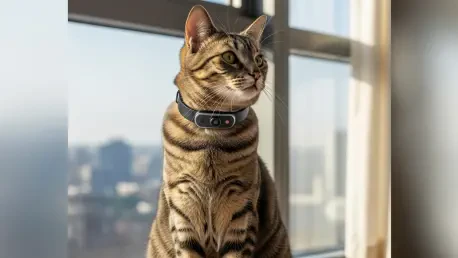

The silent grace of a domestic cat often masks a complex physiological reality that remains largely invisible to even the most attentive pet owners until a medical crisis occurs. Historically, the well-being of a feline companion was gauged through anecdotal observation, a method that frequently fails due to the evolutionary instinct of cats to hide any sign of vulnerability or illness. As the boundaries between human health technology and veterinary science continue to dissolve, a new generation of sophisticated wearables has emerged to bridge this information gap, transforming the standard nylon collar into a high-tech diagnostic and security tool. This transition represents a fundamental shift in how people interact with their pets, moving away from reactive care toward a proactive, data-driven approach that prioritizes both physical security and long-term vitality.
The primary objective of exploring this technological evolution is to answer pressing questions regarding the practical efficacy and ethical implications of smart feline devices. While the market offers a variety of solutions, understanding the nuance between GPS tracking and biometric monitoring is essential for any owner considering an investment in these tools. This discussion will delve into the technical specifications of leading hardware, the reliability of cellular networks for pet safety, and the ways in which movement data can serve as an early warning system for common feline ailments. By the end of this analysis, readers will have a comprehensive understanding of how these devices function as an insurance policy for the modern pet owner, balancing the benefits of constant connectivity against the logistical realities of device maintenance.
Key Questions or Key Topics Section
What Distinguishes Smart Collars from Traditional Identification and Tracking Methods?
The fundamental difference between modern smart collars and traditional methods like microchips or basic ID tags lies in the distinction between active and passive technology. A microchip is an essential but passive tool; it contains no power source and requires a specialized scanner and a human finder to facilitate a reunion. In contrast, smart collars utilize active GPS and cellular modules that transmit the location of a cat in real-time to a smartphone application. This allows an owner to initiate a search the moment a pet exits a designated area, rather than waiting for a stranger to locate the animal and bring it to a veterinary clinic. This immediacy is particularly crucial for indoor cats that may accidentally slip out and become disoriented in an unfamiliar environment.
Moreover, the scope of utility extends far beyond simple location services. While a standard collar is merely a carrier for a nameplate, a smart wearable acts as a constant monitor for activity levels and sleep hygiene. These devices leverage accelerometers and gyroscopes to distinguish between a cat that is merely resting and one that is in a deep, restorative sleep. By establishing a baseline of what is normal for a specific animal, the technology can highlight deviations that might go unnoticed by the human eye. For instance, a subtle decrease in daily jumps or a sudden increase in night-time restlessness can be the first indicators of joint pain or cognitive dysfunction, providing a level of insight that a static ID tag could never offer.
The reliance on cellular networks and global positioning systems also sets these devices apart from local-range trackers like Bluetooth tags. While Bluetooth options are inexpensive and lightweight, they depend entirely on the proximity of other smartphones within the same ecosystem to update a location. In a scenario where a cat wanders into a wooded area or a quiet suburban street at night, a Bluetooth tracker may remain silent for hours. High-end smart collars circumvent this limitation by communicating directly with cell towers, ensuring that as long as there is a signal, the pet remains visible on a map. This robust connectivity transforms the device from a mere identification tool into a comprehensive security system that operates independently of the presence of other people.
How Does Activity Monitoring Translate into Actionable Health Insights for Pet Owners?
Cats are notoriously skilled at concealing discomfort, an evolutionary trait that protects them from predators but often complicates veterinary care. Smart collars address this challenge by quantifying daily behaviors into digestible data points, such as calories burned, minutes of intense activity, and total rest time. This objective data serves as a powerful diagnostic supplement during veterinary consultations. Instead of an owner guessing whether a pet has been less active lately, they can present a digital log showing a fifteen percent decline in movement over a two-week period. This level of precision helps veterinarians identify the onset of chronic conditions like osteoarthritis or metabolic disorders much earlier than was previously possible through physical examination alone.
The integration of social benchmarking and breed-specific data further enhances the value of these health metrics. Many modern pet applications compare a cat’s activity levels against a database of thousands of other felines of the same age, weight, and breed. This context is vital because the activity needs of a young Bengal are vastly different from those of a senior Persian. If the data shows that a cat is consistently falling below the average activity level for its demographic, the owner is prompted to engage in more interactive play or consult a professional regarding weight management. This proactive engagement shifts the paradigm of pet care from treating symptoms to maintaining optimal wellness through lifestyle adjustments.
In addition to physical activity, sleep tracking has emerged as a critical component of feline health monitoring. Changes in sleep patterns can be symptomatic of anything from environmental stress to hyperthyroidism. Smart wearables can distinguish between light naps and deep sleep cycles, providing a window into the quality of a cat’s recovery. If a device detects that a cat is waking up frequently during the night or failing to reach deep sleep stages, it may indicate that the pet is experiencing discomfort or that its environment is not sufficiently peaceful. By monitoring these subtle shifts, owners can make informed decisions about their pet’s living conditions, ensuring that the home environment supports the cat’s natural circadian rhythm.
What Are the Primary Technical Trade-offs Between Device Size and Battery Longevity?
The engineering of feline wearables is a delicate balancing act between the physical comfort of the animal and the energy requirements of high-precision electronics. Because cats are smaller and more sensitive to weight than dogs, designers must minimize the footprint of the hardware, which often limits the size of the battery. High-frequency GPS tracking is a significant energy drain, especially when a device is in live mode, pinging satellites every few seconds. Consequently, some of the most data-rich collars require more frequent charging, sometimes as often as every five days. This creates a maintenance loop for the owner, who must ensure the device remains powered to be effective during an actual emergency.
Conversely, some manufacturers prioritize battery life by utilizing more efficient communication protocols and larger, though sometimes bulkier, batteries. These devices can last several weeks on a single charge by relying on a base station or home Wi-Fi network to handle the majority of data transmission when the cat is indoors. While this is convenient for the owner, it can sometimes result in a larger physical profile that might be cumbersome for smaller cats or those with sensitive skin. The choice between a sleek, short-lived device and a more robust, long-lasting one often depends on the lifestyle of the cat. An indoor-only cat might be better served by a small, lightweight device, whereas an indoor-outdoor cat requires the extended battery life of a more rugged unit to ensure it remains trackable during a long excursion.
Technological advancements in charging mechanisms have also influenced the user experience. The shift toward standardized ports like USB-C and magnetic inductive charging has made the process of repowering these collars more seamless. However, the proprietary nature of some charging systems remains a hurdle, as losing a specific cable can render the device useless until a replacement is sourced. Furthermore, the environmental impact of these devices is a growing consideration, as the life cycle of lithium-ion batteries and the durability of plastic housings determine the long-term sustainability of the product. Owners must weigh the initial cost and the ongoing subscription fees against the build quality and expected lifespan of the hardware to determine the true value of the investment.
Can Virtual Fencing Effectively Protect Cats from Common Outdoor Dangers?
Virtual fencing, or geofencing, is one of the most touted features of smart collars, allowing owners to draw digital boundaries around their property on a map. When a cat crosses these invisible lines, the system triggers an immediate notification to the owner’s smartphone. This feature is intended to act as a safety net, providing an early warning that a pet has wandered too far or entered a hazardous area, such as a busy road or a neighbor’s yard with aggressive dogs. For owners of indoor-outdoor cats, this information is invaluable for understanding the specific territories their pets frequent and for ensuring they return home before nightfall when predatory risks increase.
However, the efficacy of virtual fencing is often dictated by the limitations of GPS accuracy and signal interference. In densely populated urban areas or regions with heavy tree cover, GPS drift can occur, causing the app to report that a cat has left the safe zone even when it is still inside the house. These false alerts can lead to unnecessary anxiety for the owner and may eventually result in notification fatigue, where legitimate alerts are ignored. Additionally, the minimum size of a virtual fence is often larger than a standard suburban lot, meaning a cat could be several houses away before the system recognizes it has left the home perimeter. This delay can be critical if the goal is to prevent a cat from reaching a nearby thoroughfare.
Despite these technical hurdles, the historical data provided by geofencing offers insights that were previously impossible to obtain. Owners can view heat maps of their cat’s movements over weeks or months, identifying patterns and favorite hiding spots. This information is not only fascinating from a behavioral perspective but also practical; if a cat goes missing and the battery dies, the owner knows the most likely places to search based on previous data. While a virtual fence cannot physically stop a cat from moving toward danger like a traditional physical barrier, the situational awareness it provides significantly reduces the time it takes to respond to a potential crisis, which is often the deciding factor in a successful recovery.
Summary or Recap
The integration of smart collars into feline care represents a significant milestone in the application of technology to domestic animal welfare. By combining real-time GPS tracking with sophisticated health monitoring, these devices offer a multifaceted solution to the age-old challenges of pet safety and hidden illnesses. Throughout this discussion, it has become clear that the choice of a wearable depends heavily on a cat’s specific needs, ranging from the necessity of high-precision location data for outdoor roamers to the importance of ergonomic design for smaller, indoor-dwelling felines. While the hardware continues to evolve, the core value remains consistent: providing owners with objective, actionable data that enhances the security and quality of life for their companions.
Key takeaways from the current landscape of pet wearables include the superiority of cellular-based GPS over Bluetooth for long-range recovery and the growing importance of using movement data as a diagnostic tool. Owners should be prepared for the logistical requirements of these devices, such as recurring subscription fees and regular charging schedules. Moreover, understanding the limitations of virtual fencing, including the potential for false alerts due to GPS drift, is essential for maintaining a balanced perspective on the technology’s capabilities. As the industry matures, the focus is shifting toward more seamless integration and deeper data analytics, promising a future where pet care is increasingly personalized and preventive.
Conclusion or Final Thoughts
The emergence of smart cat collars has fundamentally altered the expectations of modern pet ownership, moving the conversation away from simple identification and toward a holistic view of feline wellness. These devices have proven that a wealth of information exists beneath the surface of a cat’s daily routine, waiting to be decoded by sensors and algorithms. By embracing these tools, owners are not just buying a gadget; they are investing in a deeper understanding of a creature that has historically been one of the most enigmatic companions in human history. The transition from anecdotal observation to data-driven insights was a necessary evolution in a world where the safety and health of pets are increasingly prioritized.
Looking forward, the challenge for the industry will be to further miniaturize the technology while expanding the accuracy of health sensors to include metrics like heart rate or hydration levels. For the individual cat owner, the next step involved assessing the specific lifestyle of their pet and determining which features—whether it be the ruggedness of a GPS tracker or the precision of a sleep monitor—will provide the most benefit. As technology became more accessible and reliable, it encouraged a more mindful approach to pet care, where every step and every hour of rest was accounted for in the pursuit of a longer, healthier life. Ultimately, the success of these wearables was measured by the peace of mind they offered, allowing people to enjoy the company of their cats with the confidence that they were truly seen and protected.