
Achieving a state of deep, restorative slumber often feels like a losing battle against a cacophony of sirens, snoring partners, and the persistent hum of modern city life that traditional foam earplugs simply cannot tackle. While white noise machines offer a blanket of sound, they frequently fail to address the nuance of unpredictable disturbances that wake a light sleeper in the early hours. This persistent gap in the market has created a demand for technology that does more than just make noise; it must create a sanctuary.
The quest for a truly disturbance-free night remains elusive for millions, particularly those living in dense urban environments where soundproofing is a luxury. Traditional solutions often feel like blunt instruments in a world requiring surgical precision. The Ozlo Sleepbuds 2 entered this landscape not as a generic audio device, but as a specialized tool designed specifically for the eight hours spent in bed. By focusing on the intersection of comfort and sound masking, this device represents the latest evolution in personal sleep-tech architecture.
The Relentless Pursuit of a Disturbance-Free Night
The primary frustration for many sleepers lies in the inadequacy of passive blocking. Even the best silicon earplugs can only dampen sound, often leaving the sharpest, most disruptive noises to penetrate the inner ear. Digital sound masking, however, works by raising the noise floor with soothing frequencies that make sudden sounds less noticeable to the brain. This methodology is the core of the Ozlo approach, aiming to provide a consistent auditory blanket that prevents the “startle response” triggered by a car alarm or a neighbor’s footsteps.
Creating a perfect sleep environment is a multi-sensory challenge that extends beyond just volume control. For urban dwellers, the unpredictability of the night is the greatest enemy of the REM cycle. The Sleepbuds 2 aim to solve this by providing a reliable, steady stream of audio that is engineered to neutralize the specific frequencies of common household and city disruptions. This focus on specialized audio science distinguishes the product from standard noise-canceling headphones, which are often too bulky for side sleeping or too aggressive in their digital processing for long-term wear.
Beyond the Bose Legacy: Building an Independent Sleep Ecosystem
The transition from a specialized product line within a corporate giant like Bose to an independent platform under Ozlo marks a significant shift in the sleep-tech industry. When Bose discontinued its sleep-focused hardware, it left a void that former engineers and visionaries felt compelled to fill. By launching a standalone health platform, the team at Ozlo has moved beyond mere hardware preservation. This independence allows for a more agile approach to software updates and a dedicated focus on sleep health that isn’t overshadowed by consumer audio trends.
Understanding the $279 price point is essential to recognizing where the Sleepbuds 2 sit in the premium market. This cost reflects a commitment to high-quality materials and specialized engineering rather than mass-market appeal. Former Bose engineers have used their institutional knowledge to address the hardware shortcomings that plagued previous iterations, such as battery degradation and connectivity hiccups. By investing in better internal components, the company signals that its priority is long-term reliability for a device that must function perfectly every single night.
Solving the Technical Hurdles of Sleep-Focused Hardware
Hardware designed for sleep faces unique challenges, particularly regarding longevity and user interface. The Sleepbuds 2 have undergone a significant overhaul to provide a 14-hour battery life, ensuring the audio lasts well into the morning hours even for those who prefer long rest periods. The charging case has also been redesigned to store multiple full charges, making it a viable companion for travel or camping where power sources might be scarce. These incremental improvements address the most common complaints of early adopters in the sleep-audio space.
Connectivity has historically been a weak point for small, in-ear devices that must communicate through a human head while the user is moving in bed. Ozlo addressed this by redesigning the Bluetooth antennas to ensure a stable, “flake-free” connection that does not drop out mid-cycle. Furthermore, the inclusion of physical buttons on the case allows users to manage their environment without the stimulating blue light of a smartphone. This shift toward user-centric controls acknowledges that the less time a person spends looking at a screen before bed, the better their chances of falling asleep quickly.
Turning the Bedroom into a Data Lab: Biometrics and Environmental Tracking
Modern sleep technology is increasingly moving toward a diagnostic model where the device learns about the user. Built-in sensors in the Sleepbuds 2 monitor breathing patterns and physical movement, providing a granular look at sleep quality that goes beyond simple heart-rate tracking. This data allows the system to identify when a user is in a deep sleep state versus a light, easily disrupted stage. When combined with artificial intelligence, these biometrics help create a personalized map of nightly recovery.
The charging case serves a dual purpose by acting as an environmental monitor, tracking ambient light, temperature, and noise levels within the bedroom. This allows the Ozlo platform to correlate external conditions with internal sleep quality, helping users identify if their room is too warm or if street lights are leaking through the curtains. Partnerships with content providers like Calm further enhance the ecosystem, allowing users to choose between traditional masking sounds and professionally produced sleep stories. This holistic approach turns the bedroom into a data lab designed for optimization.
A Practical Guide to Optimizing Your Nightly Recovery
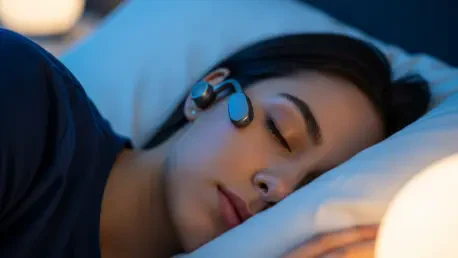
Maximizing the potential of these devices requires more than just putting them in the ears; it involves a strategic use of the available software features. The “Personalized Sound Tuning” option enables users to select audio profiles that match their specific environment, such as “Airplane” for travel or “Spoken Word” for those who find voices more soothing than white noise. For side sleepers, the ergonomic design ensures that the pressure against the pillow does not cause discomfort or dislodge the buds, maintaining a consistent seal throughout the night.
The adoption of the “Sleep Shield” feature allowed for a sanctuary free from digital interference by filtering notifications without changing global phone settings. Users discovered that adjusting their environment based on the case’s data insights, such as lowering the thermostat by two degrees, resulted in significantly higher restorative sleep scores. The integration of AI into the nightly routine offered a way to finally bridge the gap between simple noise masking and total sleep optimization. By applying these specific hardware adjustments, the bedroom became a controlled space where restorative health was prioritized over convenience.