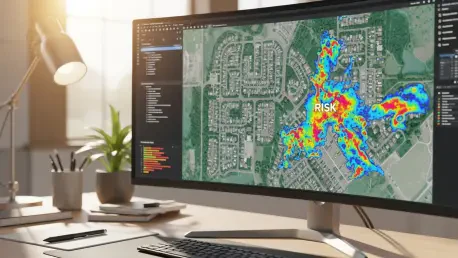

ZestyAI is currently navigating a pivotal chapter in its growth, recently fortifying its leadership team to bridge the gap between high-tech innovation and the rigorous demands of the property and casualty insurance market. With the strategic appointments of David Friend as CFO and John Ross as SVP of Client Development, the firm is signaling a shift toward long-term financial stability and deeper carrier integration. This move comes at a time when the company has already reached significant commercial milestones, including achieving a cash-flow-positive state and more than doubling its product usage. This interview explores how these strategic leadership changes and new agentic AI capabilities are reshaping the landscape of risk assessment and underwriting.
Moving toward a cash-flow-positive state while scaling an enterprise software business requires a specific financial rigor; how do you see the arrival of a veteran like David Friend impacting this trajectory?
Achieving a cash-flow-positive status is a rare and impressive milestone for any Insurtech, especially when you are simultaneously more than doubling product usage in a competitive market. David Friend brings over two decades of experience to the table, including his most recent tenure where he guided Quantum Metric past the $100 million annual recurring revenue mark. His background as an investor at Bain Capital Ventures adds a layer of corporate development expertise that will be vital as ZestyAI manages its impressive tally of over 200 regulatory approvals. By overseeing finance, accounting, and corporate development with a focus on scaling, he ensures the company isn’t just growing fast, but building a foundation that can sustain the needs of 26 new carrier customers. This level of financial maturity allows the platform to remain a stable, long-term partner for the massive enterprises they serve.
With John Ross leading client development, what shifts should we expect in how carriers and reinsurers integrate AI-driven risk models into their traditional workflows?
John Ross possesses nearly 20 years of property and casualty experience, having managed major portfolios at LexisNexis Risk Solutions, which gives him a unique perspective on the deep-seated pain points of personal lines insurers. His role at ZestyAI is to help clients like California Casualty and Lemonade achieve measurable outcomes through precision underwriting and smarter rate segmentation. We are seeing a definitive move away from generic, regional data toward property-level intelligence that can accurately predict specific perils like wildfires and severe convective storms. Ross’s expertise in reinsurance capital access is particularly crucial, as it helps carriers prove the validity of their risk models to their financial backers using climate science and historical loss data. By deepening relationships with industry giants like Berkshire Hathaway and the California FAIR Plan, he is helping turn AI into a core decision infrastructure rather than just a supplementary data feed.
The launch of ZORRO and ZORRO Discover™ suggests a move toward agentic AI; how does this automation specifically address the bottlenecks currently faced by underwriters and product leaders?
The primary bottleneck in modern underwriting isn’t necessarily a lack of data, but rather the overwhelming amount of manual research required to make sense of property variables and regulatory requirements. ZORRO Discover™ is designed to cut manual regulatory and market research time for underwriters and product leaders by a staggering 95%, which represents a massive shift in operational efficiency. By combining property-level data with agentic AI automation, these platforms can handle the “heavy lifting” of workflows that previously took days or even weeks of human effort. This is especially vital when dealing with complex perils like non-weather water risks, where the data is often fragmented and difficult to validate. Seeing firms like Marsh and Applied Underwriters adopt these tools shows a growing trust in AI’s ability to provide the precision needed for modern rating and reinsurance.
What is your forecast for the role of predictive AI in the P&C market over the next few years?
I anticipate that predictive AI will move from being an optional competitive advantage to a fundamental regulatory and survival requirement for maintaining solvency in an increasingly volatile climate. As ZestyAI has shown by surpassing 200 regulatory approvals, the path to industry-wide adoption lies in transparency and the ability to validate predictive models against real-world historical outcomes. We will see more carriers utilizing agentic automation to manage their entire underwriting cycle, from the initial property data gathering to the final reinsurance workflow. The ultimate winners in this space will be those who can blend high-level financial scaling with deep, boots-on-the-ground insurance expertise to provide models for wildfire and storm risks that are as reliable as they are innovative. The partnership between technology providers and traditional carriers is only going to tighten as the cost of ignoring precise, property-level risk data becomes too high for the market to bear.