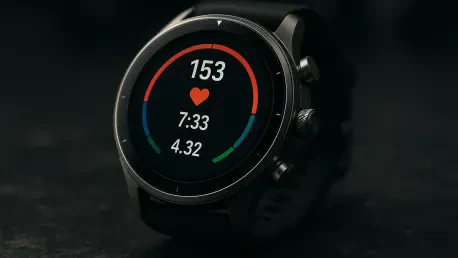

The integration of sapphire glass and a stainless steel frame into a sub-$200 wearable marks a significant shift in how manufacturers approach budget-friendly hardware. This strategic pivot by Zepp Health signals a new era where consumers no longer have to choose between financial accessibility and industrial-grade durability. By positioning the Amazfit Active 3 Premium at approximately $170, the company directly challenges the dominance of established players who often reserve such high-end materials for their flagship models costing three times as much. The device serves as a bridge for the ambitious athlete who requires a tool capable of withstanding the rigors of trail running or high-intensity interval training while maintaining an aesthetic that fits into a professional environment. This move democratizes technology that was previously out of reach for many, emphasizing a 45mm chassis that balances presence with a surprisingly sleek profile. The introduction of this model creates a compelling narrative about the value proposition in 2026, where the premium label is being redefined by its utility and accessibility rather than its exclusionary price tag. This shift allows a broader demographic of fitness enthusiasts to access professional-grade equipment, effectively lowering the barrier to entry for high-stakes health monitoring and performance tracking in a competitive market.
Material Design and Physical Ergonomics
Premium Materials: The Structural Advantage
The choice to utilize sapphire glass as the primary protective layer for the display is a transformative decision that drastically improves the longevity of the wearable. Unlike the chemically strengthened glass often found in this price bracket, sapphire glass offers a level of scratch resistance that is nearly unparalleled, sitting just below diamond on the Mohs scale of mineral hardness. This ensures that even after months of being scraped against gym equipment or brushed against rocks during a hike, the screen remains clear and legible. Surrounding this crystal is a stainless steel frame that provides the necessary structural integrity to protect the sensitive internal sensors and electronics from lateral impacts. The cold, tactile feel of the metal immediately distinguishes the device from its plastic-bodied competitors, lending it a sense of permanence and quality that is rare for a sub-$200 investment. This combination of materials ensures that the watch does not just look expensive, but it also possesses the physical resilience required for the demanding lifestyles of modern athletes.
In addition to its rugged exterior, the engineering team managed to maintain an incredibly low weight of 38 grams without the strap, which is a remarkable feat given the density of stainless steel. This lightweight construction is essential for long-distance runners and triathletes who need to minimize the mass on their wrist to prevent the watch from shifting during high-cadence activities. If a watch is too heavy, the inertia created during motion can cause the optical heart rate sensor to lift away from the skin, leading to inaccurate data or light leakage that confuses the photodiode. By keeping the profile slim and the weight manageable, the device remains glued to the wrist without requiring the strap to be uncomfortably tight. This ergonomic mindfulness extends to the 24/7 wearability of the device, making it a viable tool for sleep tracking where a bulky or heavy watch would typically interfere with the user’s rest. The balance between heavy-duty materials and lightweight performance represents a sophisticated approach to industrial design that prioritizes the user experience in diverse environments.
Physical Interface: Buttons and Display Clarity
While the industry has seen a massive push toward touch-only interfaces, the inclusion of a four-button physical layout on this model acknowledges the practical realities of intensive sports. When an athlete is mid-sprint, wearing gloves, or dealing with heavy perspiration, a capacitive touchscreen often becomes unreliable or difficult to navigate with precision. The physical buttons provide a tactile “click” that confirms an action has been registered, allowing users to start laps, pause workouts, or scroll through data screens without ever having to look away from the path ahead. This layout is reminiscent of professional diving and racing watches, where mechanical reliability is prioritized over minimalist aesthetics. Each button is strategically placed to be accessible even when the wrist is flexed, ensuring that the interface never becomes a bottleneck during critical training moments. This focus on physical controls demonstrates a deep understanding of the athletic workflow, catering to those who view their wearable as a tool first and a gadget second.
Complementing these physical controls is a vibrant 1.32-inch AMOLED display that achieves a peak brightness of 3,000 nits. This level of luminance is particularly important for outdoor activities, where direct sunlight can wash out traditional screens and make it impossible to read heart rate zones or navigation cues. Even in the height of a summer afternoon, the high contrast ratio and intense brightness of the AMOLED panel ensure that every pixel remains sharp and colors remain saturated. The software interface has been optimized with high-legibility fonts and bold color palettes that make data consumption at a glance effortless. However, the lack of an anti-fingerprint coating on the sapphire glass is a minor oversight that requires the user to wipe the screen occasionally to maintain its pristine appearance. Despite this, the combination of a high-performance screen and a robust button-based navigation system creates a user experience that is both modern and highly functional, bridging the gap between a high-tech smartwatch and a dedicated sports instrument.
Internal Hardware and Sensor Integration
Physiological Sensing: The BioTracker Foundation
The core of the device’s data collection capabilities lies in the latest iteration of the BioTracker optical sensor, which utilizes a 5-photodiode and 2-LED configuration. This sophisticated array is designed to capture a more detailed volumetric representation of blood flow near the surface of the skin, which translates into more accurate heart rate and blood oxygen (SpO2) readings. By increasing the number of light-sensing points, the system can better filter out the “noise” created by arm movement or changes in ambient lighting, which are the primary causes of error in cheaper fitness trackers. This hardware setup allows the device to provide continuous, high-fidelity monitoring that is crucial for calculating advanced metrics like heart rate variability and recovery time. The precision of these sensors is a fundamental requirement for users who rely on heart rate zone training to optimize their physiological adaptations. The consistency of the data ensures that trends over time are meaningful, allowing for a more nuanced understanding of how the body responds to various stressors and training loads.
Beyond the optical sensors, the inclusion of a built-in barometric altimeter significantly expands the utility of the device for outdoor enthusiasts who operate in vertical environments. While many budget watches rely solely on GPS data to estimate elevation, which is notoriously inaccurate due to satellite signal limitations, a barometer measures changes in atmospheric pressure to determine altitude with much greater precision. This feature is indispensable for trail runners, hikers, and cyclists who need to track their total vertical gain and descent to accurately assess the difficulty of their sessions. The altimeter also contributes to more accurate calorie expenditure calculations, as the metabolic cost of moving uphill is significantly higher than moving on flat ground. By integrating this sensor into the chassis, the manufacturer provides a level of environmental awareness that is typically reserved for specialized mountain watches. This holistic approach to hardware ensures that the device provides a comprehensive view of the user’s physical performance, regardless of whether they are on a track or scaling a mountain pass.
Data Management: Connectivity and Storage
In the realm of navigation and positioning, the support for five different satellite systems ensures that the watch can maintain a stable lock even in challenging environments like dense urban canyons or thick forest canopies. While the device does not utilize dual-band GNSS technology, its single-band performance is remarkably stable thanks to an optimized antenna design that minimizes signal interference from the stainless steel frame. This reliability is vital for athletes who need precise distance and pace data to stick to their training plans. The initial satellite acquisition time is notably fast, often locking within seconds of starting an activity, which removes the frustration of waiting around before a workout. The consistency of the GPS track is impressive for its class, showing minimal “drift” when compared to devices that cost significantly more. This level of accuracy provides users with the confidence that their personal bests and training milestones are recorded with a high degree of integrity, reinforcing the watch’s position as a serious training tool.
One of the most significant advantages of this model is its 4GB of internal storage, which allows for a truly independent workout experience. This capacity is sufficient to store several hundred music tracks directly on the device, which can be streamed to Bluetooth headphones without the need for a smartphone. Furthermore, this storage space enables the loading of offline maps, a feature that provides a massive safety and convenience benefit for those exploring new trails or traveling in areas with poor cellular reception. Users can follow pre-loaded routes with turn-by-turn prompts, ensuring they stay on track without having to drain their phone’s battery or deal with bulky handsets during a run. The inclusion of a microphone and speaker further enhances this independence, allowing for Bluetooth calling when the watch is within range of a phone, or providing audio feedback during intervals. These features transform the watch from a simple data logger into a central hub for the athlete’s digital life, providing tools that encourage focus and reduce the reliance on secondary devices during physical activity.
Tracking Accuracy and Software Analysis
Health Ecosystem: The Zepp Intelligence Platform
The data collected by the sensors is processed and visualized through the Zepp App, which has evolved into a sophisticated health management ecosystem. This platform goes beyond basic step counting by offering deep insights into sleep architecture, providing a breakdown of light, deep, and REM cycles alongside a “sleep breathing quality” score. By correlating this sleep data with daily activity levels, the software generates a “Readiness” score each morning, which serves as a guide for how hard the user should train that day. This proactive approach to health helps prevent overtraining and reduces the risk of injury by encouraging rest when physiological markers indicate a lack of recovery. The interface is clean and data-rich, allowing users to dive into granular charts or stick to high-level summaries depending on their preference. This balance of complexity and accessibility is a hallmark of a mature software platform that respects the user’s time while providing the depth required for serious athletic analysis.
A particularly innovative addition to the software suite is the “Life Log” feature, which allows users to tag specific lifestyle events and see how they impact their physical metrics. For example, a user could note when they consumed alcohol, experienced high work stress, or ate a late meal, and then observe the subsequent effect on their resting heart rate or sleep quality the following night. This creates a powerful feedback loop that encourages healthier habits by making the consequences of daily choices visible and quantifiable. It moves the conversation away from simple performance tracking and toward a more holistic view of well-being, similar to the insights provided by high-end recovery trackers like Oura. By integrating these analytical tools, the manufacturer has created a software experience that adds significant value to the hardware, making the $170 investment feel even more justified. The ability to see the direct correlation between lifestyle and performance is a game-changer for individuals who are serious about optimizing their health and reaching their peak potential.
Athletic Benchmarks: Precision in Motion
When evaluating the performance of the device against established industry leaders like the Garmin Forerunner series, the results demonstrate a high level of parity in core metrics. During head-to-head testing on standardized running routes, the distance measurements were consistently within a one percent margin of error compared to more expensive dedicated GPS watches. This level of precision is essential for runners who are following specific training blocks where pace accuracy is the difference between a successful workout and a missed target. Heart rate tracking also showed remarkable stability, even during interval sessions where rapid fluctuations in intensity often cause cheaper sensors to lag or “flatline.” The 5-photodiode array proves its worth here, providing a responsive and accurate representation of cardiac effort that matches the performance of chest-strap monitors in all but the most extreme conditions. This reliability makes the watch a legitimate choice for athletes who demand high-quality data without the premium brand-name tax.
Beyond basic pace and heart rate, the watch provides advanced running dynamics that were once the sole province of laboratory equipment or expensive foot pods. Users can view metrics such as cadence, stride length, and ground contact time, which are critical for improving running economy and identifying potential biomechanical issues. By analyzing these data points, an athlete can refine their form to become more efficient and less prone to repetitive strain injuries. The watch also calculates VO2 Max estimates and training effect scores, giving users a clear picture of their aerobic and anaerobic progress over time. These features are integrated seamlessly into the post-workout summary, providing immediate feedback that is both actionable and encouraging. The depth of the athletic data suite ensures that the device grows with the user as they progress from a casual jogger to a competitive racer, offering the sophisticated tools needed to reach new levels of performance.
Battery Management and Practical Utility
Energy Efficiency: The Longevity Standard
Battery performance has long been a deciding factor for wearable technology, and the Active 3 Premium set a high standard by offering up to 12 days of typical usage on a single charge. This endurance was achieved through a combination of a high-density battery cell and aggressive power management algorithms that prioritized essential background tasks while hibernating non-essential processes. For most users, this meant that the watch only required a trip to the charger roughly three times per month, which effectively removed the “battery anxiety” that plagued owners of more power-hungry smartwatches. This longevity was particularly valuable for those who utilized the watch for sleep tracking, as it eliminated the need to charge the device overnight. The convenience of a long-lasting battery cannot be overstated, as it ensured that the device was always ready for an impromptu workout or a long weekend of hiking without the need to carry extra cables.
In high-intensity scenarios involving heavy GPS usage and continuous heart rate monitoring, the device still managed to provide enough power for a full week of training sessions. This was a critical metric for endurance athletes who might spend ten or more hours per week in active tracking modes. Even with the always-on display enabled, the power draw remained remarkably efficient, demonstrating the benefits of the custom-designed operating system that was built specifically for this hardware. The charging process itself was also optimized, with the magnetic puck delivering enough power to go from zero to a full charge in just under two hours. This quick turnaround meant that even if the battery was low, a short session on the charger while the user got ready for work provided several days of additional run time. By focusing on energy efficiency as a core pillar of the design, the manufacturer created a device that integrated seamlessly into the user’s life rather than becoming another chore to manage.
Operational Insights: The Future of Budget Wearables
The integration of smart functionality alongside professional-grade sports tracking proved that budget wearables did not need to compromise on versatility. The system handled notifications, calendar alerts, and voice assistant interactions with a level of smoothness that rivaled more expensive lifestyle watches. This multi-functional approach ensured that the device remained useful throughout the entire day, transitioning from a high-performance training tool in the morning to a discreet productivity assistant in the afternoon. The ability to answer calls directly from the wrist provided a layer of convenience for those who needed to stay connected without constantly reaching for their phones. Ultimately, the success of the device was found in its ability to balance these disparate roles without feeling cluttered or overwhelmed. It established a new benchmark for what a sub-$200 wearable could achieve, proving that thoughtful engineering and material selection could overcome the limitations of a modest price point.
Moving forward, athletes and health-conscious individuals should look toward devices that prioritize material durability and sensor accuracy over flashy, unnecessary software gimmicks. The shift toward sapphire and steel in the budget segment suggested that the industry was finally listening to users who demanded products that could survive real-world use. For those looking to upgrade their fitness technology, the primary takeaway was that the gap between budget and flagship hardware had narrowed to the point of being negligible for most training purposes. Future considerations should include an emphasis on open data ecosystems and the continued refinement of recovery-based analytics. As the market continues to evolve, the focus will likely remain on providing high-fidelity physiological insights in a package that is both affordable and indestructible. Investing in a device with this level of structural and technological integrity was a wise decision for anyone committed to a long-term fitness journey.