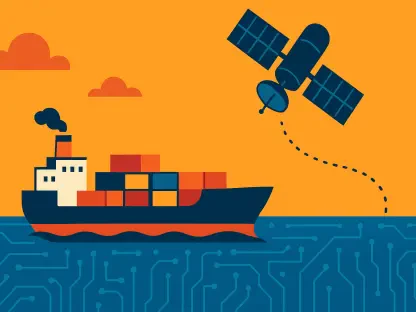

Floating palaces of steel and composite materials now carry enough processing power to manage a mid-sized metropolitan hub, yet their digital defenses often lag several decades behind their architectural sophistication. The superyacht industry is currently navigating a period of profound technological upheaval that has redefined the boundaries of luxury and liability. Traditionally viewed as isolated bastions of privacy and maritime independence, these vessels have undergone a rapid digital transformation, driven primarily by the accessibility of high-speed satellite internet. While this connectivity enhances the experience for owners and guests, it has simultaneously opened a Pandora’s box of cyber vulnerabilities that threaten the very safety of the vessel.
The central issue is the widening gap between the adoption of always-on connectivity and the implementation of robust cyber resilience measures. As these ships become increasingly complex and interconnected, the risk profile has shifted from mere data breaches to tangible threats against the physical integrity of the vessel and the lives of those on board. The transition from throttled, expensive data to unlimited, low-latency streams has created a new frontier for exploitation. Security is no longer a luxury feature but a core operational requirement for any vessel navigating the modern digital landscape.
The High Cost: A One-Thousand-Dollar Connection
A modern superyacht generates more data in a single week than many mid-sized corporations do in a month, yet its most critical propulsion and navigation systems often rely on communication protocols designed in the mid-1980s. For decades, the staggering cost of satellite bandwidth acted as a natural firewall, keeping luxury vessels effectively air-gapped from the wider web. Historically, satellite communication was a significant operational expense, costing tens of thousands of dollars per month for limited data speeds. Because of these constraints, vessels were only online sparingly, which inadvertently protected internal systems from the constant scanning of malicious actors.
Today, the economic landscape has changed drastically with the arrival of Low-Earth-Orbit satellite arrays. A medium-sized yacht can now secure a high-quality connection with a near-perfect service level agreement for as little as $1,000 to $2,000 a month, offering several terabytes of data. This drop in cost and increase in accessibility has led to what experts call connectivity sprawl. Vessels are now connected to the internet twenty-four hours a day, but the engineering architecture of these ships was often designed for an era of total isolation. The safety of being offline has been traded for the convenience of being always-on, often without a corresponding upgrade in firewall sophistication.
Digital Transformation: Maritime Privacy and Safety
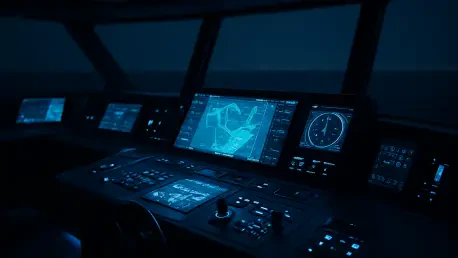
The shift toward high-speed networks like Starlink has fundamentally altered the risk profile of the luxury maritime sector. While owners and guests now enjoy seamless streaming and global video conferencing, the internal infrastructure of these vessels was rarely built to withstand constant external exposure. This digital transformation has moved the threat beyond simple data privacy or identity theft. When a yacht’s guest Wi-Fi is inadvertently bridged with its engine room or navigational bridge, a cyberattack ceases to be a virtual annoyance and becomes a tangible threat to the physical integrity of the ship.
This vulnerability is exacerbated by the trend of integrating every system on board into a single, unified interface. While it is convenient for a captain to monitor engine temperatures from an iPad, that convenience creates a pathway for a remote intruder to gain control over the ship’s steering or fuel pumps. The engineering world and the digital world have collided on the water, creating a scenario where a digital intrusion could result in catastrophic physical consequences. The risk of a vessel being held for ransom—not by pirates in skiffs, but by hackers thousands of miles away—is a reality that the industry is only now beginning to address with the seriousness it deserves.
Identifying the Weak Links: Legacy Protocols and Connectivity Sprawl
The technical vulnerability of the industry is rooted in a reliance on outdated communication standards like NMEA 2000 and CAN bus, which lack basic encryption or authentication. These protocols were developed for internal vessel communication and were never intended to be exposed to the internet. As connectivity sprawl takes hold, these legacy systems are being exposed to the web through unmanaged network bridges and poorly configured routers. In many cases, the ship’s backbone is visible to basic network scanning tools, making it possible for an attacker to spoof navigational data or override safety alarms without the crew ever knowing.
Furthermore, the modern yacht is a web of third-party dependencies, with contractors for lighting, CCTV, and propulsion frequently installing black box remote-access equipment. These permanent backdoors into the ship’s internal network are designed to facilitate easy maintenance and remote diagnostics from a manufacturer’s headquarters. However, they create a massive, unmonitored attack surface where a breach at a contractor’s office could lead to the simultaneous hijacking of dozens of high-value vessels. These third-party access points often bypass the ship’s primary security measures, leaving the vessel’s internal systems vulnerable to any actor who compromises the contractor’s network.
Financial Insurance: Why Coverage Is No Longer a Substitute for Resilience
The maritime insurance market is undergoing a sharp correction, moving away from silent cyber coverage and toward strict, standalone policies. Industry experts and regulators now emphasize cyber resilience over mere financial remediation, recognizing that a check from an insurer cannot restart a disabled engine in the middle of a transoceanic crossing. Research indicates that standard hull and protection policies often exclude cyber-related losses via the CL380 clause, which specifically removes coverage for damage caused by computer viruses or unauthorized access. This forces owners to prove they meet rigorous new standards just to remain insurable.
This shift reflects a growing consensus that insurance is a secondary defense, not a primary solution. Regulatory bodies have mandated that cyber risk management be integrated into a vessel’s safety management system as a condition for receiving certificates of compliance. Owners are increasingly required to demonstrate compliance with requirements that establish a baseline for digital defense. In an era where automated attacks can target entire fleets at scale, the focus has shifted toward preventing the breach entirely rather than simply paying for the aftermath. The inability to prove a high level of resilience is fast becoming a major barrier to the resale value and operational legality of luxury vessels.
Hardening the Vessel: A Blueprint for Total Cyber Resilience
The successful hardening of these vessels required a total departure from the culture of unvetted accessibility that defined the previous decade. Owners and management firms shifted their focus toward rigorous network segregation, ensuring that critical navigational and operational systems remained completely isolated from guest entertainment arrays. By implementing a defense-in-depth strategy, stakeholders successfully created multiple layers of security that prevented a single point of failure from compromising the entire ship. This transition included the decommissioning of permanent third-party backdoors in favor of on-demand, monitored access tunnels that required explicit permission from the crew.
Management also moved to enforce the principle of least privilege, ending the dangerous practice of sharing master passwords among rotating crew members. Robust credential management systems were established to ensure that each individual had access only to the systems required for their specific role. Furthermore, the industry prioritized comprehensive crew training, integrating cyber hygiene into standard operating procedures and emergency drills. These changes ensured that the human element, once the weakest link in the security chain, became a proactive layer of defense.
The evolution of maritime security finally reached a point where digital protection was treated with the same urgency as fire safety or hull integrity. Stakeholders realized that the convenience of constant connectivity was only sustainable when paired with a disciplined approach to network management and third-party oversight. By adopting these rigorous standards, the industry successfully insulated its most valuable assets from the rising tide of global cyber threats. This proactive transformation ensured that the superyacht remained a sanctuary of privacy and safety, even while functioning as a fully connected node in the modern world.