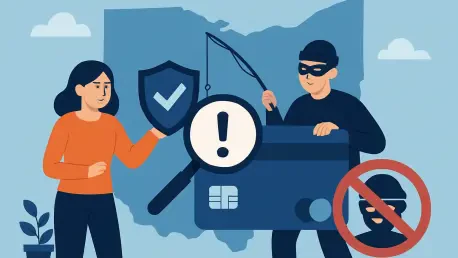

The shadow of financial exploitation often looms over vital public resources, threatening the stability of programs designed to support the most vulnerable members of society. Governor DeWine’s ‘day one’ commitment to government integrity focuses on creating a hostile environment for those attempting to exploit public social safety nets. This mission has culminated in the official designation of April as Fraud Prevention Month, a strategic initiative aimed at fortifying the state’s internal and external defenses against waste and abuse. By centering public awareness on the wide array of resources available to combat these illicit activities, the state is making it clear that bad actors will find no quarter within its borders. This month serves as a high-profile platform to highlight the collaborative efforts of multiple government agencies, ensuring that every dollar intended for essential services reaches its rightful destination. Through this unified front, the administration reinforces its pledge to maintain the absolute integrity of taxpayer-funded programs across all sectors.
Strengthening Oversight and Consumer Security
Protecting Medicaid Integrity and Taxpayer Investments
The Ohio Department of Medicaid stands as a primary defender in this ongoing battle, treating the preservation of public funds as a critical investment in the health of the entire community. To ensure that resources are utilized appropriately, the department has implemented a multi-stage verification process that acts as a rigorous filter against fraudulent claims and administrative errors. This system involves exhaustive background checks for all service providers, coupled with sophisticated validation protocols to confirm that home-based care is actually delivered as reported. Furthermore, medical necessity reviews are conducted with precision to prevent the over-billing of services that do not meet rigorous clinical standards. These oversight measures are not merely bureaucratic hurdles; they have proven to be exceptionally effective in real-world applications. During the five-year operational cycle starting in 2026, these combined efforts are projected to recover or save approximately $114.5 million in taxpayer funds, demonstrating a high return on investment for citizens.
Beyond immediate recovery efforts, the state is focused on a long-term structural overhaul to close any remaining loopholes that could be exploited by increasingly sophisticated criminal networks. Currently, the Medicaid department is engaged in a comprehensive review of over 60 distinct facets of its oversight framework to ensure maximum efficiency and total accountability. This includes a deep alignment with evolving federal regulations, specifically those designed to prevent the duplicate enrollment of recipients across different state lines. By utilizing advanced data science and cross-jurisdictional cooperation, Ohio is building a barrier that makes it significantly harder for fraudulent actors to manipulate the system for personal gain. This proactive stance ensures that the state’s most vulnerable populations continue to receive high-quality care without the interference of fraudulent billing practices. It also fosters a culture of transparency where data scientists and auditors work in tandem to monitor high-risk transactions and identify emerging patterns of abuse.
Empowering Consumers Against Insurance Scams
While state agencies handle systemic oversight, the Ohio Department of Insurance focuses on the front lines of consumer protection by educating the public on personal financial security and scam detection. The department’s strategy centers on teaching residents how to identify specific “red flags” that often precede a sophisticated insurance scam or identity theft attempt. Ohioans are encouraged to adopt a mindset of “vetted verification,” which involves checking the licensing status of every insurance agent or agency through official state hotlines before sharing any sensitive information. Common warning signs, such as high-pressure sales tactics or unexplained delays in providing policy documentation, should be viewed as immediate triggers for suspicion. By providing these educational tools, the department helps citizens bypass schemes designed to harvest Social Security or Medicare numbers under the guise of official business. This grassroots approach to security empowers individual consumers to serve as their own first line of defense against financial predators.
To further protect residents, the department maintains a robust database of licensed professionals, allowing consumers to confirm the legitimacy of any insurance product or representative in real-time. This level of transparency is essential in a digital age where fraudulent websites and misleading advertisements can easily deceive even the most cautious individuals. The state also emphasizes the importance of protecting sensitive personal data, urging citizens to never provide financial credentials to unsolicited callers or through unverified online links. By promoting these protective behaviors, the department reduces the overall success rate of insurance fraud, which in turn helps stabilize premiums and costs for all policyholders. This dual focus on education and enforcement ensures that the insurance market remains a safe and reliable space for Ohioans to manage their risks. Ultimately, the goal is to create an informed public that can confidently navigate financial decisions without the fear of falling victim to predatory practices or deceptive marketing.
Safeguarding Social Services and Reporting Channels
Defending the Social Safety Net and Essential Benefits
The protection of social services is equally paramount, as programs like SNAP and unemployment insurance are frequently targeted by increasingly sophisticated international and local criminal organizations. The Ohio Department of Job and Family Services remains at the forefront of this defense, promoting a culture of “vigilant awareness” to help the public recognize modern phishing attempts and identity theft. Because these benefits often serve individuals in immediate financial need, the impact of theft can be devastating, making early detection vital for family stability and public trust. Residents are urged to be wary of unsolicited texts or emails that request personal credentials or login information, as legitimate agencies rarely ask for such data through insecure channels. By understanding the mechanisms of identity theft and the digital footprints left by scammers, Ohioans can better protect their personal accounts from being hijacked by bad actors seeking to divert funds.
In addition to public education, the department utilizes advanced fraud detection software to monitor for unusual patterns in benefit distribution and application submissions. This technological layer of defense works behind the scenes to identify potentially fraudulent claims before payments are ever issued, saving millions of dollars and preserving the intended use of these funds. By collaborating with federal partners and law enforcement, the state can track the source of these attacks and implement new security measures in response to emerging threats. This dynamic approach to security is necessary to keep pace with criminals who constantly adapt their tactics to bypass traditional safeguards. Ensuring that essential benefits remain available to those who truly require assistance is a core priority of the administration’s integrity mission. By maintaining a high level of scrutiny over these programs, the state protects the social safety net from being eroded by the actions of a few individuals who seek to profit at the expense of others.
Utilizing Consolidated Reporting Channels for Public Action
Effective fraud prevention ultimately relied on the collective action of informed citizens who utilized streamlined reporting channels to alert authorities of suspicious activity. Ohio established a unified “see something, say something” philosophy across all state agencies, which allowed for the immediate initiation of investigations once potential abuse was identified. Dedicated hotlines and secure online portals provided a direct line for the public to report Medicaid, insurance, and social service fraud without the need for complex administrative navigation. Looking forward, the state emphasized the importance of regular credit monitoring and the use of multi-factor authentication as standard practices for all residents to mitigate the risk of account compromise. These proactive measures, reinforced throughout Fraud Prevention Month, transitioned the state from a reactive posture to a resilient, defensive network. By continuing to leverage these reporting tools, citizens played a permanent role in safeguarding public resources.
The success of these initiatives was grounded in the realization that government oversight and public participation must work in tandem to create a truly secure environment. As residents became more familiar with the resources at their disposal, the speed at which fraud was identified and mitigated increased significantly across all departments. This systemic improvement ensured that taxpayer dollars were utilized with maximum efficiency, directly benefiting the programs and people they were intended to serve. Moving ahead, the state planned to continue its investment in public education and technological infrastructure to stay ahead of evolving financial crimes. By maintaining this high standard of integrity and transparency, Ohio demonstrated its commitment to fiscal responsibility and the protection of its citizens’ hard-earned resources. The collaborative efforts seen during this period served as a model for how state governments can successfully protect the public trust through vigilance and community engagement. Citizens remained the final line of defense in a strategy built on awareness and decisive action.