
Simon Glairy has spent years at the intersection of insurance, AI, and risk, advising on how to turn frontier tech into dependable systems. For SusHi Tech Tokyo 2026, he’s channeling that lens into four defined domains—AI, robotics, resilience, and entertainment—each with live demos and leaders who deploy at scale. Across April 27–29 at Tokyo Big Sight, he explains how tangible outcomes, not hype, will guide programming, with university teams sharing the floor alongside global players and 55 cities comparing resilience playbooks.
SusHi Tech Tokyo 2026 spotlights four domains—AI, robotics, resilience, and entertainment. Why these four now, and how will you balance depth with breadth? Share an example metric or KPI you’ll use to judge whether each domain delivered tangible outcomes.
We picked four because they’re where infrastructure, culture, and safety collide in 2026. Depth comes from curated tracks and on-floor demos on April 27–29, so sessions feed directly into pilots. Breadth comes from cross-domain workshops that knit AI with physical systems and IP. KPIs are domain-specific: AI’s model-to-production rate, robotics’ uptime during live interaction, resilience’s post-visit policy drafts, and entertainment’s greenlit co-productions moving beyond one-off showcases.
AI at scale is a focus, with leaders from Nvidia, AWS, and venture backing onstage. Where is AI truly deployed in production today, and where are the hidden bottlenecks? Walk us through a case that moved from pilot to scale, including costs, timelines, and risk controls.
Production AI thrives where data is repeatable and auditable—think logistics routing and content localization. Bottlenecks hide in labeling debt and governance gaps, not just compute. A pilot-to-scale path we favor starts with a bounded use case during the business days, then a staged rollout tied to measurable risk gates. Controls include human review thresholds and rollback playbooks, with outcomes presented before the public day on the 29th to lock accountability.
University AI startups will pitch alongside global players. How will you prevent early-stage teams from getting overshadowed, and what mechanisms will help them secure real customers? Give a play-by-play of the most effective matchmaking or proof-of-concept path you’ve seen.
We separate discovery from diligence, giving university teams curated windows on the 27–28 business days. The play-by-play: a 10-minute tech narrative, a sandbox link, a buyer-side pain brief, and a timed proof-of-concept charter. We then pre-book follow-ups before April 29 so momentum doesn’t drift. The goal is one signed pilot sheet per team, not just applause.
An AI Film Festival in Yurakucho explores culture reshaped by AI. What creative workflows are changing first—storyboarding, dubbing, or post-production—and how do rights and royalties adapt? Share concrete examples, budgets, and turnaround times before and after AI.
Storyboarding and dubbing shift first because they’re iterative and time-boxed. AI roughs a board overnight so human directors can punch up nuance the next morning in Yurakucho. Rights stay human-led: provenance logs and explicit opt-ins are stitched into project files. Royalties follow the IP chain of title, with AI tools treated like lenses—not creators—so payouts remain clear from day one of production to release.
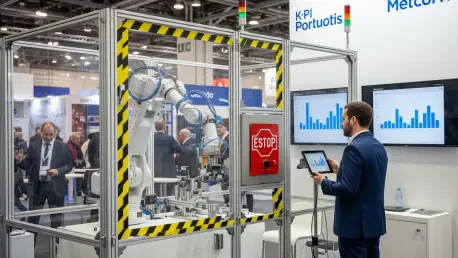
Physical AI is center stage, with interactive robots on the floor. What safety, latency, and reliability standards are you enforcing for live demos, and how do exhibitors meet them? Describe your test protocol and the most instructive failure you’ve learned from.
We require a safety envelope, e-stop drills, and operator-in-the-loop readiness for all April 27 floor demos. Latency is managed by limiting edge-cloud hops and preloading motion primitives. Reliability is proven via dry runs with scripted anomalies and crowd noise. Our hardest lesson was a misclassified gesture; now we mandate multi-sensor confirmation before actuation.
Software-defined vehicles bring Nissan, Isuzu, and Applied Intuition together. Which stack layers—sensing, simulation, over-the-air updates—are closest to commercial maturity? Outline a validation pipeline from digital twin to road testing, including benchmarks and regulatory checkpoints.
OTA updates and simulation are closest to maturity; sensing remains situational. The pipeline begins with a digital twin, then scenario libraries and regression gates. Hardware-in-the-loop comes next, then supervised road miles aligned to regulatory check-ins. We freeze release candidates ahead of April 29 to show traceability from twin to street.
Cyber defense sessions feature leaders from Trend Micro and NEC. What new threat patterns are emerging in city-scale systems, and how are incident response times improving? Walk through a recent tabletop exercise or red-team drill, with metrics and actionable takeaways.
City-scale threats now chain building controls, mobility, and cloud identity in one move. We’ve trimmed dwell time by rehearsing isolation and least-privilege resets. In a tabletop aligned to the 27–28 agenda, we rehearsed staged containment across transit and utilities. The takeaway: pre-signed data-sharing MOUs shaved precious minutes and forced clarity on who flips which switch.
A VR disaster simulator and tours of underground flood infrastructure make resilience visceral. How do you translate that immersion into policy changes or budget shifts? Detail the decision framework cities use post-visit, from risk scoring to procurement and deployment timelines.
Immersion isn’t the end; it’s the spark. Post-visit, cities use a three-step frame: recalibrate risk scores, rank interventions, and pre-authorize procurement. We align milestones with the 55-city dialogue so peer pressure reinforces action. The public day on the 29th helps win citizen backing for line items that used to stall.
Climate tech investors from Breakthrough Energy and Cleantech Group will map capital flows. Which sub-sectors—storage, grid orchestration, materials—are underfunded relative to impact, and why? Share check sizes, milestones, and the de-risking steps that unlock later-stage capital.
Grid orchestration lags because benefits are systemic while ownership is fragmented. Materials can be overlooked until a marquee partner leans in. Milestones that unlock capital include certified performance, offtake intent, and validated safety. We time these proofs during the business days so announcements land before April 29 and momentum carries into the next quarter.
In entertainment, CEOs from top animation studios discuss becoming the “Hollywood of animation.” What capacity, talent, and IP pipelines are required to make that leap? Provide concrete hiring targets, production throughput goals, and co-financing models that actually pencil out.
Capacity means consistent slates, not one-hit wonders. Talent pipelines blend veterans with university labs, mirroring how AI startups share the floor with global players. Co-financing hinges on transparent recoup waterfalls and territorial splits that respect origin IP. We spotlight deals that can enter Startup Battlefield 200-level scrutiny without flinching.
Startups are translating manga with AI, generating music from text, and turning IP into anime for global release. What quality controls prevent uncanny results, and how do you manage localization without losing nuance? Describe your review stack, human-in-the-loop checkpoints, and success metrics.
We build a review stack with linguistic glossaries, cultural notes, and human punch-ups at each pass. Music generation uses guardrails tied to licensed stems to avoid drift. Success is measured by retention and rewatch on the 29th when the public reacts in the open. Provenance logs protect the chain so global distribution doesn’t get tripped by unclear rights.
Remote participation includes on-site staff carrying a device that shows a participant’s face for real-time interactions. What etiquette and technical guidelines make these meetings productive? Share scheduling tips, audio/latency targets, and examples where this led to signed deals.
Book short blocks on the 27–28 for focused passes and keep agendas crisp. Keep audio directional, camera at eye level, and cut background noise so turn-taking feels natural. We pair remote visitors with an on-site brief who corrals follow-ups. One remote founder secured a pilot because the face-to-face vibe overcame “send me a deck” fatigue.
Not everyone can do full telepresence; session streams are available too. How should attendees design a hybrid plan to maximize outcomes across business days and the free public day on April 29? Give a step-by-step schedule template and the KPIs to track.
Day one: streams for signal-gathering, plus two targeted one-on-ones. Day two: live negotiations and demo floor loops to validate fit. Day three, April 29: public feedback and community recruiting. Track intros-to-meetings, meetings-to-pilots, and pilots-to-press-ready moments.
A Startup Battlefield semifinalist will be selected from the SusHi Tech Challenge. What criteria will decide the standout—market readiness, team, defensibility, or traction? Walk us through your scoring rubric and a past example where one metric overruled the others.
We score four pillars: problem, product, path, and proof. Defensibility can tip the scales when traction is early but repeatable. We also ask whether the team can handle the Startup Battlefield 200 spotlight. A past call went to a team with modest revenue but a wall of moats that screamed inevitability.
Leaders from 55 cities will discuss urban resilience within a global network. How do you convert multinational dialogue into replicable city playbooks? Describe the data model, peer benchmarking cadence, and one policy that transferred cleanly across regions.
We start with a shared schema for assets, hazards, and response, anchored since 2022. Benchmarking runs on a cadence tied to this summit so peers stay honest. A transferable win was standardizing flood alert thresholds with clear citizen messaging. The YouTube-observable summit keeps the loop open for post-event adoption.
SusHi Tech Tokyo runs April 27–29 at Tokyo Big Sight. How will you measure overall success—deal volume, pilot programs launched, or policy commitments? Share the exact dashboard you’ll review the week after the event and what would count as a breakout win.
The week after, my dashboard shows: pilots inked, policies drafted, and cross-city MOUs initiated. I track domain splits across all four to avoid hollow wins. Media velocity matters too—announcements that survive beyond the 29th. A breakout win is one semifinalist heading to the 200 with a pilot already underway.
What is your forecast for Tokyo’s tech ecosystem through 2026 and beyond?
Tokyo’s arc accelerates as these four domains reinforce each other. By anchoring on April 27–29 and the 55-city dialogue, it keeps one foot in global markets and one in civic reality. Expect more founders who speak policy and product in the same breath. For readers, the opening is clear: pick a domain, pick a partner, and make one promise you can deliver before the next summit.