
Simon Glairy is a recognized authority in the marine insurance landscape, specializing in the intricate intersection of risk management and Insurtech innovation. With a career dedicated to dissecting complex policy language and leveraging data-driven insights, he has become a pivotal voice for both insurers and vessel owners navigating the aftermath of major weather events. His expertise is particularly relevant as we explore the legal and meteorological gray areas that arise when a named storm loses its official status, yet continues to cause significant physical and financial devastation. Today, we delve into the nuances of deductible endorsements and the high-stakes reality of claims involving the National Hurricane Center’s specific timelines.
When a weather event transitions from a tropical depression to a remnant low, what specific meteorological data determines if a “Named Windstorm” still exists for insurance purposes?
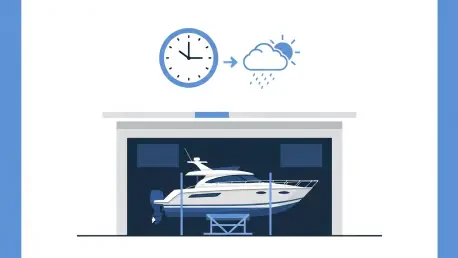
In the specialized world of marine risk, the transition from a tropical depression to a remnant low isn’t just a scientific change; it is a critical legal shift that can determine the fate of a five-figure claim. According to the National Hurricane Center, Tropical Storm Chantal was downgraded to a tropical depression at 1200 UTC on July 6, 2025, as it crossed into North Carolina, and was declared a remnant low before the actual damage occurred at Hyco Lake. Because the AXIS policy defines a “Named Windstorm” strictly as a Tropical Depression, Tropical Storm, or Hurricane as designated by the National Weather Service, the moment that official designation is dropped, the storm technically ceases to exist under the contract. Even if the water is still rising and the local atmosphere remains volatile, the absence of that specific federal label means the insurer can no longer easily justify applying storm-specific endorsements. It becomes a game of hours where the National Weather Service’s public advisories become the most expensive documents in a boat owner’s file.
The “Seafarer Lift Deductible” in this case jumps from a standard $2,500 to a staggering 50% of the property damage limit; how do such extreme shifts in liability impact the fundamental relationship between an insurer and a policyholder?
When a deductible climbs from $2,500 to half the value of the property damage limit, it fundamentally alters the nature of the insurance contract from a transfer of risk to a shared loss that feels punitive to the owner. In this dispute, the owners of the 2017 Correct Craft Super Air Nautique G23 are looking at a repair estimate of $79,044.96, meaning a 50% deductible would essentially swallow a massive portion of their potential recovery. This kind of “cliff-edge” pricing in endorsements can lead to a complete breakdown in trust, especially when the policyholder feels the insurer is using an undefined or ambiguous term to protect its bottom line. From a risk management perspective, if the terms are so broad that they render the coverage “illusory,” the policyholder isn’t just fighting for a check; they are fighting against a perceived systemic unfairness. It creates a high-stakes environment where every word in the endorsement is scrutinized for a way to avoid a financial hit that most individual boat owners simply cannot absorb.
The plaintiffs allege a “pattern and practice” of denials involving at least six claims at Hyco Lake. How do insurers typically manage the legal risks of denying multiple claims from a single localized event?
Managing a localized event like the flooding at Hyco Lake requires a delicate balance, as denying multiple claims in a concentrated area often invites the very “pattern and practice” allegations we see in this three-count suit. When an insurer faces six or more similar claims from the same storm system, they often seek consistency in their application of the policy, but if that consistency is based on a flawed interpretation, it opens the door for bad faith and treble damages. The most striking detail in this complaint is the allegation that AXIS tried to condition a settlement on an attorney’s agreement not to represent other clients in similar storm-related matters. That kind of maneuver suggests the insurer is acutely aware of the potential for a localized legal wildfire and is trying to contain the spread of litigation. For the industry, this highlights the danger of using a single, potentially incorrect claims decision as a template for an entire region’s worth of policyholders.
Local winds during this event stayed between 9 and 12 mph, never topping 19 mph, which is far below the 34-knot storm threshold. How central is this specific wind data to proving a breach of contract?
The wind speed data is the factual anchor that makes the plaintiffs’ case so compelling, as it provides a sensory reality that contrasts sharply with a “Named Windstorm” designation. While the policy relies on the National Weather Service’s labels, the fact that local winds were barely a breeze—peaking at just 19 mph—makes the application of a high-wind deductible seem logically inconsistent to any reasonable observer. The threshold for a tropical storm is 34 knots, and when the actual conditions are less than half of that, the argument that the boat was damaged “during” a named windstorm becomes much harder for the insurer to defend. If the water rose high enough to crush the boat against the boathouse ceiling on July 7, 2025, but the storm had officially ended the day before, the wind data serves as the secondary proof that the catastrophic event was an inundation issue, not a windstorm event. In a breach of contract case, these numbers provide the objective evidence needed to show that the insurer’s interpretation doesn’t align with the physical environment.
What is your forecast for the future of marine windstorm endorsements?
I expect the industry to rapidly pivot toward highly localized, data-driven endorsements that replace broad regional designations with specific, on-site triggers to prevent these multi-thousand-dollar disputes. We will likely see a move toward “parametric” insurance models where a deductible is triggered only if a certified sensor at a specific marina or lake records wind speeds or water levels exceeding a pre-defined limit. This would eliminate the ambiguity of whether a storm is still active 24 hours after a downgrade, as the claim would be settled based on the immediate physical reality of the boat’s location rather than a distant report from the National Hurricane Center. By using IoT technology and real-time monitoring, insurers can offer more transparent coverage that avoids the “illusory” label and ensures that both the boathouse owner and the carrier are operating from the same set of undisputed facts. Ultimately, the goal will be to make these massive deductible shifts predictable and fair, rather than a source of litigation and bad faith claims.