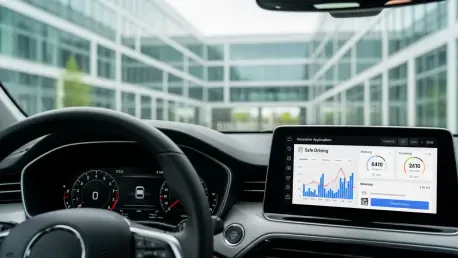

California has long stood as a solitary fortress against the encroachment of real-time telematics in the insurance industry, remaining the only state to strictly forbid car insurers from using live driving data to dictate premiums. This long-standing policy is currently facing its most significant challenge as Assembly Bill 311 gains traction in the state legislature, promising a shift toward a voluntary system where drivers can opt to share their habits for potential financial relief. This proposal marks a pivotal transition from a categorical ban on digital surveillance to a regulated framework where economic incentives and high-tech tracking finally intersect in the Golden State. For millions of residents struggling with the rising cost of living, the lure of lower monthly payments is powerful, yet it brings forth a fundamental question regarding the price of personal data in the modern age. As the state moves toward 2027, the resolution of this debate will likely redefine the boundary between consumer convenience and the right to a private life.
Navigating Legal Hurdles: The Legacy of Proposition 103
The historical bedrock of California’s insurance regulations is Proposition 103, a landmark voter-approved law from 1988 that was designed to protect consumers from arbitrary or discriminatory rate hikes. For decades, this law has mandated that insurance premiums be based primarily on three factors: a person’s driving safety record, the number of miles they drive annually, and their years of driving experience. Because Proposition 103 was intended to prevent insurers from using opaque or intrusive metrics to set prices, it has served as a formidable barrier to the implementation of modern telematics programs seen in almost every other state. Consumer advocates argue that the strength of this regulation lies in its predictability and its focus on historical facts rather than real-time surveillance. However, as vehicle technology has evolved far beyond what voters could have imagined in the late twentieth century, the push to modernize these rules has become a central point of legislative friction.
To circumvent the rigid constraints of Proposition 103 without requiring a direct and difficult ballot measure to overturn it, Assembly Bill 311 employs a sophisticated legal strategy centered on redefinition. The bill seeks to expand the legal interpretation of a “driving safety record” to include not just past citations and accidents but also six months of monitored driving behavior gathered through telematics. By framing real-time data as a component of the safety record rather than an entirely new rating factor, proponents hope to satisfy the technical requirements of existing law while opening the door for high-tech tracking. This approach represents a clever attempt to layer twenty-first-century data collection over a twentieth-century legal framework. If successful, it would allow insurers to use granular metrics like braking force and acceleration patterns to judge a driver’s risk level. Critics worry that this redefinition sets a dangerous precedent for interpreting consumer protection laws in ways that favor corporate data acquisition.
Regulating the Invisible: From Backdoor Data to Public Policy
Most modern vehicles currently on the road are equipped with an array of sensors and internal computers capable of logging every movement, from steering angles to the speed at which a door is opened. In recent years, it has become increasingly common for automakers to collect this information and share it through “back door” channels with third-party data brokers and insurance companies. Drivers are often unaware that their vehicle is transmitting their habits to external entities, as these disclosures are frequently buried deep within lengthy terms-of-service agreements that few people read. Assembly Bill 311 aims to formalize this process by creating a regulated “front door” for data sharing, ensuring that the state has oversight over how this information is used for insurance purposes. By bringing these practices into the light, the bill seeks to replace an unregulated and often secretive data economy with one that requires explicit driver consent and adherence to state-mandated standards for privacy and security.
To address concerns about the potentially invasive nature of vehicle surveillance, the new proposal includes specific provisions designed to “fence off” certain types of technology from being used by insurers. Under these rules, while insurance companies could analyze mechanical data like speed and braking, they would be strictly prohibited from accessing more personal tools such as in-cabin cameras, facial recognition software, or audio recording devices. This legal boundary is intended to prevent the transition from simple risk assessment to total personal surveillance of a driver’s private space inside their car. By drawing a firm line between vehicle performance metrics and biometric or environmental data, the legislation attempts to balance the insurance industry’s desire for precision with the consumer’s right to privacy. Maintaining this distinction is crucial for public trust, as the thought of an insurance company watching a driver through a camera remains a major point of resistance for many residents who might otherwise consider telematics.
The Financial Reality: Promises Versus Actual Consumer Savings
The primary marketing hook for usage-based insurance is the promise of significant savings for those who demonstrate safe habits on the road, but the reality for many participants is often less rewarding. Experience from other states where these programs have been active for several years suggests that only about a third of drivers who enroll in tracking actually see a meaningful reduction in their monthly premiums. A large portion of users find that their rates remain essentially unchanged, while a small but notable percentage may even see their costs increase if the algorithm determines their habits are riskier than their traditional record suggested. This discrepancy between the marketing and the results highlights the complexity of the math used to calculate safety scores. For many, the trade-off of personal data for a potential discount becomes a gamble rather than a guaranteed benefit. This uncertainty makes it difficult for consumers to judge whether the loss of privacy is worth the elusive promise of a cheaper insurance policy.
Insurance companies are increasingly desperate for more granular data as the financial landscape of vehicle repair and liability undergoes a rapid and expensive transformation. Modern cars are no longer just metal frames; they are mobile computers filled with delicate sensors, cameras, and lidar systems that make even minor collisions incredibly costly to repair. Inflationary pressures and the rising weight of electric vehicle batteries have also contributed to higher payout costs for accidents, squeezing the profit margins of major carriers. From the perspective of the insurance industry, real-time data offers a way to more accurately predict which drivers are likely to cost the company money and which are truly safe risks. In an environment where traditional actuarial tables are struggling to keep up with the pace of technological change and rising costs, telematics represents a stabilizing tool for businesses. For these firms, the ability to monitor behavior is not just about pricing—it is about surviving in a market where the cost of risk is rising faster.
Algorithmic Logic: The Challenge of Driving Context and Transparency
One of the most persistent criticisms of telematics software is its inherent inability to understand the complex context of real-world driving situations. For instance, a driver who performs a sudden, sharp swerve or applies the brakes with maximum force might be doing so to avoid a serious accident caused by another person’s negligence or a sudden obstacle in the road. However, an automated algorithm typically flags such events as “reckless” or “aggressive” behavior, potentially lowering the driver’s safety score and increasing their premium. Because the proprietary formulas used to calculate these scores are often protected as trade secrets, drivers have almost no way to see how their data was interpreted or to challenge a negative assessment. This lack of transparency creates a system where individuals are judged by a rigid digital standard that does not account for human intuition or defensive driving maneuvers. Without a mechanism for appeal or clarification, drivers remain at the mercy of a black-box system that values raw data over safety.
The debate over voluntary tracking in California also raises serious concerns about the long-term implications for those who choose to opt out of these programs to protect their privacy. While the current proposal frames telematics as an optional choice, privacy advocates warn that it could eventually lead to a “privacy penalty” for those who refuse to be monitored. As more “safe” drivers migrate to tracked plans to secure discounts, the remaining pool of untracked drivers might be perceived by insurers as inherently higher risk, leading to an increase in their base rates. In this scenario, the choice to remain private becomes a luxury that only the wealthy can afford, while lower-income drivers may feel forced to accept surveillance just to keep their insurance affordable. This shift could effectively end the era of the untracked driver in California, turning what was once a fundamental right into a tiered system where privacy is a commodity to be bought or sold. The potential for this social divide remains a central concern for those fighting the current bill.
The legislative journey of Assembly Bill 311 represented a major turning point in the intersection of technology and consumer rights within the California insurance market. While the move toward telematics was framed as a necessary step for modernization, it forced a difficult conversation about the value of personal data and the transparency of algorithmic decision-making. To ensure that this transition benefits consumers rather than just the insurance industry, several actionable steps became apparent for the coming years. Drivers should prioritize reviewing the data-sharing settings on their vehicle’s infotainment systems and demand clearer, simplified explanations of how safety scores are calculated. Furthermore, regulators must establish a clear appeals process that allows drivers to explain the context of flagged incidents, ensuring that defensive maneuvers are not unfairly penalized. As the state implemented these new frameworks, the focus shifted toward creating a marketplace where transparency and fairness were just as important as the pursuit of lower rates through digital tracking.