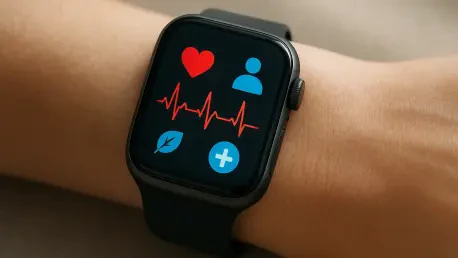

The transition from simple step counting to clinical-grade cardiac monitoring has created a massive data-insight gap that standard consumer software cannot bridge effectively. For years, the general public viewed smartwatches and fitness bands as mere novelties or motivational tools to encourage a daily walk around the block. However, as we move through 2026, the complexity of these devices has surged, transforming them into miniature medical laboratories that sit permanently against the human skin. The sheer volume of information being recorded—from photoplethysmography (PPG) signals to continuous interstitial glucose levels—is overwhelming for the average consumer and remains largely inaccessible to the traditional healthcare practitioner. This disconnect is primarily a software problem. While the hardware can detect minute changes in physiology, the generic apps provided by manufacturers often lack the sophisticated algorithmic depth required to turn these observations into a diagnosis or a preventative strategy. Custom healthcare software is the necessary solution, providing a specialized analytical layer that can filter out the noise and highlight the critical biometric trends that actually matter to a patient’s long-term survival and well-being. This shift signifies a fundamental move away from the gamification of fitness and toward a serious, data-driven methodology for managing human health in real-time.
The Technological Evolution of Wearable Hardware
The progression of wearable technology has been nothing short of remarkable, moving from simple mechanical pedometers to advanced diagnostic arrays that rivals equipment found in hospitals. Early iterations of these devices were limited to counting steps and providing highly speculative estimates of caloric expenditure, which served general fitness goals but offered zero utility for actual medical intervention. In the current landscape of 2026, the industry has successfully integrated medical-grade sensors into everyday accessories like rings, bracelets, and patches. These devices now perform continuous electrocardiogram (EKG) monitoring and can detect complex arrhythmias like atrial fibrillation with high sensitivity. This level of granular data collection is no longer restricted to clinical settings, as users now carry the equivalent of a telemetry unit on their wrists at all times. This hardware revolution has democratized access to high-fidelity biometric data, but it has also created a tidal wave of information that requires a new breed of software to manage.
Beyond the well-known heart rate monitors, the market is now flooded with continuous glucose monitors (CGMs) and sensors capable of measuring blood oxygen saturation, skin temperature, and even hydration levels. Emerging technologies such as smart textiles and specialized adhesive cardiac patches have moved health monitoring out of the clinical environment and into the flow of daily life. These sensors analyze heart rate variability (HRV) to assess the state of the autonomic nervous system, providing insights into stress levels and systemic recovery. This evolution has resulted in a massive data explosion, where a single individual might generate more biometric data points in a single week than a primary care physician could capture over several decades of traditional annual check-ups. The hardware has clearly succeeded in capturing the signals of the human body, yet the true challenge remains in the interpretation of these signals. Without a sophisticated software infrastructure, this data remains an untapped resource that offers little more than interesting trivia for the user.
Critical Limitations of Standard Consumer Applications
Despite the widespread popularity of mainstream fitness platforms, they frequently fall short of providing genuine medical understanding because they are built as closed ecosystems or “walled gardens.” A typical user may track their sleep quality in one proprietary application, their dietary intake in a second, and their high-intensity interval training in a third, yet these disparate systems rarely communicate with one another. This fragmentation prevents a holistic assessment of how different lifestyle factors interact to influence overall health. For instance, an app might report a poor sleep score without realizing that the user had an exceptionally high metabolic load or a late-night meal, both of which would be recorded in different, disconnected databases. This lack of interoperability ensures that the “big picture” of a patient’s physiological state remains obscured, leaving the user with a collection of interesting but ultimately uncoordinated metrics.
Furthermore, most generic consumer applications lack the clinical context necessary to provide personalized health advice, relying instead on broad population averages that may not apply to the individual. A resting heart rate of forty-five beats per minute might be interpreted as a sign of elite cardiovascular fitness in a marathon runner, but it could be a dangerous indicator of bradycardia in an elderly patient with underlying heart conditions. Mainstream apps are fundamentally designed for user engagement and the gamification of activity, which often prioritizes colorful charts and digital badges over clinical accuracy or medical relevance. They generally lack the rigorous data security frameworks and regulatory compliance, such as HIPAA or GDPR, required for professional healthcare integration. Consequently, these apps remain “noise-heavy,” providing dashboards that feel informative but fail to deliver the high-level medical “signal” that a physician requires to make an informed clinical decision or adjust a treatment plan.
Architectural Advantages: The Power of Custom Integration
Custom healthcare software approaches the data challenge from a clinical perspective, engineering platforms that can synthesize multiple streams of information into a single, unified health profile. One of the most significant technical differentiators of custom builds is the utilization of advanced API-driven integration. This allows a centralized repository to ingest data directly from various manufacturers simultaneously, breaking down the silos that typically isolate biometric information. By consolidating data from a smartwatch, a smart scale, and a glucose monitor into a single analytical engine, custom software can identify hidden correlations that would otherwise go unnoticed. This architectural flexibility ensures that the platform is not tied to a single hardware vendor, allowing healthcare providers to choose the best-fit devices for their patients while maintaining a consistent and comprehensive view of the patient’s data within a single interface.
The integration of artificial intelligence and machine learning within these custom platforms further sets them apart by identifying subtle physiological patterns that both humans and basic apps would likely miss. For example, a custom-built system might detect that a slight, consistent decrease in sleep quality over several nights often precedes a spike in blood pressure or a change in glucose stability. These predictive insights allow for a proactive approach to medicine, where interventions can occur before a health event becomes a crisis. Perhaps most importantly, custom software can be designed to synchronize directly with Electronic Health Records (EHR), utilizing standards like FHIR to ensure that biometric data is presented alongside a patient’s official medical history, prescription records, and recent lab results. This synchronization transforms the wearable from a standalone gadget into a critical component of the professional healthcare delivery chain, improving the accuracy of diagnoses and the effectiveness of remote patient management.
Clinical Insights: From Raw Numbers to Life-Saving Actions
The synthesis of wearable data and custom software creates substantial value across numerous medical domains, most notably in the realm of cardiovascular health. Continuous monitoring allows for the detection of physiological anomalies that occur between traditional doctor visits, which are often the only time such issues might be caught in a reactive care model. By moving to a proactive stance, healthcare systems can identify sustained heart rate elevations or irregular rhythms in the patient’s natural environment, allowing for early intervention that can prevent acute emergencies or hospitalizations. This capability is particularly vital for patients recovering from major cardiac events, as the software can alert medical teams the moment a patient’s recovery trajectory deviates from the expected norm. This real-time visibility ensures that the care plan is dynamic and responsive to the actual needs of the individual, rather than relying on periodic and potentially misleading snapshots.
In addition to cardiovascular monitoring, custom software offers a much more sophisticated analysis of sleep and systemic recovery than standard consumer apps. While a basic fitness app might only track “light” versus “deep” sleep based on movement, an advanced clinical platform can incorporate oxygen saturation levels and stress biomarkers to provide a comprehensive look at how sleep affects long-term metabolic and neurological health. By analyzing heart rate variability in the specific context of daily activity levels and reported stress, these platforms generate a “readiness” score that is far more accurate than generic versions. This data is invaluable for preventing burnout in high-stakes professional environments and is increasingly used in sports medicine to avoid overtraining in elite athletes. The ability to translate raw sensor data into a nuanced understanding of a person’s recovery capacity allows for highly personalized lifestyle and medical recommendations that are grounded in hard evidence rather than general guidelines.
Expanding Reach: Industry Applications and Remote Monitoring
The utility of these integrated health platforms extends well beyond individual patient care, impacting various sectors of the economy such as insurance and professional athletics. In the preventive health and insurance space, organizations are using aggregated biometric data to identify high-risk populations long before chronic conditions manifest as expensive medical claims. By offering customized software solutions to policyholders, insurers can provide personalized incentives for healthy behaviors while gaining a more accurate understanding of actuarial risk. This data-driven approach allows for more precise underwriting and the development of wellness programs that actually move the needle on population health. Similarly, professional sports organizations are utilizing custom-built analytical suites to synthesize training loads, nutrition, and recovery markers, enabling coaching staffs to make objective, data-informed decisions regarding player rest and game-day intensity to maximize performance and minimize injury risk.
Remote monitoring also addresses a critical gap in post-operative care and chronic disease management. When a patient is discharged from the hospital after a surgical procedure, there is often a period of uncertainty before the first follow-up appointment where complications can arise unnoticed. Custom software allows surgeons and recovery teams to track a patient’s mobility, heart rate, and wound healing indicators in real-time. This ensures that any signs of infection or physiological distress are flagged immediately, allowing for rapid intervention that can prevent readmission. Furthermore, corporate wellness programs are evolving from self-reported surveys to objective, data-driven models. By using custom software to aggregate anonymized data, employers can implement targeted health interventions that demonstrate a clear return on investment by reducing absenteeism and improving the overall well-being of their workforce through measurable and impactful health initiatives.
Navigating the Complexities: Ethics and Regulatory Compliance
Despite the immense potential of these digital tools, the creation of detailed, continuous biometric profiles introduces significant risks related to privacy and data governance. Technical security must be integrated into the core architecture of custom software, utilizing high-level encryption and strict access controls to ensure that sensitive health information is protected from unauthorized access or malicious breaches. Furthermore, transparent consent frameworks are essential; users must have a clear and granular understanding of who has access to their data and for what specific purposes it is being used. As the value of biometric data increases, the debate over data ownership becomes more central to the industry. Custom software developers must prioritize user sovereignty, ensuring that individuals retain control over their information while still allowing for its beneficial use in clinical research and personalized medical treatment.
Another significant challenge involves the validation of sensor accuracy and the navigation of a complex regulatory environment. Not all wearable hardware is created equal, and software developers must be incredibly cautious not to draw definitive clinical conclusions from “noisy” or imprecise data streams. Navigating the legal requirements for “Software as a Medical Device” (SaMD) is a substantial undertaking that requires specialized expertise. Different global jurisdictions have varying rules regarding what constitutes a diagnostic tool, and maintaining compliance requires continuous monitoring of legal changes and rigorous clinical testing. Developers must ensure that their algorithms are not only technically sound but also ethically robust, avoiding biases that could lead to disparate health outcomes for different demographic groups. This focus on accuracy and ethics is what ultimately transforms a consumer product into a reliable medical instrument that can be trusted by both patients and providers.
Strategic Outlook: The Convergence of AI and Telehealth
Looking toward the immediate future of digital health, the next stage of evolution will likely be defined by the widespread adoption of predictive modeling and non-invasive metabolic monitoring. As biometric datasets continue to expand in both size and complexity, artificial intelligence will become increasingly adept at predicting major health events, such as myocardial infarctions or severe mental health episodes, days or even weeks before they occur. This shift from “real-time” to “predictive” monitoring represents the holy grail of preventive medicine. Additionally, the development of non-invasive sensors that can track glucose, ketones, or even alcohol levels without the need for needles is poised to revolutionize how individuals manage metabolic health. Custom software will be the primary vehicle for delivering these insights, providing users with a clear understanding of how their daily choices affect their internal chemistry.
The industry is also moving toward a total convergence of telehealth services and personalized AI coaching. The standard doctor’s consultation is being transformed from a simple video call into a data-informed session where the physician has access to a real-time dashboard of the patient’s biometrics. This allows for a much more productive conversation, as the doctor can see exactly how the patient has been performing in the “real world” rather than relying on subjective self-reporting. This leads to the creation of “digital health twins,” where a virtual representation of the patient is used to simulate the effects of different medications or lifestyle changes before they are implemented. This level of personalization ensures that healthcare is no longer a one-size-fits-all model but a highly calibrated service that evolves alongside the individual’s unique physiology and health goals.
A New Paradigm for Healthcare Delivery
The evolution of wearable technology demonstrated that the true value of the digital health revolution never resided in the hardware itself. While the sensors became more sophisticated and the devices more elegant, they remained mere collectors of raw data. The real breakthrough occurred when the industry shifted its focus toward the custom healthcare software that interpreted that data and gave it clinical meaning. By moving beyond the superficial “fitness app” model and embracing integrated, clinically grounded solutions, organizations successfully unlocked the latent potential of the millions of data points being collected every second. This transition enabled a form of healthcare that was proactive and precise, moving away from the reactive and general methods that defined the previous century of medical practice.
The implementation of these advanced analytical platforms improved the quality of life for patients by providing them with a clearer picture of their own health and a more direct connection to their medical providers. Organizations that prioritized the development of custom software foundations realized that data was only useful when it was understood and acted upon. The industry eventually moved toward a software-centric future where the analytical intelligence behind the device became the most critical component of the care delivery chain. This shift ensured that every heart rate spike and every recorded sleep cycle contributed to a more accurate, holistic, and actionable understanding of human health. The era of the “smart” device was replaced by the era of the “intelligent” system, fundamentally changing the relationship between technology and medicine for the better.